Honor Magic 8 Pro: A Flagship Contender Emerges
▼ Summary
– The Honor Magic 8 Pro is a flagship phone whose camera system, particularly its impressive 200MP telephoto lens, is highly competitive and close to best-in-class.
– The phone’s telephoto camera excels with a large sensor and fast aperture, producing photos with excellent dynamic range, natural depth of field, and good performance in low light.
– While the cameras are a major strength, some drawbacks include occasional oversharpening, variable performance with fast-moving subjects, and a design the author finds unappealing.
– A key selling point outside the camera is its enormous silicon-carbon battery, which provides exceptional, multi-day battery life.
– The phone offers premium performance specs and long software support, making it a truly competitive flagship, especially in markets where rivals’ latest models are unavailable.
When evaluating a new smartphone, particularly one marketed for its photographic prowess, a straightforward personal test often applies: how frequently does it make you long for a different device in your pocket? For many reviewers, that benchmark is currently set by the Vivo X300 Pro, a model celebrated for its exceptional camera system. Yet, after extensively using the Honor Magic 8 Pro, that feeling of wanting a substitute rarely surfaced. This flagship device, now arriving in Europe after its Chinese debut, positions itself squarely against premium rivals like the iPhone 17 Pro Max and Galaxy S25 Ultra with a price tag of £1,099.99.
Honor has consistently promoted its top-tier phones as photography champions, a strategy inherited from Huawei. While past models delivered competent cameras, they never quite reached the pinnacle. The Magic 8 Pro doesn’t definitively claim that crown either, but it represents the company’s strongest effort yet, producing images that could easily rival any flagship available in the American market. The rear camera array is built around a 50-megapixel main sensor with an f/1.6 aperture, accompanied by a 50MP ultrawide and a standout 200MP telephoto lens with 3.7x optical zoom. This telephoto camera is where modern mobile photography competitions intensify, focusing not just on long-range zoom but also on mastering the 2-4x range ideal for portraits, pets, and everyday detail shots.
The telephoto lens adopts contemporary design principles, featuring a large sensor and a wide aperture. This hardware primarily enhances performance in low-light conditions, even with moving subjects. A welcome secondary effect is a naturally narrow focal range, which creates a pleasing depth of field. This quality helps images avoid the flat, artificial look common to many smartphone photos, lending them a more sophisticated, camera-like appearance. While these technical specs are shared with competitors from other Chinese manufacturers, the execution here is remarkable. Shots exhibit excellent dynamic range, warm and typically restrained colors, and minimal noise. This consistency extends across all three rear lenses, though the ultrawide can struggle slightly more than its counterparts in complex lighting.
What prevents it from being the absolute best? Occasional oversharpening or excessive contrast can appear. Capturing fast-moving subjects yields mixed results, some frames are perfectly crisp, while others show motion blur. Some may prefer the specific color science of rivals like the Vivo X300 Pro, which leans toward a film-like aesthetic. However, these are largely matters of personal taste rather than fundamental flaws. On pure technical merit, the Magic 8 Pro’s camera stands shoulder-to-shoulder with the best.
Honor has embraced the trend for a dedicated camera button, a touch-sensitive key on the phone’s side. It functions as a zoom rocker and shutter release but also serves as a shortcut to various AI features, such as photo editing, transcription, and translation. These tools largely overlap with offerings from Google Gemini. Unfortunately, customization is limited; the button cannot be programmed to launch standard applications beyond the camera and AI suite.
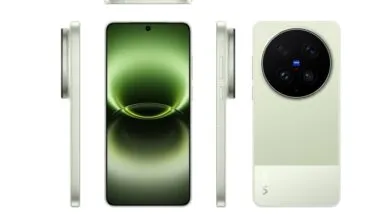
The design leaves room for criticism. The camera module remains a prominent, bulky feature on the back, a common issue across many flagships, and the rear panel has a somewhat plasticky texture unexpected at this price point. Using a case mitigates this, but premium materials are a reasonable expectation. The software experience, MagicOS, also presents minor frustrations with pre-installed apps and some unintuitive layouts, though these are seldom major hindrances. Honor commits to seven years of software updates in Europe, with at least four years promised elsewhere, and the phone launches with Android 16.
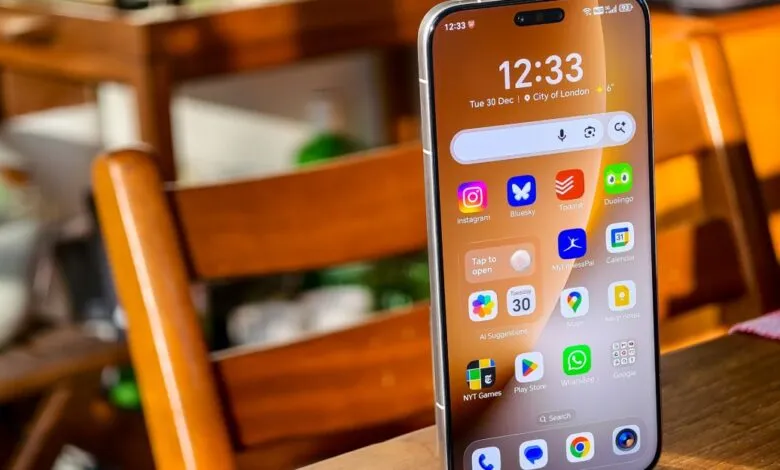
Beyond imaging, the phone’s other major strength is its substantial battery life. The global review unit features a massive 7,100mAh cell (the European variant will be 6,270mAh). It reliably delivers two days of use, eliminating the need for nightly charging. While long-term degradation of this silicon-carbon battery technology remains an open question, its starting endurance is impressive. Other specifications meet flagship expectations: the Qualcomm Snapdragon 8 Elite Gen 5 processor handles all tasks effortlessly, the 6.71-inch 120Hz OLED display is vibrant, and it supports 100W wired and 80W wireless charging, IP68/IP69K ratings, and up to 16GB of RAM with 1TB of storage.
Historically, Honor has sometimes lagged in the fiercely competitive Chinese flagship arena. The Magic 8 Pro feels like the first model to truly compete at the highest level. Its European prospects are bolstered by the sporadic international availability of recent Oppo and Vivo flagships and the delayed global launch of Xiaomi’s latest models. Depending on your region, this could arguably be the most compelling high-performance phone available today. As the testing period concludes, the lingering question isn’t which phone will be next, but whether its successor will, in moments of frustration, make one miss the capable all-rounder that is the Honor Magic 8 Pro.
(Source: The Verge)