Pila Power Station’s Stunning Transformation
▼ Summary
– Pila Energy’s home batteries are now available for preorder, with deliveries expected to begin in February 2026.
– These batteries are designed to be aesthetically pleasing for homes and to keep critical devices like refrigerators running during power outages.
– The system is user-installable, plugging into a standard wall outlet and allowing devices to automatically failover during an outage.
– The battery can be configured to charge when energy rates are low and discharge when rates are high to reduce daily electricity costs.
– Pila batteries start at $1,299, which is more expensive per watt-hour than typical competitors, but the design justifies the premium for some buyers.
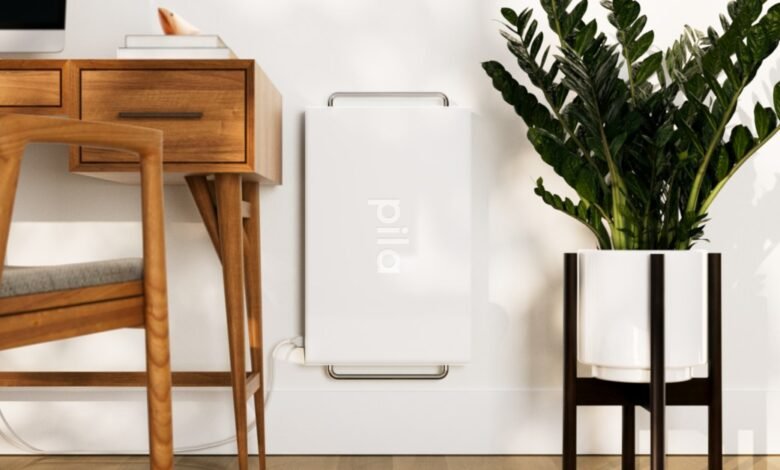
Pila Energy has opened preorders for its new line of home battery power stations, with deliveries slated to begin in February 2026. Designed to be both functional and aesthetically pleasing, these units aim to provide reliable backup power for essential home appliances while helping to manage daily energy costs. Unlike many utilitarian batteries built for job sites, Pila’s offering is crafted to fit seamlessly into modern living spaces, providing peace of mind during outages without compromising on design.
The core concept mirrors other home energy solutions like the announced but not yet shipped Backup by BioLite. Pila’s approach, however, emphasizes user-friendly installation. A single battery unit, measuring 15.0 × 26.5 × 3.3 inches and weighing 45 pounds, plugs directly into a standard 120V kitchen outlet. You then connect critical appliances, like a refrigerator, directly to the battery. This setup requires no electrician and allows the fridge to automatically switch to battery power during a blackout, protecting perishable food. The system can also be programmed to charge when electricity rates are low and discharge during peak hours, potentially saving money on monthly utility bills. For greater capacity or to power additional devices like a window air conditioner or sump pump, multiple units can be stacked or placed in different rooms, all managed centrally via the Pila App over Wi-Fi or built-in cellular connectivity.
At the heart of the system is a durable 1.6kWh LFP (lithium iron phosphate) battery paired with an AC inverter that delivers 2400 watts of continuous output, with a brief peak of 7800 watts. This capacity is sufficient to run a standard refrigerator-freezer combination for approximately 24 hours, with additional power to spare for tasks like brewing coffee, charging phones, or using a microwave. The pricing starts at $1,299, which calculates to about $0.81 per watt-hour. This positions it at a premium compared to the broader category average of around $0.50 per watt-hour. The higher cost reflects the product’s design-forward philosophy, betting that consumers will pay more for a home energy solution that is both powerful and visually discreet, avoiding the industrial look of many competitors.
(Source: The Verge)