Russian Space Station Leak Finally Sealed After 5 Years
▼ Summary
– A persistent leak from microscopic cracks in the International Space Station’s Russian PrK module has reportedly stopped, according to NASA confirmation.
– The leak, which had doubled in rate in 2024, was previously considered a high-risk issue by NASA and Roscosmos.
– Russian cosmonauts spent years searching for the elusive leaks by monitoring dust accumulation and applying a patented sealant called Germetall-1.
– The sealing process was repetitive, involving closing the module’s hatch, applying sealant, and then monitoring pressure before searching for new leaks.
– NASA states the pressure is now stable but that both agencies continue to monitor the area for any future changes.
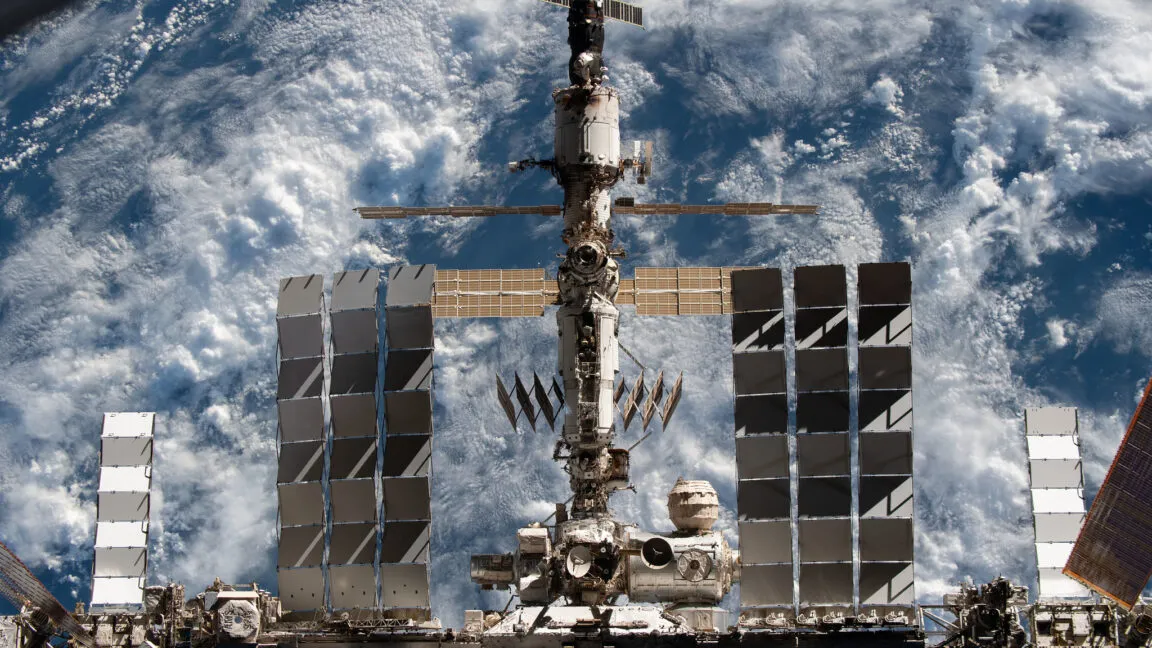
After years of persistent concern, a troublesome air leak on the International Space Station has finally been contained. The issue, located in the Russian segment’s PrK module, had plagued operations for nearly five years, with the situation escalating in 2024 when the rate of air loss unexpectedly doubled. This development led NASA to categorize the leak as a significant risk with both a high likelihood and high consequence for station safety. Recent monitoring, however, confirms the pressure has stabilized, indicating the long-running repair efforts have succeeded.
The problem stemmed from microscopic cracks within the PrK module, a transfer compartment situated between the Zvezda service module and a Progress spacecraft docking port. Pinpointing the exact sources of the leak was an immense challenge, often described as a search for a needle in a haystack. Russian cosmonauts employed a meticulous, repetitive process to find and seal the faults. They would isolate the module by closing its hatch, then later re-enter to look for telltale accumulations of dust drawn toward the vacuum of space, which revealed the leak sites.
Once identified, the crew applied a specialized Russian sealant called Germetall-1 to the cracks. Following each application, they would reseal the compartment, monitor the internal pressure for stability, and then begin the painstaking search all over again for any additional, smaller leaks. This cycle of detection and repair continued intermittently for years. A NASA spokesman, Josh Finch, recently stated that the pressure is now “holding steady in a stable configuration,” confirming the leak has stopped. Both NASA and Russia’s Roscosmos agency continue to monitor the sealed areas for any future changes.
(Source: Ars Technica)