RACER Mailbag: Your December 31 Questions Answered
▼ Summary
– The RACER Mailbag is a Q&A forum where readers can submit questions, but it will be on hiatus next week before returning on January 14.
– Marshall Pruett explains that while chassis variety existed in past eras, modern IndyCar team owners avoid the risk of choosing the wrong manufacturer, leaving Dallara as the sole chassis supplier.
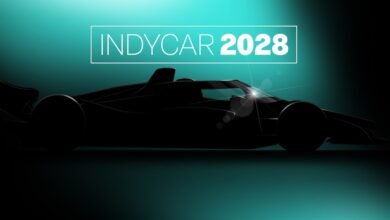
– In response to a fan suggestion, Pruett states the new 2028 IndyCar will not be named the DW28 in honor of Dan Wheldon, as too much time has passed and the series ownership has changed.
– Pruett clarifies that Honda’s position on IndyCar’s hybrid engine formula is about wanting more emphasis on hybridization, not that the technology is exhausted, and fuel economy is already a key competition point.
– The mailbag also covers diverse fan questions, including advice for attending the Rolex 24, details on IndyCar’s 2028 engine specifications, and a rebuttal to a theory about Roger Penske’s influence on engine supply.
The RACER Mailbag connects fans with expert insights on motorsports, from IndyCar’s future regulations to the best fan experiences at major events like the Rolex 24 at Daytona. Readers are encouraged to submit their questions for consideration, with the understanding that the column will take a brief hiatus before returning.
A reader, inspired by a book on CART history, wonders if the upcoming 2028 IndyCar chassis regulations might open the door for manufacturers beyond the current sole supplier, Dallara. They recall the exciting variety of the 1990s, when teams could choose from Reynard, Lola, and others. The response clarifies that while chassis diversity was a hallmark of that era, the modern landscape is different. Team owners today largely prefer the cost certainty and competitive parity of a single supplier to avoid the expensive risk of choosing the “wrong” package. The appetite among team owners for multiple car makers and tire makers is long gone. A historical example illustrates the high stakes: Chip Ganassi’s legendary success stemmed from a bold, unconventional switch to Honda and Firestone, while rivals who stuck with the established Lola-Ford-Cosworth-Goodyear combination faded. The current model is seen as protecting teams from such costly mistakes. While the IndyCar door appears closed, there is speculation about potential interest from other builders, like Lola, in supplying the next Indy NXT chassis.
Another question honors the legacy of Dan Wheldon, suggesting the new 2028 car should bear the “DW28” designation in his memory, much like the DW12 honored his development role. The response acknowledges Wheldon’s immense contribution and personal connection but notes the significant passage of time, nearly two decades, since his involvement. The series ownership has also completely changed. While some have suggested naming the car for Justin Wilson due to the integrated aeroscreen, the official name chosen by the current series leadership is deemed appropriate given the new context.
For a first-time attendee of the Rolex 24 at Daytona, comprehensive advice is offered. Recommendations include exploring the entertainment district across from the track and hunting for vintage racing memorabilia in local thrift stores. At the circuit itself, fans are advised to watch the start from the grandstands for the best view, then explore the infield fence lines and vendor areas. A key tip is to visit the garage area as repairs unfold and to experience the unique atmosphere of racing under the cover of darkness.
On the topic of engine manufacturers, a reader speculates that Honda’s commitment may be waning as the auto industry shifts focus. The response offers a different perspective, indicating Honda has expressed a desire for greater hybrid emphasis, not a feeling of exhaustion with the technology. The discussion touches on the complex relationship between government emissions regulations and manufacturer strategies, noting that the current focus on refining internal combustion and hybrid systems aligns with racing’s development goals. Chevy and Honda have fought for ages to win the fuel economy war in IndyCar, a battle that continues with the hybrid system, even if overall fuel consumption remains a far cry from road cars.
A fan eagerly awaiting the new IndyCar video game suggests the developers could add historical seasons and legacy tracks as downloadable content, citing similar features in other racing games. The response shares in the anticipation and hopes the final product rewards the community’s long patience.
Technical inquiries are also addressed. One clarifies details about the proposed 2028 2.4-liter V6 engine formula, explaining it will build upon previous development with a focus on increased durability through more robust construction. Another question delves into the specific components IndyCar teams are permitted to develop or manufacture in-house, such as dampers, coatings, and various mechanical parts, as opposed to the spec items supplied by Dallara.
A pointed question concerns the influence of Roger Penske’s partial ownership of Ilmor Engineering on engine manufacturer competition in IndyCar. The response firmly rejects any narrative of a conflict of interest designed to favor a single supplier. It points to the significant investment in hybrid technology, which was supported by Penske, and the recent move to establish an Independent Officiating Board as evidence of actions taken to maintain and please multiple manufacturers, counter to the theory presented.
Further engine discussion reveals that the 2028 2.4-liter formula will use the earlier, tested 2.4-liter design as a basis but is not a simple copy. It will be a new engine with minor tweaks still being finalized. When asked why IndyCar doesn’t simply match Formula 1’s engine displacement to attract more manufacturers, the answer is straightforward: each series has independently chosen its own technical path.
Shifting to NASCAR, questions cover the implications of a recent charter agreement settlement for other teams, the legacy of humanitarian Greg Biffle, and speculation about the next manufacturer to join the series, with Dodge/Ram cited as the most likely candidate over Honda.
The column closes with a historical footnote from a decade prior, answering a query about accomplished drivers from USAC’s early days who never won an Indy car race, highlighting names like Lee Kunzman, George Snider, and Rich Vogler.
(Source: Racer)