Who Are the Most Dangerous People Online in 2025?
▼ Summary
– In 2025, individuals who built power through online personas dominate global influence, with former President Donald Trump ruling via his Truth Social platform.
– Trump’s administration is run by former conspiracy theorists and online personalities, and his constant, chaotic social media posts dictate news cycles and policy.
– White House adviser Stephen Miller is the architect of aggressive immigration enforcement, including controversial arrest quotas and widespread enforcement actions.
– Homeland Security Secretary Kristi Noem oversees expanded immigration crackdowns involving social media surveillance and facial recognition technology.
– Elon Musk’s Department of Government Efficiency (DOGE) has bypassed norms to seize control of federal systems, aiming to build an unprecedented surveillance database.
The digital landscape of 2025 is dominated by individuals who have translated online influence into tangible, often dangerous, real-world power. These figures leverage social platforms and digital tools to shape policy, spread disinformation, and enact agendas that impact millions of lives globally. Their rise marks a profound shift where the most volatile elements of internet culture now directly steer national and international affairs.
Topping the list once again is Donald Trump. The U.S. President governs largely through impulsive decrees issued on his Truth Social network. His administration is staffed by a cohort of former conspiracy theorists and media personalities, effectively turning the federal government into an extension of the most chaotic online forums. A typical evening might see him post over a hundred times, issuing commands to Congress, commenting on foreign elections, or labeling dissent as sedition. This constant stream shapes every news cycle, forcing the nation to navigate the turmoil he generates with a few taps on his phone. His unwavering principle remains a relentless, never-ending broadcast of his will.
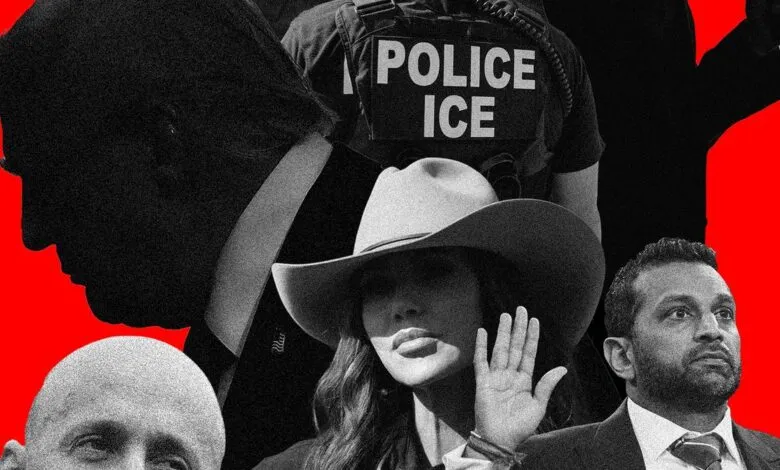
The administration’s harsh immigration policies define daily life for many. Masked agents patrol streets, conducting racial profiling and detaining individuals in a sprawling system. The architects of this system are White House adviser Stephen Miller and Homeland Security Secretary Kristi Noem. Miller is the driving ideological force behind aggressive enforcement actions, while Noem operationalizes them. Her agencies employ advanced social media surveillance, facial recognition apps, and policies that treat public scrutiny of federal agents as a crime. Under her direction, proposals even include screening five years of a traveler’s social media history before entry is granted.
A development straight from a dystopian thriller unfolded this year with the rise of Elon Musk’s Department of Government Efficiency (DOGE). This entity, staffed by young operatives with ties to powerful figures, bypassed standard vetting to infiltrate critical government systems. Their stated mission is streamlining bureaucracy, but their activities point toward a more alarming goal: wiring together disparate datasets to construct a master database capable of unprecedented public surveillance.
Beyond these central figures, the list includes persistent global threats. State-backed hackers from China continue sophisticated cyber-espionage campaigns. Members of the commodified internet underworld, known as “the com,” profit from sowing chaos and trafficking in stolen data. Prolific online scammers exploit digital platforms to defraud vulnerable populations on a massive scale. Together, these individuals and groups exemplify how online actions now carry grave offline consequences, turning the digital realm into a primary arena for conflict and control.
(Source: Wired)