The Forgotten Nintendo Controller That Pioneered VR
▼ Summary
– The Nintendo Power Glove was an ambitious and important early motion-control device, but it was not a good product.
– It emerged in the late 1980s and was a business success due to marketing, despite not being originally developed by Nintendo.
– The product’s origins trace back to a research project that became a toy before being licensed by Nintendo.
– Its legacy is significant, as it influenced future Nintendo products and the broader VR industry.
– The article is based on a podcast episode that explores the device’s history, flaws, and attempted modern use.
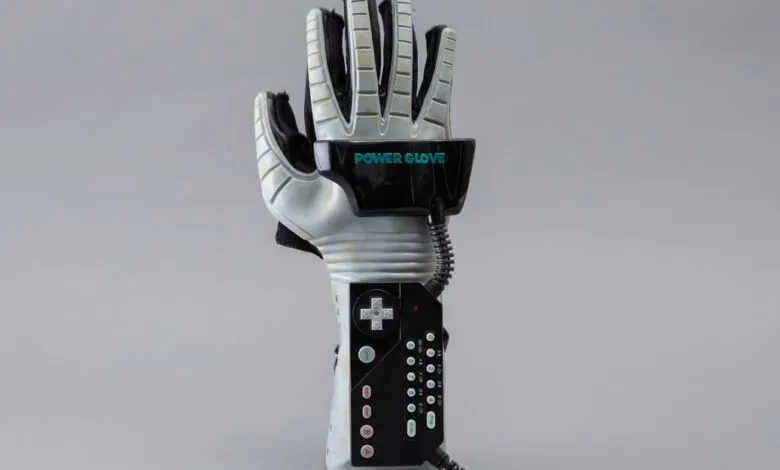
The Nintendo Power Glove stands as a fascinating and flawed piece of gaming history, a bold attempt to bring motion control to the masses long before it became commonplace. While it was notoriously difficult to use and offered a poor gameplay experience, its ambition and cultural impact cannot be ignored. This device, emerging in the late 1980s, represented a significant leap in imagining how players could interact with digital worlds, planting seeds for technologies that would mature decades later.
It is crucial to understand that the Power Glove was not a good peripheral. Its controls were imprecise, its game library was severely limited, and actually getting it to work reliably was often a frustrating ordeal. Yet, its very existence was revolutionary. At a time when the gaming industry was solidifying around the Nintendo Entertainment System (NES) and its standard controller, the Power Glove proposed a radically different idea: controlling a game with your hand and arm movements. This vision of embodied interaction, though poorly executed, captured the public’s imagination and hinted at a future of more immersive play.
Interestingly, the Power Glove was not originally a Nintendo product. It began as an experimental project by engineers at Abrams Gentile Entertainment, who were exploring data gloves for other applications. The design was later licensed to toy manufacturer Mattel, who saw its potential for the home console market. After a compelling pitch to Nintendo, the company agreed to lend its iconic branding, leading to the “Nintendo” Power Glove hitting store shelves. A brilliant marketing campaign, including a memorable appearance in the movie The Wizard, cemented its status as a must-have futuristic gadget, driving significant sales despite its technical shortcomings.
The legacy of the Power Glove is complex. As a commercial product, it was a short-lived novelty that quickly gathered dust in closets. However, its influence echoes through gaming history. It served as a public prototype for motion-controlled gaming, a concept Nintendo would master nearly two decades later with the tremendously successful Wii Remote. Furthermore, its goal of translating physical movement into digital action shares a direct philosophical lineage with modern virtual reality (VR) systems, which use sophisticated gloves and controllers to achieve what the Power Glove could only dream of.
The story of the device is a classic tale of ambition over execution. Enthusiasts and journalists who have revisited the glove consistently find it nearly impossible to use for actual gameplay. Setting it up involves calibrating ultrasonic sensors and dealing with finicky finger flex sensors, often resulting in unresponsive or erratic character movement. This hands-on experience reinforces why it failed as a toy but succeeded as a symbol, a tangible preview of a interactive future that was still many years away.
(Source: The Verge)