Male Mosquitoes Also Drink Human Blood
▼ Summary
– New research challenges the long-held belief that only female mosquitoes feed on blood, finding that males from at least five species can also do so under certain conditions.
– The discovery began as an accidental lab observation where male mosquitoes that fed on blood survived as long as those on a sugar diet, contradicting prior assumptions.
– Dehydration appears to be a key trigger for male blood-feeding, as demonstrated by experiments with CRISPR-edited mosquitoes and artificial feeders.
– Wild-caught male mosquitoes tested positive for vertebrate DNA, and lab experiments showed males can be infected with and potentially transmit West Nile virus.
– The findings suggest male mosquitoes could play a role in disease transmission, potentially impacting control strategies, but rigorous field studies are needed to understand the real-world significance.
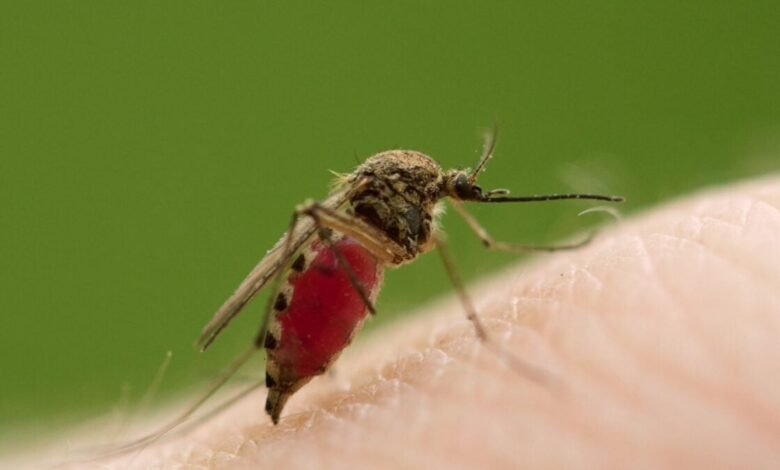
The long-held belief that only female mosquitoes bite humans for blood is being challenged by new research, revealing that male mosquitoes are also capable of drinking human blood under specific conditions. This surprising discovery could reshape our understanding of mosquito biology and their role in spreading diseases, suggesting the threat they pose may be more complex than previously assumed.
What began as an accidental observation in a laboratory has evolved into an international scientific investigation. A graduate student noticed male mosquitoes feeding during a blood-feeding experiment, prompting researchers to explore further instead of dismissing the anomaly. This curiosity led to experiments showing that dehydrated male mosquitoes would readily feed on blood from artificial feeders, a behavior mirroring that of females. The team even created genetically modified mosquitoes lacking humidity sensors; these altered males did not seek blood, strongly indicating that dehydration is a key trigger for this unusual male behavior.
The evidence extends beyond controlled lab settings. Collaborating scientists provided wild-caught male mosquitoes from Texas and Spain that tested positive for vertebrate DNA, confirming they had fed on dogs and humans in nature. In a particularly vivid experiment, lead researcher Jason Rasgon used his own healing cat scratch as bait. Exposing his hand to a cage of dehydrated males resulted in several probing the wound, with one successfully feeding. Another male even pierced his skin, causing a brief immune reaction.
Perhaps most concerning are the implications for disease transmission. The research team found that male mosquitoes can become infected with West Nile virus through blood meals, and the virus can replicate inside them to levels potentially sufficient for transmission. This raises critical questions about whether males contribute to spreading pathogens, even in a limited capacity. Several species studied, including Aedes aegypti and Anopheles stephensi, are known vectors for serious human illnesses like dengue and malaria.
The study, now involving 17 authors across four countries, has identified at least five mosquito species where males exhibit this blood-feeding capability. While the behavior appears linked to dehydration, suggesting it might be rare in ideal conditions, researchers note that harsh, dry environments in the wild could make it more common than expected. This uncertainty has direct consequences for public health strategies, including the use of sterile male mosquitoes released to suppress disease-carrying populations, a tactic that may carry unforeseen risks if those males can still feed on blood.
Scientists emphasize that this is a preliminary finding requiring rigorous field validation. The next steps involve securing dedicated funding to study how frequently this occurs in natural settings and to quantify any potential role males play in disease cycles. What started as a curious footnote is now a compelling puzzle, reminding us that fundamental assumptions in biology can still hold surprising secrets.
(Source: Gizmodo)
