Metal 3D Printing on an Ender 3: No Extruder Needed
▼ Summary
– Rotoforge has developed a method for printing metal using a modified Ender 3 printer and a friction welding tool head, avoiding the need for high temperatures or molten metal.
– The technique, called Friction and Rolling-based Additive Manufacturing (FRAM), uses a high-speed spinning disk to create plastic shear in metal wire, making it fluid enough to adhere to surfaces.
– The system repurposes off-the-shelf tools, using slitting saws as friction wheels and adapting universal AC motors from flex-shaft grinders for their constant speed and simplicity.
– Initial prints with aluminum alloy showed excellent layer adhesion, producing parts that performed similarly or better than solid metal in some tests.
– The process is loud and hazardous, requiring strict safety gear, and the current prototype faces challenges with complex prints, prompting plans for a fourth axis and other improvements.
The dream of printing metal objects with the same ease as plastic has long captivated hobbyists, yet accessible options have remained scarce. A new project is challenging that reality by transforming a standard Ender 3 printer into a metal 3D printing system, completely eliminating the need for a traditional extruder or molten metal. This innovative approach, developed over the past year, relies on a clever adaptation of friction welding technology, making metal additive manufacturing more attainable for dedicated enthusiasts.
Instead of melting plastic filament, the modified printer head feeds metal wire into a high-speed friction welding tool. This method, known as friction and rolling-based additive manufacturing (FRAM), uses a rapidly spinning disk to generate intense heat through friction. The process causes the metal wire to undergo plastic shear, becoming semi-fluid and bonding firmly to the layer beneath it. While the technique shows great promise, it introduces significant engineering challenges, primarily due to the extreme forces and speeds involved.
Safety is a paramount concern with this setup. The previous iteration involved molten metal, but the current version trades that hazard for a different one: a very loud, high-velocity spinning disk. Proper eye and hearing protection are non-negotiable, as the process generates substantial noise and carries a risk of high-speed debris. The developer found that slitting saw blades served as a suitable, readily available friction wheel, meeting the necessary demands for speed and durability.
Powering this system required a specific type of motor. After considerable experimentation, a universal AC motor, like those found in common Dremel tools, proved ideal. These motors are simpler, more affordable, and maintain a constant speed better under load than typical brushless DC motors, which is why they remain standard in many power tools. The project adapted inexpensive flex-shaft grinders to drive the friction wheel effectively.
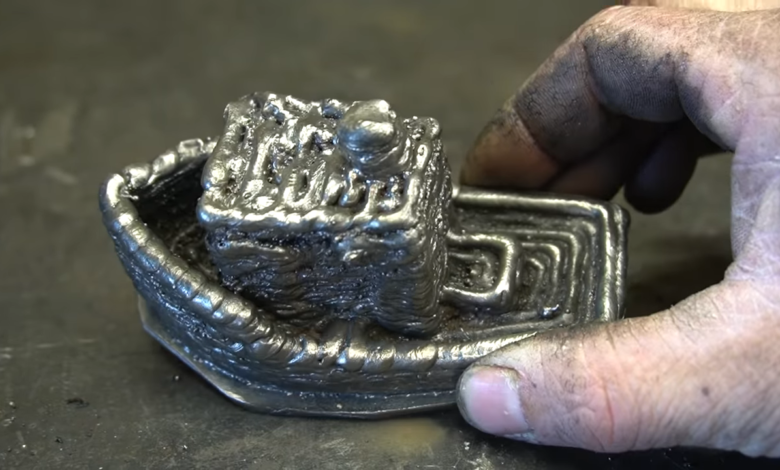
Initial tests using Al1100 aluminium alloy wire yielded impressive results. The layer adhesion was so strong that the printed parts closely resembled solid aluminium bar stock. In some mechanical tests, the layered FRAM prints actually outperformed solid Al1100 components. The real difficulty emerged when moving beyond simple straight lines to more complex geometries, where the limitations of the basic Ender 3 platform became apparent.
The next phase of development involves adding a fourth rotational axis to the printer. This upgrade aims to overcome current geometric limitations and improve print reliability and versatility. While FRAM technology is clearly in its early stages, this project demonstrates that meaningful progress in metal 3D printing is possible without a massive financial investment, opening exciting possibilities for further innovation in hobbyist workshops.
(Source: NewsAPI Tech Headlines)