Titanic VR: A Free-Roam Immersive Experience in NYC
▼ Summary
– Titanic: Echoes From The Past is a free-roam VR experience in NYC that immerses guests in exploring the wreck and reliving the ship’s 1912 maiden voyage.
– The experience effectively uses VR to convey the immense scale of the Titanic, from its massive engine room to its open boat deck and Grand Staircase.
– It utilizes simple, user-friendly HTC Vive Focus 3 headsets without body trackers, prioritizing ease of use for first-time VR users.
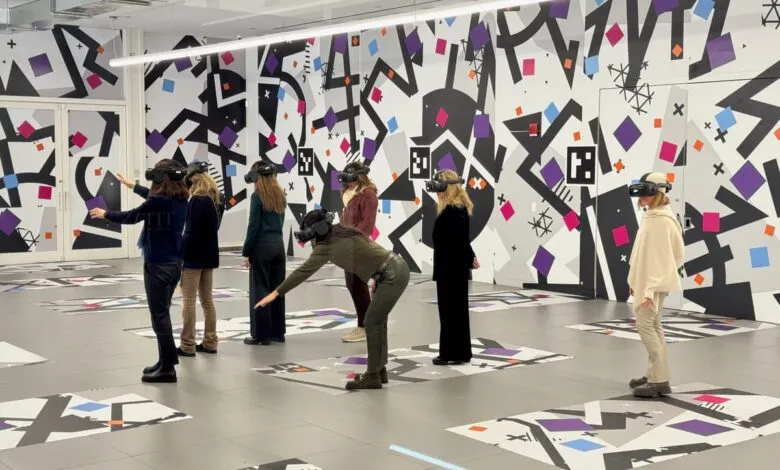
– The shared, location-based design allows multiple participants to interact as ghostly outlines within a large, walkable physical space.
– The installation demonstrates VR’s power as an educational tool, making history feel immediate and memorable, with schools booking class trips for students.
A new free-roam virtual reality installation in New York City offers an unprecedented opportunity to explore the legendary wreck of the RMS Titanic. Titanic: Echoes From The Past, created by the experiential company Eclipso, is a location-based journey that lasts over thirty minutes. Participants become modern-day explorers aboard a research vessel, descending to the infamous North Atlantic wreck site to investigate the remains before stepping back in time to witness the ship’s tragic maiden voyage in 1912.
The adventure starts with a narrative setup, casting guests as crew on a deep-sea mission. A dramatic 3,800-meter descent alongside a submersible brings the mangled wreckage into view, establishing a solemn mood. The experience then shifts, following a fictionalized account of a real passenger to dramatize the ship’s final hours. VR’s unique capacity to convey immense scale becomes powerfully evident inside the Titanic’s engine room, where colossal steam-powered machinery looms overhead, its massive components rotating in sync. Standing beneath it all provides a tangible sense of the industrial force needed to propel such a vessel.
Emerging onto the open boat deck offers a stark contrast. The vast expanse of ocean in every direction underscores the ship’s size, allowing time to walk, pause, and absorb the surroundings. Guests later encounter Captain Edward Smith on deck, free to explore alongside him at a relaxed pace. Interactive elements in each scene, like a quiet moment in the ship’s gymnasium, provide glimpses of daily life before the disaster.
One of the most iconic locations, the Grand Staircase, is rendered with striking detail. Beneath its glass and wrought-iron dome, characters move at human scale, their conversations audible as you pass, letting the environment itself tell the story. The penultimate sequence places guests on the bridge during the fateful collision, offering a chillingly close view of the iceberg as it slides past. A final look at the pristine ship concludes the journey back in time.
Housed in a 10,000-square-foot Manhattan space, the experience begins in a staging hallway with historical context. The technical setup is notably simple and friction-free, utilizing HTC Vive Focus 3 standalone headsets. Guests are not burdened with body trackers, external sensors, or PC backpacks; within about a minute of putting on the headset, they are free to explore. Plastic ear coverings direct audio while reducing ambient noise, enhancing focus without total isolation. Thoughtful design touches, like a holographic grid during descents, help minimize motion discomfort and maintain immersion.
This combination of accessible hardware and intelligent software creates a profoundly compelling and liberating experience. The virtual boundaries of the large physical space are rarely encountered, encouraging natural exploration. Other participants appear as simple, ghostly white outlines, facilitating organic interaction, like calling out to point out details, without distracting from the environment.
For observers, an open seating area with a window into the VR space allows them to watch, though the lack of monitor feeds might induce a sense of missing out for some. Post-experience observations reveal its powerful impact; one group was seen dancing together during the Grand Staircase scene. This blend of immersion and historical engagement demonstrates VR’s potent role as an educational tool, making history feel immediate and memorable in a way traditional exhibits often cannot. Eclipso reports strong interest from schools, with positive feedback from students and educators who value the sense of scale and lasting impression it creates.
Ultimately, Titanic: Echoes From The Past succeeds by letting its environments lead. Guided narration provides structure while leaving ample room for personal discovery. The effortless setup ensures the technology never becomes a barrier, a crucial factor for first-time VR users. By the conclusion, the feeling is not of having watched a story, but of having spent time within a place, gaining a deep, personal sense of the ship’s scale and atmosphere, distinct from cinematic portrayals. Eclipso plans to expand with additional experiences in New York and other major cities.
(Source: Upload VR)