Why Ants Sacrifice Armor for Overwhelming Numbers
▼ Summary
– A study shows the economic trade-off between quality and quantity applies to biology, influencing ant evolution.
– As ant societies grew larger and more complex, they evolved to produce smaller, cheaper-to-build individual workers.
– A robust protective exoskeleton (cuticle) is metabolically expensive, requiring nitrogen and rare minerals like zinc and manganese.
– The researchers hypothesized that colonies could favor the collective by reducing individual worker defenses, as losing a few workers is less costly.
– To test this, the team conducted a large-scale comparative study using a global 3D imaging database of ants called Antscan.
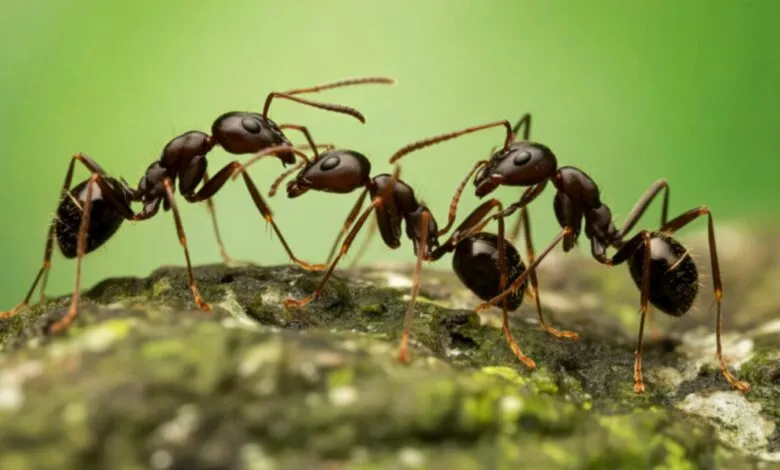
Understanding the evolutionary success of ants reveals a fascinating biological strategy where colony-level efficiency trumps individual durability. A groundbreaking international study suggests that as ant societies grew more complex, they evolved to produce workers that are not only smaller but also built with less robust physical armor. This shift represents a profound trade-off, favoring the sheer power of numbers over the fortified strength of any single ant.
The insect exoskeleton, or cuticle, acts as a critical defense system. It shields against predators, prevents dehydration, and serves as an anchor for muscles. However, constructing this tough biological armor demands substantial resources, including nitrogen and trace minerals like zinc and manganese. For a solitary insect, a weak cuticle often means certain death. Ants, however, evolved a different survival calculus entirely.
Researchers proposed that in highly social insects, the metabolic economics of resource allocation would favor the group. “We wanted to explore how individuals change as their societies become more complex,” explained one of the study’s authors. “In a collective, tasks that a lone organism must manage itself can be distributed, potentially allowing individuals to become simpler in their design.” The theory posits that a massive colony can easily absorb the loss of a few vulnerable workers. Therefore, pouring limited nutrients into building ultra-resilient exoskeletons for every ant becomes an inefficient use of precious colony resources.
To investigate this, scientists needed to conduct a vast comparative anatomical analysis across the ant family tree. They turned to a global database containing detailed 3D X-ray scans of ant specimens from countless species. This repository allowed the team to examine and compare the structural investment in ant exoskeletons on an unprecedented scale, capturing the full breadth of ant diversity from around the world. By analyzing these scans, they could test whether lineages with enormous, specialized workforces truly invest less in each worker’s protective shell.
(Source: Ars Technica)