Pumped Hydro Storage Is Making a Comeback
▼ Summary
– Pumped hydro technology, originally developed to complement fossil fuel plants, is now valued for balancing variable wind and solar power by quickly storing or releasing energy.
– Significant energy, such as over £1 billion worth in the UK this year, is wasted when renewable sources like wind turbines are curtailed due to lack of immediate demand.
– RheEnergise’s innovation uses a denser-than-water fluid to enable smaller, lower-elevation pumped hydro systems, reducing the space and height required compared to traditional water-based designs.
– The new technology could vastly increase viable sites for pumped hydro, with thousands of potential locations in the UK alone, compared to only about 20-25 for traditional systems.
– Pumped hydro is experiencing a global resurgence, with 600 GW of projects in development and 8.4 GW installed in 2024, including the world’s largest 3.6 GW plant in Fengning, China.
The global push for renewable energy has created a powerful new role for an old technology: pumped hydro storage. Originally developed over a century ago to balance the steady output of fossil fuel plants, these facilities are now experiencing a major resurgence as essential partners for wind and solar power. Their unique ability to rapidly absorb excess electricity or discharge it to cover shortfalls makes them invaluable for stabilizing modern grids. This capability is increasingly critical, as evidenced by the UK wasting over £1 billion this year alone by curtailing wind farms when supply outstrips immediate demand.
For decades, the high cost and significant geographical requirements of traditional pumped hydro have limited its expansion. Projects typically demand two vast reservoirs at dramatically different elevations, often in mountainous terrain. This has constrained viable sites to just a handful in many regions. However, innovative approaches are now challenging these old limitations. Companies like RheEnergise are pioneering the use of a denser-than-water fluid, which fundamentally changes the engineering equation. This fluid allows a system to store the same amount of potential energy in a much smaller footprint and at a far lower height difference compared to water.
To illustrate, replicating the energy capacity of RheEnergise’s 500-kilowatt demonstrator with a conventional water-based system would require more than double the fluid volume. More strikingly, the upper reservoir would need to be 200 meters high instead of just 80 meters. This technological leap could unlock thousands of new sites. While a country like the UK might only have around two dozen locations suitable for traditional pumped hydro, the company estimates its approach could be viable at approximately 6,500 sites nationwide. Globally, the potential locations could number in the hundreds of thousands if the technology proves successful in ongoing tests.
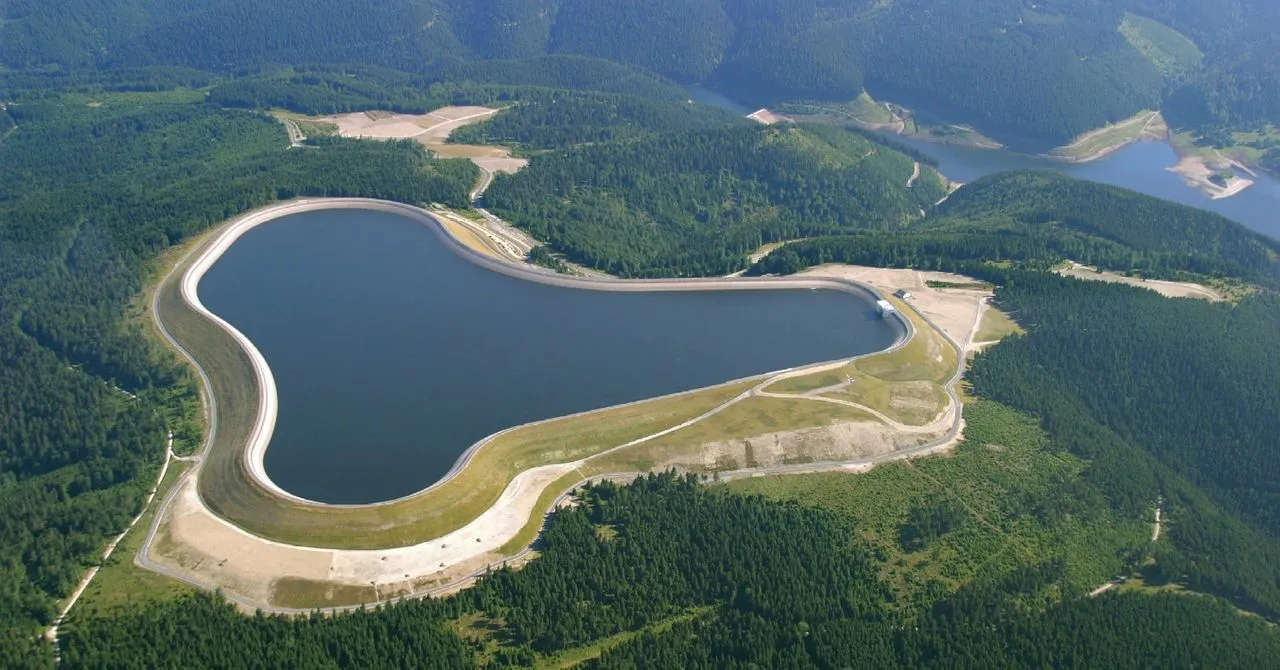
RheEnergise represents just one facet of a broader pumped hydro renaissance. Industry experts note a surge in global project development, driven by the urgent need for large-scale, long-duration energy storage. The International Hydropower Association reports a robust pipeline of projects worldwide, with significant new capacity coming online. This growth was bolstered in 2024 by major installations, including the commissioning of the Fengning plant in China. With a massive 3.6 gigawatts of power capacity, it stands as the world’s largest facility of its kind, symbolizing the scale at which this mature technology is being deployed to secure the clean energy transition.
(Source: Wired)