Donut Lab & WATT Unite: New EV Skateboard with Hub Motor & Battery
▼ Summary
– Donut Lab’s compact, powerful electric motors debuted last year and are now being used in an electric vehicle through a collaboration with WATT Electric Vehicle Company.
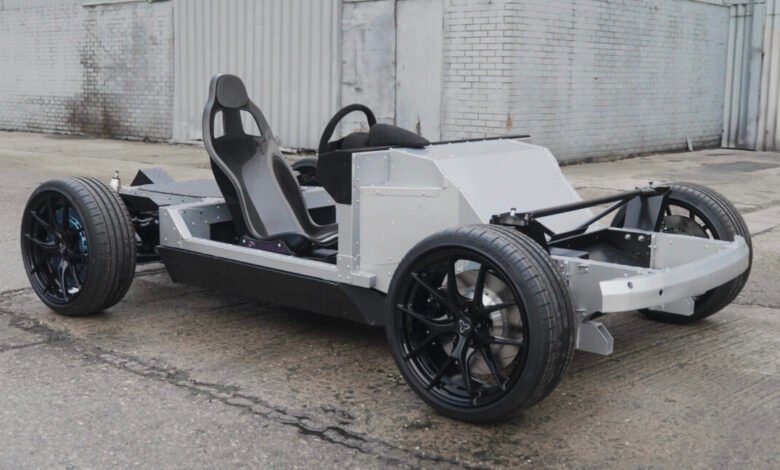
– WATT’s PACES platform is a lightweight aluminum chassis designed for low-volume electric vehicle production.
– The initial vehicle design uses one Donut motor in each rear wheel hub, with plans for an all-wheel-drive version in the future.
– This hub motor layout is more space-efficient than conventional EVs, as it eliminates the need for a separate central drive unit.
– The companies envision the adaptable platform being used for various vehicle types, from sports cars to commercial delivery vehicles.
The collaboration between Donut Lab and WATT Electric Vehicle Company marks a significant step forward in electric vehicle platform design, introducing a new and highly space-efficient skateboard chassis. This partnership leverages Donut Lab’s innovative, compact hub motor technology within WATT’s existing lightweight aluminum platform, known as PACES. The result is a versatile foundation capable of supporting a wide range of future electric vehicles, from recreational models to high-performance and commercial applications.
The core of this new platform is the integration of Donut Lab’s powerful yet small electric motors directly into the rear wheel hubs. This design choice eliminates the need for a centralized drive unit, freeing up considerable space within the vehicle’s architecture. Compared to a conventional EV layout that must find room for its motor and transmission, this hub-motor approach offers superior packaging efficiency. The initial configuration features one motor per rear wheel, with plans for an all-wheel-drive version to follow.
WATT’s PACES platform provides the structural backbone. It is a lightweight, modular chassis built from aluminum, originally designed for low-volume vehicle production. By incorporating the hub motors, the companies have created an even more adaptable system. They envision this technology enabling multiple vehicle configurations, from beach buggies and high-performance sports cars to commercial delivery vehicles. The flexibility of the skateboard design, combined with the compact nature of the motors, allows manufacturers to explore new form factors and uses that might not be feasible with traditional EV layouts.
Donut Lab’s motor technology first gained attention for its power density and small size. While initially discussed for applications ranging from drones to wind turbines, this EV partnership represents a major real-world application. The move into the automotive sector demonstrates the scalability of their design. For WATT, this collaboration enhances the value proposition of their PACES platform, offering potential customers a cutting-edge drivetrain solution as part of a complete, ready-to-build chassis.
This union of specialized technologies points toward a future where EV development can be more modular and accessible, particularly for niche manufacturers and new market entrants. The space saved by the hub motors can be reallocated to battery storage or passenger and cargo room, directly impacting vehicle utility and design. As the partnership progresses, the industry will be watching to see which of the promised vehicle types emerges first from this promising and efficient new electric platform.
(Source: Ars Technica)


