Linux Finally Gets Stable GPIB Support After Decades
▼ Summary
– Stable GPIB support has been merged into the Linux 6.19 kernel, as announced on the Linux Kernel Mailing List.
– The GPIB (IEEE 488) is a short-range, 8-bit, multi-master bus from the 1970s, originally used in HP equipment and later in microcomputers like the Commodore PET.
– It is a relatively simple and low-cost bus design, offering a speed of 8 MB/s without requiring galvanic isolation.
– The IEEE 488 standard includes physical (488.1) and electrical protocol (488.2) specifications, with the SCPI communication protocol providing a human-readable way to control devices.
– While physical connections have evolved (e.g., Ethernet alternatives), the electrical protocol and SCPI remain relevant, and this kernel update simplifies using both old and new GPIB equipment.
A significant milestone has been reached for the Linux kernel with the recent integration of stable support for the General Purpose Interface Bus, commonly known as GPIB or IEEE 488. This long-awaited development, announced by a key maintainer on the official mailing list, is now part of the 6.19 kernel release. For engineers, scientists, and hobbyists working with a vast array of test and measurement equipment, this marks the end of a decades-long wait for a robust, native solution within the mainline kernel.
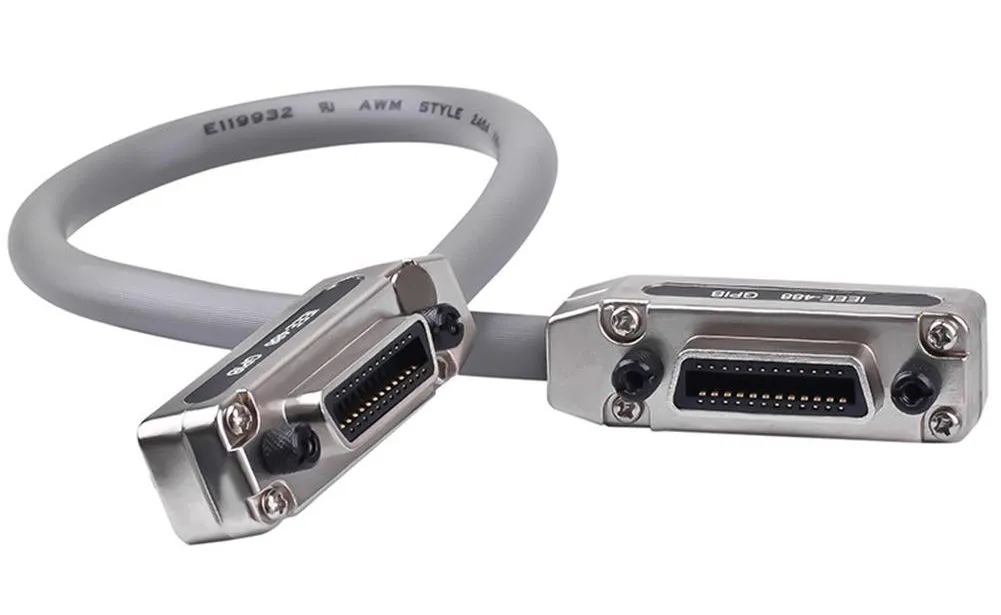
The GPIB standard originated in the 1970s, first appearing on Hewlett-Packard laboratory instruments before being adopted by early microcomputers such as the Commodore PET and Commodore 64. It is an 8-bit, multi-master interface bus designed for short-range communication. While not a high-speed bus by modern standards, offering a maximum data rate of about 8 megabytes per second, its straightforward design and lack of stringent galvanic isolation requirements made it a cost-effective and reliable choice for connecting instruments. The bus’s simplicity and historical prevalence have ensured that a massive installed base of equipment, from vintage devices to modern instruments, continues to rely on this interface.
The technical foundation of GPIB is defined by the IEEE 488 standard, which is split into two primary components. IEEE 488.1 specifies the physical layer, detailing the connectors, cables, and electrical characteristics. IEEE 488.2 defines the essential electrical protocol for communication. Over time, a higher-level language for controlling instruments evolved, known as the Standard Commands for Programmable Instruments, or SCPI. This protocol provides a standardized, human-readable command set that allows a single computer to communicate with devices from many different manufacturers, greatly simplifying automation in laboratories and production environments.
While the physical implementation has seen alternatives emerge, most notably Ethernet-based adapters that overcome the limitations of short, bulky GPIB cables, the core electrical protocol and the SCPI command language remain vitally important today. The new kernel support fundamentally simplifies connecting both legacy and contemporary IEEE 488-equipped devices to modern Linux systems. Previously, users often relied on out-of-tree drivers or proprietary software, which could be unstable or difficult to maintain across kernel updates. This mainline integration promises greater reliability and long-term sustainability, ensuring that valuable scientific and industrial hardware can continue to be utilized effectively with contemporary computing infrastructure.
(Source: Hack A Day)