▼ Summary
– The origin of life on Earth is a fundamental question, with recent claims of 3.95-billion-year-old biological carbon sparking both interest and skepticism.
– Professor Martin Whitehouse presented new evidence suggesting the carbon in Labrador, Canada, is only 2.7–2.8 billion years old, younger than other known traces of life.
– The carbon is found in metamorphic rock formed from ancient seafloor silt, potentially containing microbial remains transformed into graphite over time.
– The graphite’s biological origin is supported by its carbon isotope ratio, showing a preference for lighter carbon-12, typical of organic material.
– Determining the true age of the Labrador rock is complex due to geological transformations and mixed-up layers over billions of years.
The origins of life on Earth remain one of science’s greatest mysteries, captivating researchers and sparking debate for generations. Recent discoveries have pushed the boundaries of our understanding, though not without controversy.
In 2017, a study suggested that biological carbon found in Canadian rocks dated back an astonishing 3.95 billion years, potentially marking the earliest evidence of life. However, skepticism quickly followed, with experts questioning the accuracy of these claims. Among them was Professor Martin Whitehouse from the Swedish Museum of Natural History, who recently presented findings challenging the initial dating.
His research, shared at the Goldschmidt Conference in Prague, indicates the carbon deposits are actually much younger, between 2.7 and 2.8 billion years old. This revised timeline places them behind other known traces of ancient life discovered elsewhere.
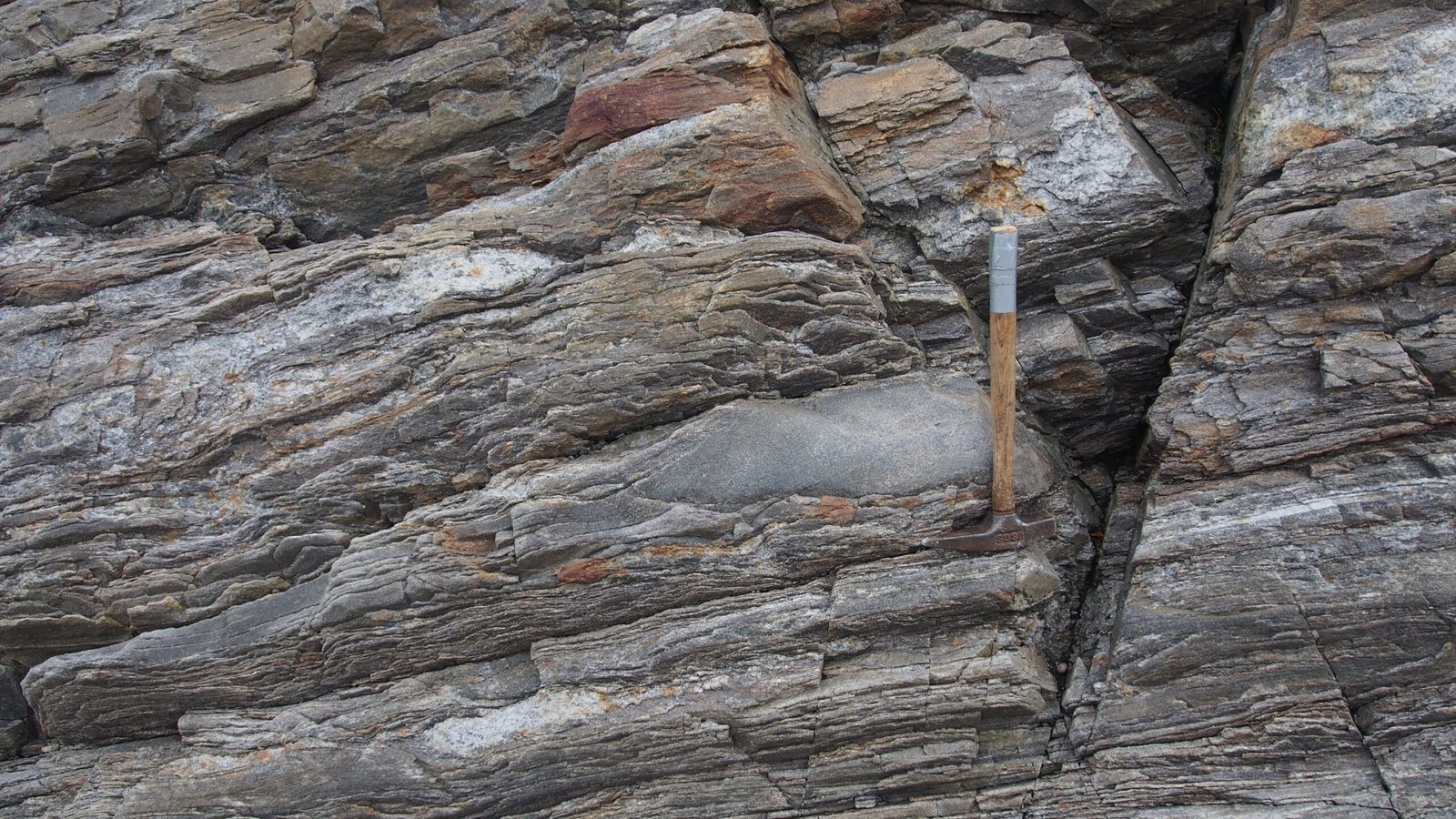
The carbon in question comes from metamorphic rock in Labrador, Canada. Originally formed from seafloor silt, these rocks are believed to have trapped microbial life before being buried under layers of sediment. Over billions of years, heat and pressure transformed the organic material into graphite, leaving behind microscopic traces that scientists now analyze.
What makes this graphite particularly intriguing is its isotopic composition. Living organisms preferentially use carbon-12, a lighter isotope, over carbon-13. The Labrador graphite shows this distinct biological signature, strongly suggesting it originated from early microbial activity.
Yet determining its exact age remains a challenge. The rock’s complex geological history, shaped by tectonic shifts and metamorphic processes, has scrambled the evidence, making precise dating difficult. Researchers must carefully untangle these layers to piece together a clearer picture of when life first emerged on our planet.
While the debate continues, each discovery brings us closer to answering one of humanity’s oldest questions. The search for Earth’s earliest life is far from over, with every new finding reshaping our understanding of life’s resilience and adaptability.
(Source: Ars Technica)