▼ Summary
– In *Jurassic Park III*, Spinosaurus was depicted as larger and stronger than T. rex based on early 2000s fossil evidence, but new research challenges this idea.
– Paleobiologist Andre Rowe’s study suggests T. rex would likely defeat Spinosaurus in a confrontation due to superior biomechanics.
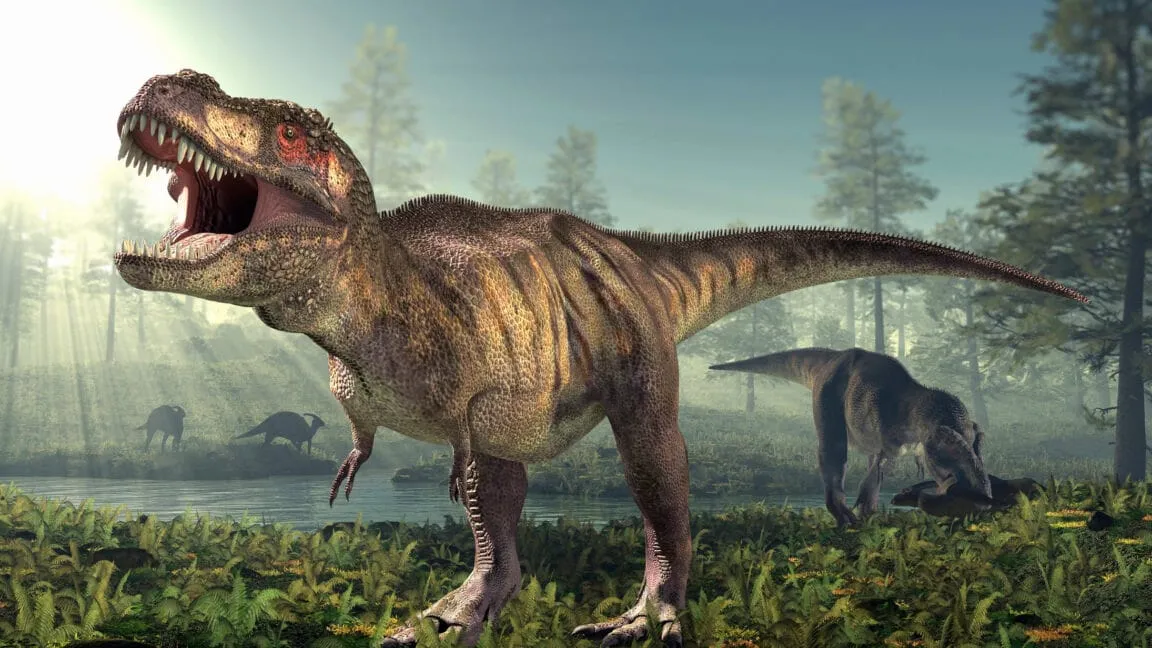
– T. rex had one of the highest bite forces in the animal kingdom, supported by extensive fossil records and skull analyses.
– Other giant carnivorous dinosaurs like Spinosaurus and Allosaurus were assumed to be similar to T. rex due to limited fossil evidence.
– Rowe’s research tested the assumption that unrelated giant carnivores had comparable predatory traits despite differing habitats and evolutionary backgrounds.
New research reveals that some of the largest meat-eating dinosaurs may have had surprisingly weak bites compared to their fearsome reputations. While Tyrannosaurus rex remains the undisputed heavyweight champion of bite force, other giant predators like Spinosaurus and Allosaurus may not have packed the same jaw power as previously assumed.
Paleobiologist Andre Rowe from the University of Bristol led a study examining the skull mechanics of these prehistoric hunters. “T. rex still stands out as the apex predator we’ve always imagined,” Rowe explains. But when it comes to other massive carnivores, the reality appears more nuanced than Hollywood depictions suggest.
The research team focused on comparing fossilized skull structures to estimate bite strength. T. rex benefits from an extensive fossil record, with multiple well-preserved specimens allowing detailed biomechanical analysis. This wealth of data confirms its extraordinary bite force, among the strongest ever recorded in nature. However, other giant predators like Spinosaurus, which once held the title of largest carnivorous dinosaur, leave scientists with far fewer complete remains to study.
“There was a tendency to assume all these massive predators functioned similarly,” Rowe notes. Despite evolving separately in different regions and time periods, paleontologists often grouped them together as equally formidable hunters. His team’s findings challenge that assumption, suggesting bite strength varied significantly among species.
The study highlights how incomplete fossil evidence can shape, and sometimes distort, our understanding of prehistoric life. While Spinosaurus may have been longer than T. rex, its slender jaws and specialized fish-eating adaptations likely made it less capable of delivering bone-shattering bites. Similarly, Allosaurus, though an efficient hunter in its own right, lacked the crushing power of its later Cretaceous cousin.
These discoveries reshape how we envision dinosaur ecosystems, showing that size alone didn’t guarantee dominance. Instead, each predator evolved unique hunting strategies suited to their environment, whether that meant brute force, speed, or specialized feeding habits. Future fossil discoveries may further refine our knowledge, but for now, T. rex retains its crown as history’s most formidable biter.
(Source: Ars Technica)
