▼ Summary
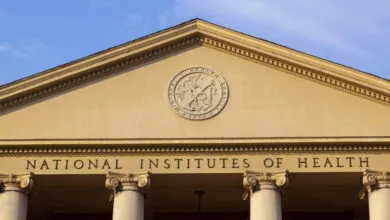
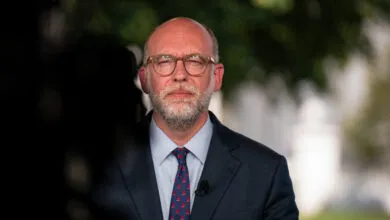
– The NIH is launching a “Scientific Freedom Lectures” series, with the first lecture scheduled for March 20, reflecting a key interest of its director, Jay Bhattacharya.
– Director Bhattacharya, a signatory of the controversial Great Barrington Declaration, feels his pandemic ideas were censored and is now advocating for major reform in the scientific community.
– The inaugural lecture will be given by former journalist Matthew Ridley, who is known for his fringe views on COVID-19 origins and climate change, not by a distinguished scientist.
– The lecture topic will be the unsubstantiated lab-leak theory for SARS-CoV-2, an idea for which the text states there is no scientific evidence.
– Bhattacharya’s choice of speaker contrasts with the expectation that a series on scientific freedom would begin with a respected scientist whose work was genuinely suppressed.
News of a new “Scientific Freedom Lectures” series from the National Institutes of Health has generated discussion, particularly around the choice of inaugural speaker. The series, announced for launch on March 20, is championed by NIH Director Jay Bhattacharya, who has been a vocal critic of what he views as censorship of scientific debate during the COVID-19 pandemic. Given the theme, many expected the first lecture to be delivered by a prominent researcher whose work faced suppression. The announced speaker, however, is not a scientist but a former journalist known for controversial positions.
The lecture will be given by Matthew Ridley, a British hereditary peer and author. His topic will focus on the possibility of a laboratory origin for the SARS-CoV-2 virus, a hypothesis for which the scientific consensus finds no supporting evidence. Ridley is best known for his writings on biology and for his views on climate change, which sit outside mainstream scientific understanding. While he acknowledges the reality of human-caused warming, he has consistently argued its impacts will be minimal and potentially beneficial, a stance at odds with the overwhelming body of climate research.
This selection aligns closely with Director Bhattacharya’s personal advocacy. He rose to public prominence as a co-author of the Great Barrington Declaration, which advocated for focused protection of vulnerable populations while allowing COVID-19 to spread widely among younger, healthier people. Most public health experts strongly opposed this approach, warning it would lead to catastrophic hospital overload, significant avoidable deaths, and a surge in long COVID cases. Although Bhattacharya faced no professional discipline, he has maintained that his scientific freedom was infringed upon, even pursuing a lawsuit alleging government censorship that was later dismissed by the Supreme Court.
His experience has fueled a drive to reform what he sees as a broken scientific culture. The lecture series appears to be a direct extension of this mission. Critics argue, however, that launching such an initiative with a non-scientist promoting a heavily debated theory sends a conflicting message. If the goal is to champion rigorous, evidence-based discourse that has faced unfair suppression, starting with a figure known for contentious views on climate science and pandemic origins seems an unusual foundation. It raises questions about the series’ intended direction and whether it aims to broaden debate or amplify specific, minority viewpoints that align with the director’s personal narrative.
(Source: Ars Technica)