▼ Summary
– Chimpanzee urine contains high levels of an alcohol byproduct, likely from regularly eating fermented fruit.
– This finding supports the controversial “drunken monkey hypothesis,” which links human alcohol attraction to ancient ape evolution.
– Recent observations show wild chimpanzees sharing fermented fruit with measurable alcohol content in the wild.
– Studies estimate chimpanzees consume the daily equivalent of nearly two human alcoholic drinks, adjusted for body mass.
– Researchers collected urine samples from chimpanzees in the field to further measure their alcohol metabolite levels.
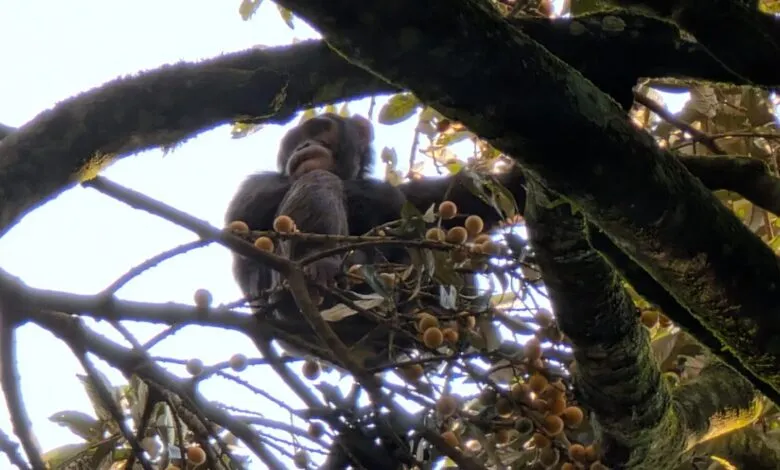
The idea that our taste for alcohol has deep evolutionary roots finds new support in a surprising place: chimpanzee urine. A recent study analyzing samples from wild chimps in Uganda’s Ngogo forest has detected significant levels of an alcohol byproduct, strongly suggesting these primates are regularly consuming fermented fruit. This research provides fresh evidence for the “drunken monkey hypothesis,” a theory proposing that the human attraction to ethanol stretches back millions of years to our shared ancestors with great apes.
The hypothesis, first formally proposed by biologist Robert Dudley in his book The Drunken Monkey, suggests that an ability to detect the scent of alcohol on ripe, fermenting fruit offered an evolutionary advantage. It would have helped early primates locate valuable, high-calorie food sources from a distance. For years, many scientists remained skeptical, arguing there was little proof that wild chimpanzees actively sought out or consumed fermented foods in meaningful quantities.
That skepticism has been challenged by a growing body of observational data. Earlier this year, researchers documented wild chimpanzees sharing fermented African breadfruit, a behavior captured on camera for the first time. Using portable breathalyzers, they found that nearly all the fallen fruit contained ethanol, with the ripest specimens having an alcohol content comparable to a very weak beer. In another study from last September, scientists measured the ethanol in fruits commonly eaten by chimps in West and East Africa, estimating their daily intake could be equivalent to a human consuming a standard alcoholic drink.
To move from estimating fruit alcohol content to confirming actual consumption, researchers needed to look inside the chimps themselves. The logical next step was to test for metabolites, the chemical traces left after the body processes ethanol. This unglamorous but crucial task fell to graduate student Aleksey Maro. He spent a summer in the Ngogo forest, often sleeping in trees with an umbrella for protection, dedicated to collecting urine samples from the chimpanzee community.
With guidance from Ugandan graduate student Sharifah Namaganda, Maro employed ingenious methods to gather his data. He crafted shallow collection bowls by hanging plastic bags on forked twigs placed beneath the trees where chimps rested. He also carefully sampled from fresh puddles of urine on the forest floor. These painstaking efforts provided the raw material needed to test the core prediction of the drunken monkey hypothesis directly in a wild ape population. The discovery of alcohol metabolites in the samples offers some of the most direct physiological evidence yet that our primate relatives do indeed have a regular, natural dietary exposure to ethanol, lending credence to the idea that our own species’ complex relationship with alcohol began not in a brewery, but in an ancient forest.
(Source: Ars Technica)