▼ Summary
– Archaeologists have discovered Africa’s oldest known cremation pyre, dating to about 9,500 years ago, at the base of Mount Hora in Malawi.
– This discovery challenges previous assumptions, as cremation was extremely rare and labor-intensive for ancient hunter-gatherer societies.
– The pyre contained the remains of an adult woman, with cut marks on bones suggesting they were skinned before cremation and the head was removed.
– It is a unique find at the Hora-1 site, which was primarily a burial ground for uncremated bodies between 8,000 and 16,000 years ago.
– The find prompts a rethinking of group labor and ritual practices in such ancient communities.
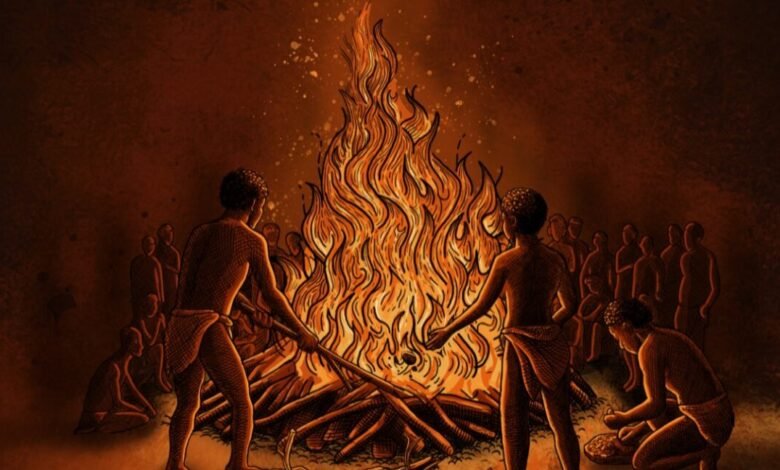
A remarkable archaeological find in Malawi is reshaping our understanding of ancient funerary practices and social organization in early human societies. At the base of Mount Hora, researchers have uncovered Africa’s oldest known cremation pyre, dating back approximately 9,500 years. This discovery, detailed in a recent scientific paper, challenges long-held assumptions about the capabilities and rituals of hunter-gatherer communities during this remote period.
While cremation is a familiar practice across many cultures, it was exceptionally rare among ancient hunter-gatherer groups. Constructing a pyre capable of fully consuming a body is a laborious task, demanding significant communal effort and resources. Prior to this find, evidence of cremation before roughly 7,000 years ago was scant. The earliest confirmed pyre was located in Alaska and is about 11,500 years old. This makes the intact pyre in Malawi, designated the Hora-1 site, an extraordinary and informative discovery.
The site itself, a sheltered area beneath a granite hill, was initially excavated decades ago and was known as a burial ground used between 8,000 and 16,000 years ago. It contained several inhumed, or buried, bodies. The newly analyzed cremation feature stands apart: a distinct ash bed holding 170 bone fragments, primarily from limbs. This is the only example of cremation found at the location, indicating it was a special, perhaps ritualized, event.
Analysis of the fragile remains tells a detailed story. The individual was an adult woman, aged roughly 18 to 60, who was cremated shortly after death. Intriguingly, several bones show cut marks made by stone tools, suggesting the body was defleshed or skinned before being placed on the pyre. The notable absence of a skull or teeth implies the head was removed prior to cremation. The positioning of the limb bones indicates the body was likely arranged in a flexed posture.
This single burial provides profound insights. It demonstrates that these mobile foragers possessed the complex social coordination necessary for such a demanding funerary rite. The careful, multi-step treatment of the body, involving cutting, possible head removal, and deliberate cremation, points to deeply held beliefs about death and the afterlife. The find pushes back the timeline for sophisticated mortuary behavior in Africa and compels a reevaluation of the symbolic and ceremonial lives of some of the continent’s earliest inhabitants.
(Source: Ars Technica)