▼ Summary
– The smart ring market is currently niche and emerging, with limited trustworthy options, as many products are experimental and from new brands.
– Smart rings are primarily discreet health and sleep trackers, best suited for casual athletes or wellness-focused individuals, but lack features like smart alarms and are not ideal for weightlifters.
– The Oura Ring 4 is recommended as the best overall choice due to its hardware, features, app, and reliability, despite requiring a monthly subscription fee.
– Notable alternatives without subscriptions include the Samsung Galaxy Ring, Ultrahuman Ring Air, and RingConn Gen 2 Air, each with specific strengths and trade-offs in hardware, ecosystem integration, or affordability.
– New smart rings like the AI-powered Stream Ring and the voice-focused Pebble Index 01 are announced for future release, indicating ongoing innovation in the category.
Choosing the best smart ring for sleep and health tracking is simpler than you might think, though the market remains a specialized one with a limited number of proven options. These discreet devices are experiencing a renewed wave of interest, bringing both innovative concepts and new brands into the fold. After extensive testing, it’s clear that while many products show promise, they often lack the refined polish found in more established gadget categories like smartwatches.
It’s important to understand what smart rings currently offer. Their primary function is health and wellness tracking, with a particular strength in discreet, continuous sleep monitoring because they are less intrusive than a watch. Most models, however, do not support smart alarms or push notifications, making them ideal for casual athletes or wellness enthusiasts rather than hardcore performance seekers. For serious athletes, a dedicated fitness watch is usually more suitable, though a ring can serve as a supplementary data source. Be aware that these rings are not recommended for weightlifting, as they are prone to scratches from gym equipment.
Our evaluation process involves rigorous real-world testing. We wear each ring daily for weeks, assessing comfort during finger swelling and temperature shifts. We test waterproofing by keeping them on in showers and while washing dishes. To gauge accuracy, we compare their sleep and health data against established devices like the Oura Ring, a smartwatch, and a smart bed. We also scrutinize sizing options, app design, syncing reliability, and critically, battery life.
For the majority of users, the top recommendation remains the Oura Ring 4. The mandatory subscription is a valid concern, but Oura continues to lead in hardware quality, feature set, app experience, and scientific research. Many competitors essentially follow the path Oura carved out over the last ten years.
The jump from the third generation to the fourth involved mostly software enhancements, including refined heart rate and blood oxygen algorithms and better automatic activity detection. The size range is impressively broad. The app has been streamlined, and the company has introduced AI-powered features like meal logging and a health chatbot. A newer feature, Health Panels, allows users to schedule a blood test and view related biomarkers in the app.
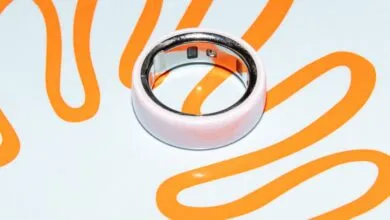
Alongside the metal versions, Oura now offers colorful ceramic models. These are more durable and scratch-resistant but are also thicker and heavier, which may affect long-term comfort. Through years of testing multiple generations, Oura has consistently improved in accuracy and design. Its commitment to research and growing retail presence solidify its position as the most reliable and well-rounded choice, even as newer competitors emerge with creative ideas.
For those who refuse to pay a subscription, several noteworthy alternatives exist.
The Samsung Galaxy Ring excels in hardware design. Its charging case is sleek, and the slightly concave shape is very comfortable. It boasts a wide size range and offers extended battery life when paired with a compatible Samsung watch. For owners of the latest Samsung foldable phones, it even enables camera gesture controls. The significant caveat is that unlocking its full potential requires a deep investment in the Samsung ecosystem. As a first-generation device, its sleep tracking accuracy and AI health features are still maturing.
The Ultrahuman Ring Air proved to be a strong contender in side-by-side testing. While its accuracy trails Oura slightly, it matches it in comfort and design. Its app has a more fitness-oriented approach. Instead of a subscription, it uses a system called “PowerPlugs”, some free, some paid, to add features like smart alarms or advanced heart metrics.
Finally, the RingConn Gen 2 Air stands out as an affordable entry point. It looks and feels more premium than its predecessor, with a more comfortable, less noticeable shape. It delivers generally accurate data and impressive battery life, lasting over a week on a charge. Its app leans heavily on AI, with mixed results in practical usefulness.
Looking ahead, the landscape continues to evolve. Sandbar has announced the AI-powered Stream Ring, focused on voice notes and a personalized chatbot, with a tentative 2026 release. Separately, Pebble is entering the market with the Index 01, a unique device focused on capturing voice memos and setting reminders rather than health tracking. It boasts a multi-year battery life but cannot be recharged, making it a disposable product once the battery depletes.
(Source: The Verge)