Hyrule Warriors: Age of Imprisonment Performance & Graphics Breakdown
▼ Summary
– Most cutscenes are pre-rendered videos at 30 FPS with visible compression artifacts and uneven frame pacing.
– Gameplay uses dynamic resolution scaling, ranging from 720p to 900p docked and 468p to 648p in portable mode.
– The game targets 60 FPS during gameplay but experiences occasional drops into the 50s and reduces to 30 FPS in multiplayer splitscreen.
– Visual shortcomings include a lack of anti-aliasing, low texture resolution, terrain quality issues, and no screen space reflections for water.
– Despite its technical flaws, the game represents a technical improvement over previous entries in the Hyrule Warriors series.
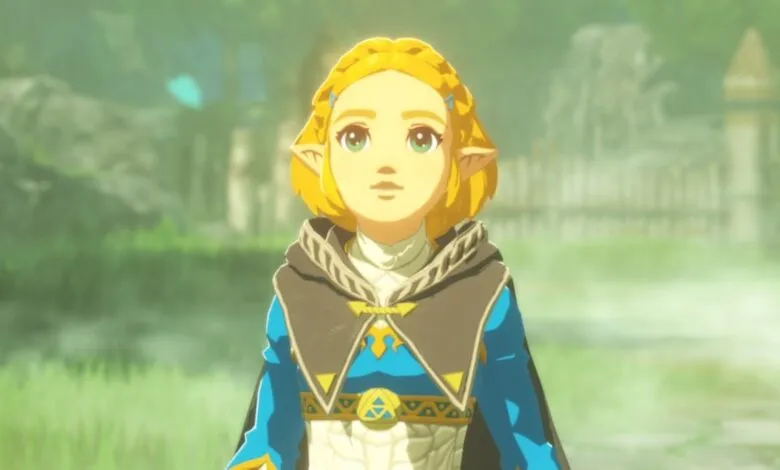
A new technical deep dive reveals how Hyrule Warriors: Age of Imprisonment performs on the Nintendo Switch 2, showcasing notable improvements over earlier entries in the series while highlighting some persistent technical limitations. This analysis covers frame rates, resolution scaling, and visual fidelity, providing a clear picture of what players can expect from the latest installment.
According to the findings, the game represents a step forward technically compared to both the original Hyrule Warriors and Age of Calamity. However, the experience is not without its compromises. The majority of cutscenes are pre-rendered videos rather than real-time in-engine sequences. These cinematic moments often display visible compression artifacts, run at a locked 30 frames per second, and can suffer from uneven frame pacing as well as banding or blocking issues.
During gameplay, dynamic resolution scaling is employed to maintain performance. When the console is docked, the resolution fluctuates between 720p and 900p based on the current GPU load. In portable mode, the resolution scales even lower, ranging from approximately 468p to 648p. Interestingly, the visual settings and asset quality remain identical between docked and portable play, though the game does not feature any anti-aliasing, which can result in jagged edges on character and object models.
Players who take a moment to survey their surroundings may notice occasional instances of lower-resolution textures, simpler terrain geometry, and some pop-in as assets load. Additionally, water surfaces do not utilize screen space reflections, which is a common modern rendering technique.
Despite these visual cutbacks, the title aims for a smooth 60 FPS target during standard single-player action. Performance generally holds close to this goal, though frame rate dips into the 50s can occur during intense on-screen battles. A more significant performance change happens in local multiplayer splitscreen mode, where the frame rate cap is reduced to 30 FPS and often exhibits uneven frame pacing. It is worth noting that the GameShare feature does not impose this same limitation, allowing the original 60 FPS target to be maintained.
The full technical analysis offers a comprehensive look into the game’s performance metrics. Hyrule Warriors: Age of Imprisonment is available now for the Nintendo Switch 2, and a day one patch has been released to address initial issues.
(Source: Nintendo Everything)