Samsung Galaxy XR vs. Apple Vision Pro: Specs, Price, and More
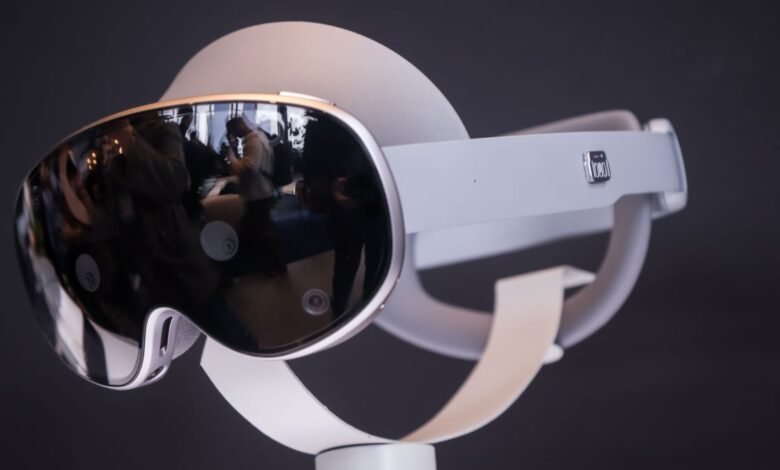
▼ Summary
– Samsung has released its Galaxy XR virtual reality headset, previously known as “Project Moohan,” entering a competitive market.
– The Galaxy XR is priced at $1,799.99, positioning it between the affordable Meta Quest 3 and the premium $3,499 Apple Vision Pro.
– Samsung’s headset features superior display clarity with 4,032 PPI and is lighter, while Apple’s offers a higher refresh rate and more powerful M-series chips.
– Both headsets use built-in eye and hand tracking for controls, but the Galaxy XR uniquely includes an optional dual controller for gaming.
– Battery life is similar, with both requiring external packs and offering around 2 hours of general use, though the latest Vision Pro with M5 chip extends this slightly.
The competition in the virtual reality headset market is heating up with the arrival of the Samsung Galaxy XR, which enters a field already occupied by heavyweights like the Meta Quest 3 and Apple’s Vision Pro. While the Quest 3 has gained popularity due to its affordability, and the Vision Pro has established a foothold in mixed reality, Samsung’s new offering aims to carve out its own space. This comparison dives into how the Galaxy XR measures up against the Apple Vision Pro in terms of pricing, specifications, controls, and battery performance.
When it comes to cost, the Samsung Galaxy XR is positioned as a premium device with a price tag of $1,799.99. While that is significantly higher than the Meta Quest 3’s $499 starting price, it appears much more budget-friendly next to the Apple Vision Pro, which starts at a steep $3,499. This places the Galaxy XR squarely in the middle of the market, offering a high-end experience without reaching the extreme cost of Apple’s flagship headset.
In the specifications department, both headsets showcase impressive technology, but each has distinct advantages. The Samsung Galaxy XR features dual 4K micro-OLED displays with a resolution of 3552×3840 per eye, delivering 29 million pixels and a refresh rate of up to 90Hz. It is powered by the Snapdragon XR2+ Gen 2 chipset, includes eye tracking and iris recognition, and offers 256GB of storage alongside 16GB of RAM. Weighing 545 grams, it is also lighter than its Apple counterpart.
The Apple Vision Pro, now available with the M5 chip, boasts dual Micro-OLED displays with 23 million pixels and a smoother 120Hz refresh rate. It combines the M5 chip, featuring a 10-core CPU, 10-core GPU, and 16-core Neural Engine, with the R1 chip to minimize latency. Like the Galaxy XR, it provides 256GB storage and 16GB RAM, but it tips the scales at 600 grams. While the Vision Pro offers a higher refresh rate, the Galaxy XR provides a sharper image with its greater pixel density.
Another key differentiator lies in the operating systems. The Samsung Galaxy XR is the first headset to run on Google’s Android XR, which may appeal to existing Android users. This platform will also be available on other manufacturers’ devices in the future. In contrast, the Apple Vision Pro operates on visionOS, an exclusive system found only on Apple hardware. This creates a familiar, integrated experience for those already invested in the Apple ecosystem.
Under the hood, the processing power reveals a significant gap. The Galaxy XR’s Snapdragon XR2+ Gen 2 is a robust mobile chipset, but the Vision Pro’s M-series chips, whether the M2 or the more advanced M5, are derived from Apple’s Mac computers. This gives the Vision Pro a substantial edge in raw processing capability, making it better suited for demanding applications and complex tasks.
Control methods on both devices emphasize intuitive, hands-free operation. Each headset incorporates built-in tracking for eyes and hands, eliminating the need for external controllers. However, the Samsung Galaxy XR offers an optional dual controller, which is absent on the Vision Pro. This could be a deciding factor for gamers who prefer the tactile feedback and precision of traditional controllers.
Battery life is another area where these two headsets are closely matched. Both feature external battery packs to reduce weight on the headset, enhancing comfort during extended use. The Galaxy XR provides up to 2 hours of general use, extendable to 2.5 hours for video playback. The Apple Vision Pro with the M2 chip offers similar performance, with 2 hours for general use and 2.5 hours for video. However, the latest Vision Pro model with the M5 chip improves on this, delivering up to 2.5 hours of general use and 3 hours of video playback, giving it a slight advantage in endurance.
(Source: Mashable)

