▼ Summary
– The author previously relied on iPhone weather apps and government websites to check outdoor air quality but decided to test an outdoor monitor due to increasing wildfires.
– The Zen outdoor air-quality monitor uses the EPA AQI color scale, is durable in various weather conditions, and provides instant visibility of air quality without needing a phone.
– The Zen can be linked to PurpleAir’s Real-Time Air Quality Map, allowing users to contribute data as citizen scientists and view local air quality readings.
– Linking the Zen to PurpleAir requires a unique ID code and is slightly clunky but takes only minutes, with options to keep the monitor public or private.
– The PurpleAir map reveals dense coverage of monitors in areas like NYC, providing accurate hyperlocal air quality data, which is valuable during extreme weather events.
Monitoring air quality has become increasingly important as environmental concerns grow, especially with rising wildfire activity across regions. Over the past few years, I’ve tested numerous indoor air quality monitors but relied on basic tools like smartphone weather apps for outdoor readings. That changed when I decided to explore dedicated outdoor air quality monitors for more precise, real-time data.
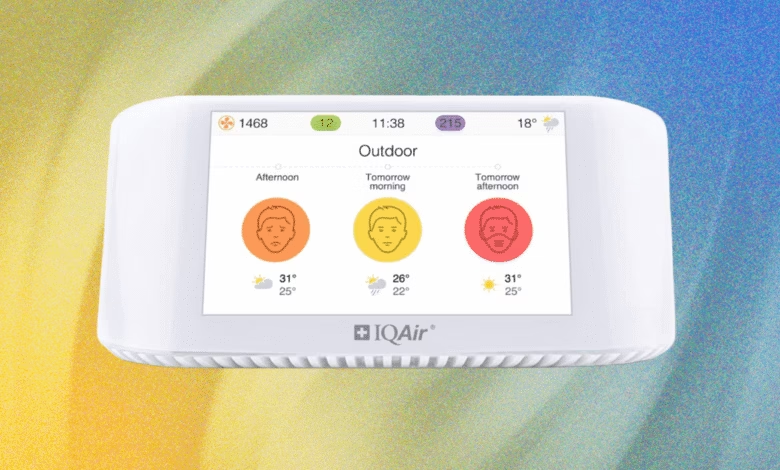
One standout device is the Zen air quality monitor, which uses the EPA’s AQI color scale, green for good, yellow for moderate, orange for unhealthy conditions for sensitive groups, red for unhealthy, and purple or maroon for hazardous levels. The glow intensity adjusts with a simple tap, making it easy to interpret at a glance. Since last summer, I’ve used it both indoors and outdoors, mounting it on a pole or placing it on its stand. It has endured everything from sweltering humidity to freezing temperatures below zero, proving its durability.
What sets the Zen apart is its instant visual feedback. Recently, spotting its yellow glow from my window immediately signaled moderate air quality, no need to check my phone or a website. This quick assessment prevented me from opening windows, even though the air looked clear. Air pollution isn’t always visible, and the Zen’s real-time alerts are invaluable for making informed decisions.
Beyond personal use, the Zen contributes to a broader network. By linking it to PurpleAir’s Real-Time Air Quality Map, users can share localized data publicly or keep it private. While the setup requires pairing the device with a unique ID on PurpleAir’s website, the process takes just minutes. Once connected, the monitor joins a crowdsourced network of air quality sensors, offering hyperlocal insights. In New York City alone, I discovered dozens of nearby monitors, with readings consistently within a narrow range, confirming accuracy.
For those in areas prone to wildfires or high pollution, the PurpleAir map provides an essential resource. Seeing real-time data from neighboring monitors helps gauge broader trends, especially during extreme weather events. The Zen’s combination of durability, ease of use, and community-driven data makes it a top choice for anyone serious about tracking air quality.
(Source: Wired)