Beware: The Hidden Risks of Gray Market Samsung TriFolds
▼ Summary
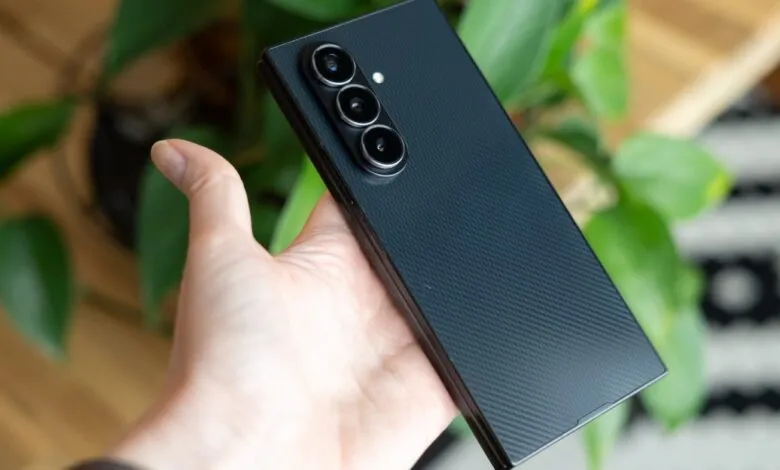
– The author, a tech reviewer, had to purchase a Samsung Galaxy Z TriFold for $4,399 from an eBay seller due to its extreme scarcity and Samsung not providing a review unit.
– The phone arrived with suspicious tamper-evident seals, pre-installed protective film containing debris, and was already set up with an app requesting sketchy permissions.
– After a factory reset, the phone demands a USIM card to complete setup, which the author refuses to provide, leaving the device unusable and potentially compromised.
– The author concludes Samsung intentionally creates artificial scarcity for the TriFold to make it an aspirational product that enhances the perceived value of its cheaper foldable phones.
– The entire experience suggests the eBay purchase was likely a bait-and-switch scam, resulting in a very expensive, possibly malware-ridden “paperweight.”
Acquiring Samsung’s latest and most ambitious folding phone, the Galaxy Z TriFold, has proven to be an exercise in extreme frustration for many consumers and reviewers alike. Officially priced at $2,899, the device has been nearly impossible to purchase through legitimate channels since its late January launch, leading some to seek it out on the gray market. This pursuit, however, comes with significant and often hidden risks, as a firsthand experience reveals the potential pitfalls of buying from unofficial sources.
The official scarcity is puzzling. Despite brief restocks that sell out in minutes, it’s difficult to believe Samsung is moving vast quantities of a nearly $3,000 device instantaneously. The more plausible explanation is intentional, artificial scarcity, a marketing tactic designed to generate hype and make the product seem more desirable than it is widely available. This manufactured shortage effectively pushes the TriFold into the realm of an aspirational item, a halo product that makes the company’s other premium foldables appear more reasonably priced by comparison.
When official avenues failed, the search led to eBay, where a seller named Moderntek offered the phone for a staggering $4,399, a massive premium over the retail price. The transaction was fraught with red flags from the start. Promised delivery dates slipped, shipping origins changed mysteriously from Hong Kong to Arizona, and communication was confusing. The device finally arrived in a minimally protected package, its retail box sealed with unfamiliar, layered stickers warning against tampering. The paper underneath was already bubbling, suggesting the seals were not original.
Upon opening the box, more alarming signs emerged. The protective film on the expansive inner display peeled off too easily, its adhesive littered with bits of hair and crumbs, a clear indicator this was not a factory-fresh unit. Powering on the device presented the most serious concern: it booted directly into a pre-configured setup. An unfamiliar app immediately prompted for an extensive list of intrusive permissions. A factory reset was performed, but the phone then hit a perplexing roadblock, demanding a physical USIM card to proceed with setup, a requirement not typical for modern Android devices that support eSIM.
This left a critical, unsettling question: is this a $4,400 device potentially loaded with malware? While the seller’s behavior points more toward a bait-and-switch scheme aimed at extracting a hefty restocking fee rather than sophisticated cybercrime, the risk cannot be dismissed. The device’s compromised state and unknown history make it utterly untrustworthy. Attempts to get clarity from Samsung on the specific unit’s provenance yielded no answers, leaving the buyer in a precarious position.
The entire ordeal underscores a crucial warning for consumers: the hidden costs and dangers of gray market electronics far outweigh the temptation of acquiring a scarce gadget. Beyond the exorbitant price premium, you risk receiving a used, tampered-with, or even compromised device with no manufacturer warranty or support. The experience transforms a cutting-edge piece of technology into nothing more than a very expensive paperweight, accompanied by the hassle of pursuing a refund through third-party platforms. For now, the TriFold serves less as a functional smartphone and more as a stark lesson in the perils of artificial scarcity and the unregulated secondary market.
(Source: The Verge)