Google Pixel 10a vs 9a: Is the Upgrade Worth It?

▼ Summary
– The Pixel 10a is priced identically to its predecessor, starting at $499, and is largely a refresh of the Pixel 9a with only a few upgrades.
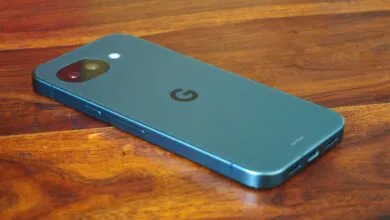
– Its design is very similar to the 9a, but it features a completely flat back, 10% smaller screen bezels, and tougher Gorilla Glass 7i.
– The phone has a brighter 3,000-nit display and includes a new modem enabling satellite-based emergency SOS connectivity.
– It uses the same Tensor G4 processor and camera hardware as the 9a but adds new AI camera software features like Camera Coach.
– The battery capacity is unchanged, but the Pixel 10a supports faster wired and wireless charging speeds.
The Google Pixel 10a enters the market at the same $499 starting price as its predecessor, positioning itself as the most affordable entry in the Pixel 10 lineup. For many shoppers, the key question is whether this new model offers enough meaningful improvements over the still-excellent Pixel 9a to justify an upgrade. A side-by-side look reveals a story of subtle refinements rather than a dramatic overhaul, with a few notable exceptions that could sway your decision.
Visually, the two phones are nearly indistinguishable. Both share a design language of flat fronts, flat sides, and softly rounded corners, with dimensions and weight that are practically identical. The most noticeable physical change is on the back: the Pixel 10a features a completely flat rear panel, while the 9a has a slight, raised module around its camera housing. Google achieved this sleeker profile by rearranging internal components. The 10a also trims the screen bezels by about 10% and upgrades the screen protection from Gorilla Glass 3 to the more durable Corning Gorilla Glass 7i. Both models maintain an IP68 rating for dust and water resistance.
When it comes to the display, the panels are fundamentally similar. Each offers a 6.3-inch OLED screen with a 1080p resolution and a 60-120Hz adaptive refresh rate. The primary upgrade here is in peak brightness; the Pixel 10a can reach 3,000 nits, an 11% increase over the 9a’s 2,700-nit maximum. This enhancement provides a tangible benefit for outdoor visibility.
Under the hood, the story is one of consistency. Both phones are powered by the same Tensor G4 processor, paired with 8GB of RAM and a choice of 128GB or 256GB of storage. This means raw performance and general day-to-day speed should feel very familiar to anyone coming from the older model. The real generational leap is found in connectivity. The Pixel 10a incorporates a new modem that enables a crucial feature: satellite-based emergency SOS messaging. This allows users to send distress signals when completely outside of cellular range, a potentially life-saving tool for adventurers. Bluetooth also sees an upgrade from version 5.3 to 6.0.
Battery capacity remains unchanged at 5,100mAh, with Google claiming up to 30 hours of use. The improvement here is in charging speed. The Pixel 10a supports faster 30W wired charging and 10W wireless charging, up from 23W and 7.5W respectively on the 9a. It’s worth noting that the 10a does not support Google’s magnet-assisted PixelSnap wireless charging found on more expensive models.
The camera hardware is a direct carryover. You get the same 48MP main sensor with OIS, a 13MP ultra-wide lens, and a 13MP front-facing camera on both devices. Video capabilities are also identical. The differentiation comes from software. The Pixel 10a introduces new AI-powered features like Camera Coach, which offers real-time guidance for better shots, and Automatic Best Take for perfecting group photos. While these software tricks may eventually trickle down to the Pixel 9a, for now they remain exclusive to the newer model.
Determining if the upgrade is worthwhile depends largely on your priorities. If you value the latest safety technology, a brighter screen, slightly faster charging, and the newest camera software, the Pixel 10a makes a compelling case. However, if you already own a Pixel 9a and are satisfied with its performance, camera quality, and battery life, the incremental changes may not justify the cost of an upgrade. For new buyers, the 10a represents the most current package, but the 9a remains a highly capable and often more discounted alternative.
(Source: PC Gamer)