Valve Joins the Console Market

▼ Summary
– Valve is launching a new Steam Machine console that aims to compete with PlayStation and Xbox by offering a PC-like gaming experience for the living room.
– Unlike the failed 2015 Steam Machine, this version runs on Linux but uses Proton compatibility technology to play a vast library of Windows games seamlessly.
– The device is designed for ease of use, automatically handling updates, TV integration, and game resumption without requiring desktop navigation.
– Valve’s strategy builds on the success of Steam’s ecosystem and the Steam Deck, which proved the viability of portable PC gaming with console-like simplicity.
– The Steam Machine’s potential challenge is its price, which may be comparable to a PC rather than subsidized like traditional consoles, possibly limiting its mainstream appeal.
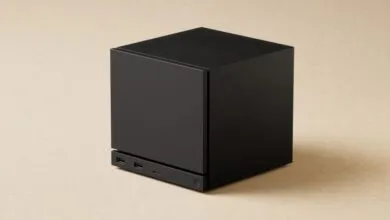
Nestled within the secure upper floors of a Bellevue office building, a compact glowing cube represents Valve’s ambitious return to the console arena. This new Steam Machine aims to merge the vast library of PC gaming with the plug-and-play simplicity traditionally associated with living room consoles, positioning itself as a formidable alternative to established platforms from Sony and Microsoft.
The scene feels strikingly familiar. Over a decade ago, Valve unveiled its original Steam Machine concept in a nearby location, a project that ultimately failed to gain traction. That earlier system struggled primarily because it relied on the Linux operating system, which at the time had a limited selection of compatible games. The hardware launched to little fanfare in 2015 and was quickly considered a market failure.
Valve’s latest attempt carries the same name but operates on a fundamentally different strategy. Rather than hoping developers will port their games to Linux, the company has spent years building a robust technological foundation. This system is designed to allow the enormous existing catalog of PC games to function seamlessly from the very first day. The core philosophy is remarkably straightforward: let people play games without the usual complications associated with personal computers.
From the user’s perspective, the experience is intended to be as intuitive as any mainstream console. Pressing the power button on the new wireless controller turns on both the unit and the television via HDMI-CEC, a feature rigorously tested across a wide array of home entertainment setups. Players can instantly resume games exactly where they left off or smoothly purchase new titles through an accessible storefront. The traditional desktop interface and command line are completely hidden unless specifically sought out, with all navigation handled through joysticks and gamepad buttons.
This user-friendly approach arrives at a time when the personal computer has arguably become the premier platform for gaming, though not necessarily because of its hardware. The shift is largely credited to Valve’s own Steam platform, which was initially met with skepticism. When Half-Life 2 required a Steam installation in 2004, many players viewed it as an intrusive form of digital rights management. However, Steam evolved into the most convenient method for discovering, purchasing, and organizing game collections, transforming Valve from a respected developer into the operator of a massive gaming ecosystem.
Today, Steam hosts well over 100,000 titles from nearly every major publisher, encompassing everything from blockbuster AAA releases to niche independent projects. Its library is frequently available at discounted prices, and its gravitational pull is so strong that even former platform exclusives from Microsoft and Sony, including franchises like Halo and God of War, are now available. A former Sony executive described bringing its games to PC as “almost like printing money.”
Despite this success, playing PC games in the living room has typically required navigating various technical settings and inconveniences. Valve’s solution was to develop SteamOS, a complete operating system that tricks Windows games into believing they are running on a Microsoft environment while avoiding many of its inherent complexities. The system allows a player to simply press the power button to pause a game and walk away, then resume later exactly where they stopped.
The current console market appears particularly vulnerable to disruption. Sony’s PS5 carries a higher launch price than its predecessor, and Microsoft has faced challenges with declining hardware sales, leading to project cancellations and significant layoffs. Both companies are exploring new strategies, with Microsoft considering a future that blends PC hardware with a flexible, cross-device gaming store, a vision Valve has been quietly perfecting for years.
Following the failure of the original Steam Machines, Valve continued refining its Linux-based SteamOS. The company shifted its focus from convincing developers to support Linux to creating technology that allows Windows games to run on its platform. This long-term investment produced a compatibility layer called Proton, built upon the existing Wine project, which translates various Microsoft graphical APIs.
The first tangible result of this effort was the 2022 release of the Steam Deck handheld. While its launch was rocky, continuous updates transformed it into a surprisingly accessible device that reliably plays a massive library of Windows games. Valve designer Lawrence Yang highlighted that “the unsung hero is all the work the team has done on Proton.” The Steam Deck offers a Nintendo Switch-like experience where users can download, play, and suspend games with minimal friction, proving that a PC can provide a console-level user experience.
Valve’s ambitions extend beyond handhelds and living room boxes. The newly announced Steam Frame virtual reality headset presents a challenge to Meta’s dominance in VR gaming. It features controllers with every button found on a traditional gamepad and includes its own copy of Steam, enabling some Windows games to run natively on its Arm processor while others are streamed. However, this device primarily targets existing PC enthusiasts rather than the broader television audience.
For the new Steam Machine to succeed where its predecessor failed, it must meet several established criteria. It needs to deliver visibly superior graphics, remain affordable for the average consumer, and provide a seamless gaming experience. Valve openly acknowledges the shortcomings of the original Steam Machines. Veteran software engineer Pierre-Loup Griffais admitted, “Those didn’t go too well.”
The company believes it can now deliver a product that combines the best elements of both PC and console worlds. Hardware engineer Yazan Aldehayyat explained, “We want this to be the easiest PC gaming experience we can give our customers.” The system is designed to automatically update the operating system, games, and cloud saves in the background, ensuring everything is ready to play. A scrolling RGB light bar on the unit allows users to monitor update progress even when the television is turned off.
Valve has also significantly improved its controller design. The new Steam Controller is far more conventional and comfortable than its unconventional predecessor, while still offering extensive customization. Players can achieve mouse-like precision in aiming or utilize community-created profiles to play games originally designed for keyboard and mouse.
Performance appears promising, with Valve claiming the new Steam Machine offers six times the power of a Steam Deck. Demonstrations showed Cyberpunk 2077 running at settings comparable to or exceeding a PS5 Pro on a 4K television.
The critical question remains pricing. Historically, console manufacturers like Sony and Microsoft have sold hardware at a loss, recouping expenses through game sales and subscriptions. Valve adopted a similar strategy with the Steam Deck, offering an entry-level model at $399, a price point CEO Gabe Newell described as “painful” but “critical.” When asked about the Steam Machine’s cost, Valve indicated it would be “comparable to a PC with similar specs.”
This suggests a potential price tag approaching $1,000 or more, as PCs with equivalent graphics capabilities typically fall in that range. While Valve has utilized slightly older AMD technology from 2022 and 2023 rather than the latest components, a premium price could limit its market impact. If the Steam Machine launches significantly above Sony’s $750 PS5 Pro, it may remain a niche product for dedicated enthusiasts rather than mounting a serious challenge to market leaders.
In 2015, the recommendation was clear: avoid purchasing a Steam Machine. The technology wasn’t ready. Walking away from Valve’s headquarters after experiencing the new system, it’s difficult to imagine the same outcome. The software foundation is now solid. Just when the console competition seemed settled, Valve appears ready to reignite the battle with a product that could genuinely reshape the gaming landscape.
(Source: The Verge)