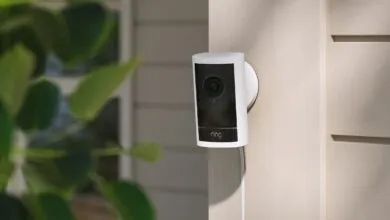
$10K Bounty to Hack Ring Cameras and Block Amazon Data Sharing

▼ Summary
– Ring’s Super Bowl ad for its “Search Party” feature, which uses camera networks to find lost pets, was widely criticized as a neighborhood surveillance tool.
– In response to the backlash, Ring canceled its partnership with AI surveillance company Flock and its CEO began a public apology tour.
– The Fulu Foundation, a nonprofit, is offering a bounty starting at $10,000 for anyone who can modify Ring cameras to stop sending data to Amazon.
– To win the bounty, the modification must allow local device control, block Amazon data transmission, and preserve core hardware functions using simple tools.
– The goal is to empower users to reclaim control of their data and security, making the modification an accessible “weekend project.”
The recent controversy surrounding a popular home security camera has sparked a significant backlash, leading to a substantial financial incentive for tech-savvy individuals to reclaim user privacy. A new bounty program offers over $10,000 to anyone who can successfully hack Ring video doorbells to block data sharing with Amazon. This initiative responds to growing public concern over surveillance features and data practices, highlighting a critical demand for user control in connected devices.
A Super Bowl advertisement for a feature called Search Party, which uses Ring’s camera network to locate lost pets, was met with immediate criticism. Many viewers and technology commentators interpreted the service as a potential neighborhood-wide surveillance tool. The negative reaction was so intense that it prompted Ring to end a partnership with an AI surveillance firm and spurred some owners to destroy their cameras publicly. This public relations crisis revealed a deep-seated anxiety about who ultimately controls the footage from these ubiquitous devices.
Seizing on this moment, the Fulu Foundation announced its targeted bounty. The nonprofit organization, founded by repair advocate Louis Rossmann, specializes in funding the removal of user-hostile elements from electronics. For the Ring camera challenge, the goal is to develop a modification that severs the device’s mandatory data pipeline to Amazon’s servers. The winning hack must allow the camera to function with a local computer or server instead, all while preserving core hardware functions like motion detection and night vision.
Kevin O’Reilly, a cofounder of Fulu, explains the core issue. People install security cameras seeking greater safety, but that sense of security is undermined if they cannot control their own data. The bounty aims to empower users who were unsettled by the company’s direction, providing a tangible path to regain autonomy over their hardware. The modification process itself is designed to be accessible; it must be achievable with common, affordable tools and completed by a moderately technical person in under an hour.
The financial reward is dynamic and has already increased from its starting point. The first person to successfully demonstrate a working modification that meets all criteria will claim the bounty, which is being supplemented by donor contributions. Furthermore, Fulu has pledged to match additional donations for the winner, potentially doubling the final payout. This project represents a direct challenge to the data-sharing models of connected devices, framing true digital security as a function of personal control rather than corporate oversight.
(Source: Wired)