Android’s Theft Protection Gets Major Security Upgrades
▼ Summary
– Google is introducing new theft protection updates for Android 16+ users, building on existing features to make devices harder targets.
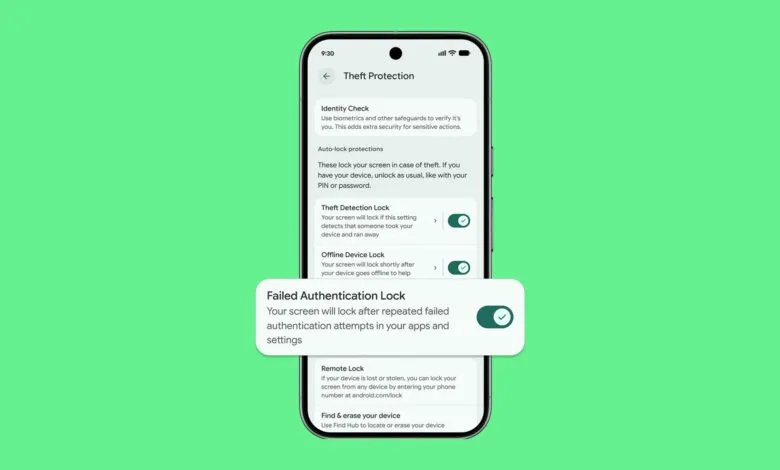
– A new dedicated toggle in settings will provide more control over the “Failed Authentication Lock” feature, which automatically locks a device after too many failed login attempts.
– The “Identity Check” feature, which requires biometrics for certain actions outside trusted places, has been extended to cover all apps and features using the Android Biometric Prompt.
– To prevent PIN guessing, Google is increasing lockout times after failed attempts, while identical incorrect guesses no longer count toward the retry limit.
– A new optional security question is being added to the Remote Lock feature to help verify the device owner is initiating the lock.
Google is rolling out a significant set of enhancements to its theft protection system for devices running Android 16 and later. These upgrades build upon existing security frameworks, aiming to transform personal devices into far less appealing targets for theft, thereby offering users substantially greater confidence in the safety of their data and hardware.
A key improvement involves refining the Failed Authentication Lock that debuted in Android 15. This feature automatically secures the screen following multiple unsuccessful login tries. Users will now find a dedicated toggle within their settings, granting them direct and straightforward control over activating or deactivating this protective measure for personalized security management.
Building on the Identity Check system introduced previously, which mandates biometric verification for sensitive actions outside of recognized safe locations, Google has broadened its application. The safeguard now extends to every function and application employing the standard Android Biometric Prompt. Consequently, vital services such as third-party financial applications and Google’s own Password Manager inherently receive this extra layer of identity confirmation, strengthening security across the board.
To further thwart unauthorized access, Google is implementing stricter protocols for PIN, pattern, and password entry. The system will now impose progressively longer lockout periods after consecutive failed attempts. Importantly, to prevent accidental lockouts for legitimate owners, repeated identical incorrect guesses will not accumulate toward the retry limit, distinguishing between persistent guessing and simple user error.
Finally, an additional optional safeguard is being integrated into the Remote Lock function. When attempting to lock a device remotely, users may be prompted to answer a pre-set security question or complete a challenge. This step verifies that the person issuing the lock command is indeed the legitimate account holder, adding a crucial verification checkpoint to prevent misuse.
These collective updates represent a focused effort to close potential security gaps. For a comprehensive look at Android’s evolving suite of anti-theft tools, further details are available directly from Google.
(Source: Droid Life)