Travel and Compatibility Drive eSIM Adoption Surge

▼ Summary
– Despite low global adoption rates (around 3-5%), analysts and investors are bullish on eSIM growth, largely driven by the travel sector.
– Device compatibility is increasing as major phone makers like Apple and Google launch eSIM-only models, with Chinese brands expected to expand support across more price ranges.
– Travel is a major catalyst, with over half of eSIM users adopting it for travel, leading to significant growth for eSIM provider startups like Airalo and Holafly.
– Investor interest is strong in travel-related eSIM startups, evidenced by large funding rounds, though the market may eventually consolidate around providers with long-term viability.
– Key adoption challenges include user education, a cumbersome QR code activation process, and legacy systems among some network providers slowing the transition.
The global adoption of eSIM technology is experiencing a significant surge, propelled by two powerful forces: the increasing compatibility of modern smartphones and the growing demands of international travel. While overall market penetration remains in the single digits, industry experts point to a clear and accelerating upward trajectory fueled by these key drivers.
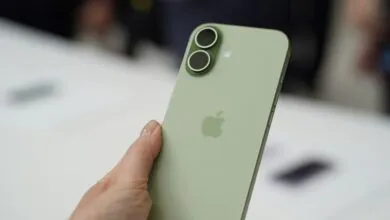
A major shift is underway in the smartphone industry, with device manufacturers increasingly embedding eSIM capabilities into their hardware. This technological integration began with flagship models like the Google Pixel 2 and iPhone XR several years ago. The momentum has since accelerated dramatically. Apple made a bold move by releasing eSIM-only models in the U.S. market, a strategy later adopted by Google. This year, Apple expanded its eSIM-only offerings to more than a dozen countries. One tangible benefit of this design choice is a slight improvement in battery life, as the space previously occupied by a physical SIM tray can be reallocated.
Currently, eSIM support is strongest in premium devices, particularly in the United States. However, the landscape is broadening rapidly. Industry data indicates that over sixty eSIM-enabled smartphone models launched in just the first half of 2025 alone. A pivotal development for mass adoption is the recent entry of China’s massive market. Following Apple’s lead, Chinese telecom operators have begun supporting eSIM services. This move is expected to prompt major local manufacturers like Huawei and Xiaomi to incorporate eSIM support across a wider range of devices, including more affordable models. These brands hold substantial market share across Asia and Africa, which could dramatically expand global access.
Crucially, simply having the feature available is no longer enough, people are starting to use it. Research indicates that activation rates for eSIM capabilities in compatible devices are climbing steadily and are projected to reach very high levels by the end of the decade.
For frequent travelers, eSIM technology has become a game-changer, offering a convenient and secure method to stay connected abroad. Surveys show that more than half of current eSIM usage is for travel purposes. The technology provides a robust security advantage, as the eSIM profile is often integrated directly into a device’s secure hardware, making it far less susceptible to tampering or theft compared to a physical card.
This travel-driven demand has created a fertile ground for specialized startups. Companies like Airalo, Holafly, and Nomad have built substantial businesses by simplifying the process of acquiring a local data plan while overseas. Their growth underscores a clear consumer preference. Industry analysts note that many people first experience eSIMs during a trip. Satisfied with the seamless connectivity, these users often return home and request their primary carrier switch them to an eSIM profile, driving further mainstream adoption.
The commercial success in this niche is evident. Several travel-focused eSIM providers report impressive metrics, including millions of eSIMs sold, rapid user base growth, and significant revenue figures. This activity has captured the attention of investors. Recent funding rounds, including a major investment that created a new unicorn, highlight strong confidence in the sector’s potential. While the immediate opportunity is centered on serving globetrotters, investors also see future potential in broader domestic market applications as awareness grows.
Despite the optimism, challenges to universal adoption remain. A primary hurdle is simply a lack of consumer awareness and education. Many people are still unfamiliar with what an eSIM is or how it works. Companies in the space are actively working to demystify the technology through partnerships and influencer campaigns. Another practical obstacle is the user experience. The common process of receiving a QR code via email to activate a plan can be cumbersome, especially for someone arriving in a new country without immediate access to a second screen. Industry groups acknowledge that streamlining this activation process is essential for broader acceptance.
Furthermore, some traditional mobile network operators face internal hurdles due to legacy systems, slowing their transition to fully digital eSIM provisioning. The long-term vision is a completely seamless, over-the-air experience that eliminates any need to visit a store. As the market matures, analysts anticipate a period of consolidation, with the most successful providers being those who build strong customer loyalty, ensure reliable network coverage, and forge smart marketing partnerships with airlines, banks, and other travel-adjacent services.
(Source: TechCrunch)