Max Hodak’s Next Venture: Beyond Neuralink

▼ Summary
– Six years ago, Sam Altman suggested OpenAI’s future profitability might be determined by asking the AI itself, a belief he held seriously despite audience amusement.
– Max Hodak, co-founder of Science Corp., previously co-founded Neuralink with Elon Musk, learning a decisive problem-solving approach from him before starting his own company.
– Science Corp.’s first commercial product is Prima, a retinal implant that has restored reading ability to blind patients in trials and is slated for a European launch next summer.
– The company’s long-term ambition involves advanced biohybrid interfaces, like growing lab-engineered neurons that integrate with the brain, aiming for a future of substrate-independent consciousness.
– Hodak predicts that by 2035, such neural interfaces will be available for patients, potentially leading to profound societal and economic shifts, including challenges to healthcare funding models.
The global race to develop brain-computer interface (BCI) technology is accelerating, moving from speculative science fiction into tangible clinical and commercial reality. Nearly 700 companies worldwide now have ties to BCI development, with major tech players and national governments entering the fray. At the center of this shift is Max Hodak, co-founder of Neuralink and now CEO of Science Corp., who is steering his new venture toward a near-term commercial product while outlining a staggering long-term vision for human cognition.
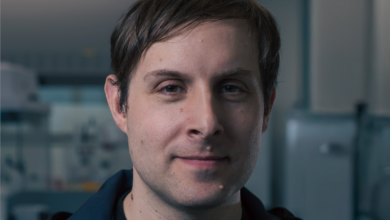
On stage, Hodak presents an unassuming figure in jeans and a black sweatshirt, yet his calm demeanor belies the scale of his ambitions. His journey into neuroscience began early, programming at age six and later working in the pioneering lab of neuroscientist Miguel Nicolelis at Duke University. His pivotal role came in 2016 as a co-founder and president of Neuralink, where he managed daily operations for years. Reflecting on that time, he describes a formative pattern working with Elon Musk. Faced with complex problems, Hodak would present two opposing solutions. “I’d be like, ‘Is it A or B?’ And he’d look at it and be like, ‘It’s definitely B,’ and the problem would never come back.” This experience in decisive, forward-moving execution shaped his approach when he left to found Science Corp. with three former Neuralink colleagues.
While public attention has been captivated by artificial intelligence, significant momentum has built quietly in the BCI sector. Microsoft Research has operated a dedicated BCI project for seven years. Apple recently partnered with Bill Gates and Jeff Bezos-backed Synchron to develop protocols for controlling iPhones and iPads via brain signals. Sam Altman is reportedly supporting a Neuralink competitor. China has unveiled a national plan targeting core BCI breakthroughs by 2027 and global leadership by 2030.
Hodak acknowledges that much of the underlying neuroscience isn’t novel. “A legitimate criticism of the BCI companies is that they aren’t doing new neuroscience,” he states, noting that decoding brain signals for cursor control has been done for decades. The real innovation, he argues, is in the engineering, creating devices small and low-power enough to be fully implanted without infection risk, a challenge Neuralink tackled. The greater hurdle is a lack of complete understanding of how the brain operates. Unlike many BCI startups focused solely on fundraising, Science Corp. is generating revenue by selling refined research tools. “We’re taking a $300,000 cart-sized recording system and turning it into a $2,000 handheld device,” Hodak explains.
The company’s first major commercial pathway is a vision-restoring procedure called Prima, acquired from French firm Pixium Vision. The system involves a rice-grain-sized chip implanted in the retina, used with camera glasses and a battery pack. It targets advanced macular degeneration, where photoreceptor cells die. Prima’s 400 electrodes bypass this dead layer to stimulate the surviving bipolar cells directly. In trials with 38 patients, 80% regained the ability to read, seeing two letters at a time. “To my knowledge, this is the first time that restoration of the ability to fluently read has ever been definitively shown in blind patients,” Hodak says. With European approval pending and a launch expected next summer, Science Corp. estimates profitability at just 50 procedures monthly, priced around $200,000 each initially. U.S. FDA discussions are ongoing, with the timeline still unclear.
Looking beyond electrodes, Science Corp. is pursuing optogenetic gene therapy. The goal is to genetically modify surviving retinal cells to become light-sensitive, eliminating the need for hardware implants. The eye is an ideal testing ground, Hodak notes, as it is largely ignored by the immune system, reducing rejection risks for engineered cells. He asserts that competing approaches target the wrong cell layers or use inferior proteins. “The proteins that we’re actually using are state of the art,” he claims.
The ultimate, more speculative frontier involves growing new brain tissue. Hodak points out the fundamental scaling limit of mechanical electrodes like those Neuralink uses: they cause tissue damage. “You can’t scale it up to millions or billions of channels,” he says. His proposed solution is a biohybrid interface, a tiny grid placed on the brain’s surface, each well containing lab-grown, functionally optimized neurons from stem cells. These neurons grow connections into the host brain, integrating biologically. In mouse tests, five of nine subjects learned to move left or right when the device was activated. Safety, he describes, involves a built-in biological “valve”: a specific vitamin that, if taken, would cause the engineered neurons to die.
Hodak reframes the entire endeavor as “a longevity-adjacent story.” He distinguishes between intelligence, which he sees as substrate-independent (existing in both brains and computers), and consciousness. The end goal of BCI research, in his view, is creating conscious machines. This requires cracking the “binding problem”, understanding how billions of neurons create a unified subjective experience. With that knowledge, he envisions possibilities that sound like science fiction: redefining the boundaries of a single brain to include multiple hemispheres, devices, or even groups of people. “Will there be some giant super organisms that correspond to world cultures? Will there be dyads, like the next step up in marriage?” he wonders. The technology’s ultimate use is uncertain, but he is confident such devices will be built.
His projections are surprisingly concrete. He anticipates biohybrid neural interfaces becoming available for patients with serious needs by 2035, “deforming the world in interesting ways.” As technology improves and surgeries become safer, the patient pool will expand, with the tech becoming “really ubiquitous” by the late 2040s. By 2035, he speculates, a terminal patient might be offered a choice: “You can die of pancreatic cancer, or you can be inserted into the matrix.”
This future raises profound economic questions. Hodak contrasts the deflationary nature of consumer tech with healthcare’s “fixed bucket of money.” As BCI technologies extend lives and improve outcomes, healthcare costs could skyrocket, creating a fundamental conflict. The risk is a society divided by who can afford cognitive enhancement, leading to untenable class divisions based on mental capability.
When asked about societal impacts, Hodak admits he lacks clear answers, quipping that he worries more about Twitter and information manipulation through traditional media than through brain interfaces. His calm presentation of radical ideas echoes a moment years earlier when Sam Altman told a snickering audience that he would someday ask an AI how to make money. That idea no longer seems absurd. Many ambitious Silicon Valley concepts once met with similar skepticism before reshaping the world. Now, the conversation has shifted to listening, waiting, and considering what happens when the boundaries of the mind itself begin to blur.
(Source: TechCrunch)