Beyond the Funnel: A Customer-Centric B2B Journey
▼ Summary
– The traditional B2B marketing funnel (awareness, consideration, decision) is designed for marketers, not for the actual buyer’s experience.
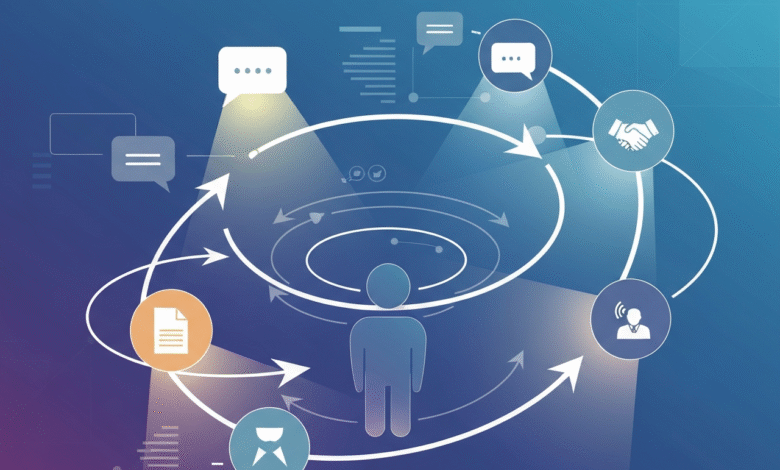
– A customer-centric buyer’s journey is non-linear, allowing buyers to jump between stages, pause, and consult peers on their own terms.
– This approach requires personalized engagement with the right message in the right channel at the buyer’s moment of need, extending beyond the sale to include retention and advocacy.
– Marketers must adopt new strategies like detailed buyer personas, omnichannel consistency, dynamic journey mapping, and real-time feedback loops.
– Success metrics must evolve beyond traditional leads and conversions to measure engagement depth, customer satisfaction, and lifetime value, requiring alignment across marketing, sales, and customer experience teams.
The traditional B2B marketing funnel, with its linear stages of awareness, consideration, and decision, is increasingly seen as an outdated model that serves internal processes rather than actual buyer behavior. A truly customer-centric B2B buyer’s journey discards this rigid structure in favor of a dynamic, responsive framework built around the customer’s own needs, timeline, and preferred channels. This shift requires a fundamental rethinking of strategy, content, and measurement to remain competitive in a market where buyers control the process.
Unlike the predictable funnel, the modern journey is anything but a straight line. Prospects frequently jump between stages, revisit earlier information, pause their research, and seek advice from peers, all often invisible to the marketing team. The focus must shift from pushing contacts through predefined steps to engaging them with relevant messaging on their terms, precisely when they are ready to receive it. Furthermore, the journey definitively does not end at the point of sale. Customer retention, loyalty, and advocacy are integral, ongoing phases, not separate post-sales concerns.
To adapt, several critical changes are necessary. Developing deeper buyer insights is paramount, moving beyond basic demographics to build rich personas grounded in actual behavioral data, key motivations, and specific pain points. Content must be highly personalized, tailored not just to a persona but to the individual’s current context and stage in their non-linear exploration. This demands omnichannel consistency, ensuring a seamless and coherent experience whether a buyer interacts with a social ad, a whitepaper, or a sales representative.
Strategy must also become more agile. Journey mapping should be dynamic, illustrating flexible pathways rather than fixed sequences, and pinpointing critical moments where marketing can add value or reduce friction. Implementing real-time feedback loops allows teams to continuously gather and act on insights, rather than waiting for a post-campaign report. Success metrics need to evolve beyond traditional leads and conversion rates to include indicators like engagement depth, customer satisfaction, lifetime value, and overall account health. Finally, achieving this requires breaking down organizational silos; marketing, sales, and customer experience teams must align around shared buyer-centric goals and key performance indicators.
Today’s B2B buyers simply expect a purchasing experience that mirrors their actual research habits and decision-making processes. Transitioning from a funnel-centric to a customer-centric model is no longer a strategic option but an essential requirement for relevance and growth.
(Source: MarTech)