SpaceX Booster Fails; Pegasus Set for Return Flight
▼ Summary
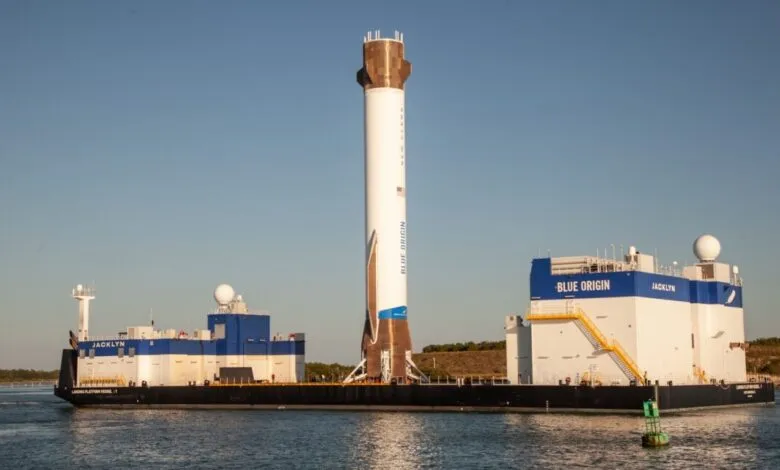
– Blue Origin’s New Glenn rocket had a successful launch and landing on November 13, with plans to enhance it with more engines.
– SpaceX is progressing toward the first flight of its Starship rocket in South Texas.
– The Rocket Report will skip next week due to the U.S. Thanksgiving holiday and resume in early December.
– Katalyst Space Technologies won a $30 million NASA contract for a robotic rescue mission to extend the life of the Swift Observatory.
– Northrop Grumman’s Pegasus XL rocket was chosen for the rescue mission due to its ability to reach a specific orbit and available inventory, despite its high cost and infrequent use.
This week’s spaceflight news brings a mix of ambitious developments and strategic comebacks. Blue Origin continues to make waves following the successful November 13 launch and landing of its second New Glenn rocket. The company has now shared an engineering roadmap detailing plans to enhance the vehicle by integrating additional engines. Over in South Texas, SpaceX is advancing preparations for the inaugural flight of its next-generation Starship rocket. Please note, the Rocket Report will pause next week for the US Thanksgiving holiday and will return the first week of December with all the latest updates on space launch activities.
We always appreciate contributions from our readers. To ensure you receive every edition, consider subscribing via the form provided below, please be aware this feature is not accessible on AMP-enabled pages. Our comprehensive coverage spans small, medium, and heavy-lift launch vehicles, and we also preview the upcoming trio of scheduled launches.
In a notable contract award, Northrop Grumman’s Pegasus rocket has secured a rare mission. Katalyst Space Technologies, a startup, received a $30 million NASA contract in August to construct a robotic rescue vehicle for the Neil Gehrels Swift Observatory, which operates in low-Earth orbit. Launched in 2004, Swift is a specialized spacecraft dedicated to observing gamma-ray bursts, the universe’s most energetic explosions. The observatory has no propulsion system, and its orbit is gradually decaying due to atmospheric drag. NASA emphasizes it is in a race against time to raise Swift’s orbit and prolong its operational life before re-entry. This week, Katalyst confirmed it has chosen Northrop Grumman’s air-launched Pegasus XL rocket to deploy the rescue craft into orbit next year.
The selection of Pegasus might appear puzzling at first. The Pegasus XL has not launched since 2021 and has flown only once in the past six years. This solid-fueled rocket is carried to altitude beneath a modified airliner before being released to propel payloads up to 1,000 pounds into low-Earth orbit. It is known for being a costly option relative to its capacity; public records indicate Northrop has charged over $25 million per launch. Satellites that once relied on Pegasus can now often reach orbit far more affordably via rideshare missions on rockets like SpaceX’s Falcon 9. However, several factors made Pegasus the right choice for Katalyst. The rescue mission requires insertion into a very precise, low-inclination orbit to meet the Swift observatory, ruling out participation in standard rideshare launches. Additionally, Northrop Grumman has components in stock for one final Pegasus XL rocket and may have offered a discounted rate to clear inventory and retire the expensive L-1011 carrier aircraft. Finally, smaller launch vehicles such as Rocket Lab’s Electron or Firefly’s Alpha lack the necessary performance to deliver Katalyst’s spacecraft into the required orbit.
(Source: Ars Technica)