Orbital Dynamics Saves NASA’s Next Mars Mission

▼ Summary
– ESCAPADE’s launch was saved from delay or cancellation by using an unusual trajectory after its original rocket wasn’t ready last year.
– The mission will launch outside the typical Mars transfer window and enter a loiter orbit to wait for proper planetary alignment in November next year.
– Originally planned for a direct six- to nine-month trip, ESCAPADE will now depart when Mars is over 220 million miles away on the opposite side of the Solar System.
– NASA is paying Blue Origin only about $20 million for the launch, significantly less than other rockets capable of sending the mission to Mars.
– The launch carries higher risk as it’s only the second flight of New Glenn, which hasn’t been certified by NASA or the US Space Force.
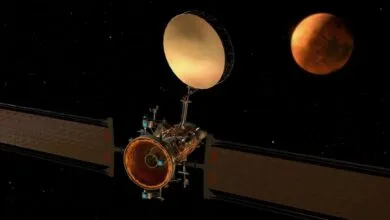
A clever application of orbital dynamics has rescued NASA’s upcoming ESCAPADE Mars mission from a potentially lengthy postponement or outright cancellation. The mission’s trajectory experts devised an ingenious workaround after the spacecraft missed its original launch window last year due to rocket unavailability. ESCAPADE, which stands for Escape and Plasma Acceleration and Dynamics Explorers, will now embark toward the Red Planet aboard Blue Origin’s massive New Glenn rocket as early as this Sunday.
Rob Lillis, the mission’s principal investigator from the University of California, Berkeley, explained the unconventional approach. “ESCAPADE is pursuing a very unusual trajectory to reach Mars,” he noted. “We’re launching outside the standard Hohmann transfer windows that occur approximately every two years. Our flexible mission design involves entering a loiter orbit around Earth, essentially waiting until Earth and Mars achieve the proper alignment in November of next year for the journey to Mars.”
This represents a significant departure from the original mission profile. Initially, ESCAPADE was planned to follow a direct Earth-to-Mars trajectory requiring six to nine months of transit time. The revised plan will see the spacecraft departing Earth when Mars sits more than 220 million miles distant, positioned on the opposite side of the Solar System.
The most recent optimal Mars launch window occurred last year, with the next conventional opportunity not arriving until late 2026. Planetary positions currently don’t favor direct Mars missions, and various circumstances prevented the ESCAPADE satellites and their New Glenn rocket from reaching the launch pad until this weekend’s opportunity.
Several factors make this unconventional approach acceptable to NASA mission planners. The New Glenn rocket provides substantially more capability than required for this mission. The two-stage launcher possesses the capacity to deliver multiple tons of cargo to Mars, yet NASA needs it to transport only about one ton of payload consisting of twin scientific probes. These identical spacecraft will investigate how Mars’ upper atmosphere interacts with solar wind particles.
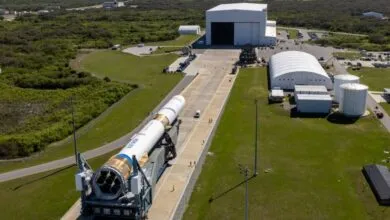
NASA secured favorable financial terms from Blue Origin for this launch. The space agency is paying approximately $20 million to Jeff Bezos’ space company, significantly less than what a dedicated launch on any other Mars-capable rocket would cost. In exchange for this financial advantage, NASA accepts a higher-than-usual risk of launch failure. This mission represents only the second flight of the 321-foot-tall New Glenn rocket, which hasn’t yet received certification from NASA or the US Space Force.
(Source: Ars Technica)