$30M NYC Landmark on Iconic Photo Spot Hits Market
▼ Summary
– Filmmaker Neil Burger and architect Diana Kellogg have lived for over 20 years on Staple Street, a small, distinctive Tribeca alley famous for its cast-iron skybridge and frequent photography.
– The couple is selling their two-building compound, including a 19th-century brick townhouse and an acquired studio, for $30 million, forming a unique residential-and-work enclave.
– They purchased the 1860s townhouse in 2002 after temporarily leaving the area post-9/11 and transformed it into a warm, idiosyncratic home with exposed brick, timber beams, and repurposed historic details.
– Over the years, they customized the property to reflect their family life and professions, converting spaces like a freight elevator shaft into a video call room and adapting a commercial unit across the alley into a workspace.
– The secluded street served as an extension of their home, hosting activities like children’s hockey games and Halloween candy hand-outs, but they are now selling due to increased work and time spent outside the city.
Nestled within the vibrant Tribeca neighborhood, a truly one-of-a-kind property has arrived on the market. A two-building compound on the iconic and diminutive Staple Street is now available for $30 million, offering a rare chance to own a piece of New York City’s architectural and cultural fabric. For over twenty years, this unique enclave has been home to filmmaker Neil Burger and architect Diana Kellogg, who are now preparing to part with their cherished urban sanctuary.
The property consists of their primary residence, a brick townhouse dating back to the 1860s, and a separate studio and office space directly across the narrow alley. This configuration creates a private live-work environment that is exceptionally rare in a city known for its cramped quarters. The listing agent, Jeremy Stein of Sotheby’s International Realty, emphasized the property’s uniqueness, stating it defies any standard comparison in the New York real estate landscape.
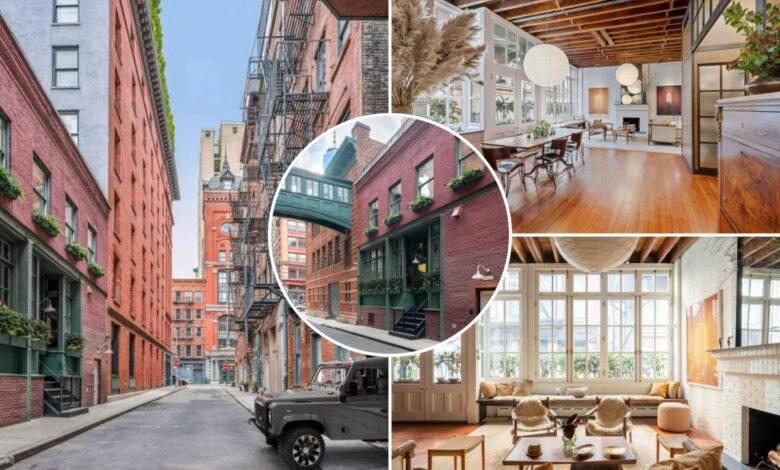
The main house spans approximately 4,100 square feet and masterfully retains its industrial heritage. The interior is defined by exposed brick walls, heavy chestnut timber beams, and oversized windows that flood the space with natural light and offer direct views onto the quiet, cobblestoned street. Over more than two decades, the couple transformed the three-bedroom home from a space surrounded by boarded-up storefronts into a warm and idiosyncratic retreat.
A wood-burning fireplace serves as the heart of the main living area. Upstairs, the original floor plan was reconfigured to create a spacious primary suite that overlooks the street’s most famous feature: a slender, historic cast-iron skybridge. The couple’s architectural ingenuity is evident throughout, such as the conversion of a former freight elevator shaft into a compact “green room” ideal for video calls, with the original metal rails cleverly repurposed into a built-in bookcase.
The couple first discovered the property after temporarily leaving their previous nearby home following the September 11 attacks. Kellogg, who had admired the building years earlier while studying architecture at Columbia University, was drawn back when it came up for sale. At the time, the street was dormant and covered in graffiti, but the townhouse’s compelling scale and proportions convinced them to embark on a major restoration. Burger described it as a “little magical and kind of mysterious place” that felt “full of excitement and possibility.”
In 2008, they expanded their footprint by purchasing the commercial unit across the alley, adapting it into a workspace filled with film posters and architectural plans. The two buildings, just steps apart, are visually connected by the intimate, secluded feeling of the alleyway itself. The street became an extension of their home, a private stage for neighborhood life where their children played street hockey, a local opera singer tested the acoustics, and a juggler practiced undisturbed.
Halloween became a particular tradition, with the family passing candy directly from their windows to streams of neighborhood children. As their children grew, the lower level of the home evolved from an indoor play space into a guest suite and den, while small, historic storage vaults beneath the alley remain intact. Kellogg reflected that the non-cookie-cutter nature of the home allowed them to “have a life here that was very special.”
With their careers now taking them globally, Burger directing films abroad and Kellogg’s firm completing international projects, including a school in India, the couple is ready for a change. They maintain another residence in Watch Hill, Rhode Island, and anticipate spending more time outside the city. Burger has even entertained the “crazier idea” of purchasing a boat to use as a floating residence on the Hudson River when in New York.
Jeremy Stein acknowledged that pricing such a distinctive property is a challenge, describing the process as “both art and science.” He noted that finding a buyer requires someone who responds to the unique atmosphere as much as the physical attributes, asking, “Given that there’s nothing like it, what do you think someone might pay for it?”
While they are letting go of their Staple Street compound, Kellogg said they expect to maintain some foothold in Manhattan, likely in a smaller, simpler home. Nevertheless, the years spent living on one of the city’s most photographed and peaceful alleys will remain a singular chapter in their lives.
(Source: NY Post)
