Spiro Secures Record $100M for Africa’s E-Mobility
▼ Summary
– Spiro secured Africa’s largest-ever EV mobility investment with a $100 million funding round led by FEDA to expand its electric motorbike operations.
– The company plans to deploy over 100,000 electric bikes across Africa by 2025, a 400% annual increase from its current fleet of 60,000 bikes in six countries.
– Spiro’s battery-swapping model reduces costs for riders, with electric bikes priced 40% lower upfront and offering 30% lower per-kilometer expenses compared to gasoline models.
– The company operates 1,500 swap stations and has seen battery swaps surge from 4 million in 2022 to over 27 million, using renewable energy to ensure reliability during power outages.
– Spiro has established local assembly plants in four African countries and aims to increase local sourcing from 30% to 70% to support growth and create employment opportunities.
The electric mobility sector in Africa is witnessing a transformative moment with Spiro securing a landmark $100 million investment, the largest ever for an EV mobility company on the continent. Led by The Fund for Export Development in Africa (FEDA), this funding round signals strong confidence in the potential for electric two-wheelers to reshape urban and rural transport. While challenges like inadequate infrastructure and unreliable power have historically slowed progress, Spiro’s battery-swapping model is designed specifically to overcome these hurdles and deliver practical, affordable solutions for millions of daily commuters and commercial riders.
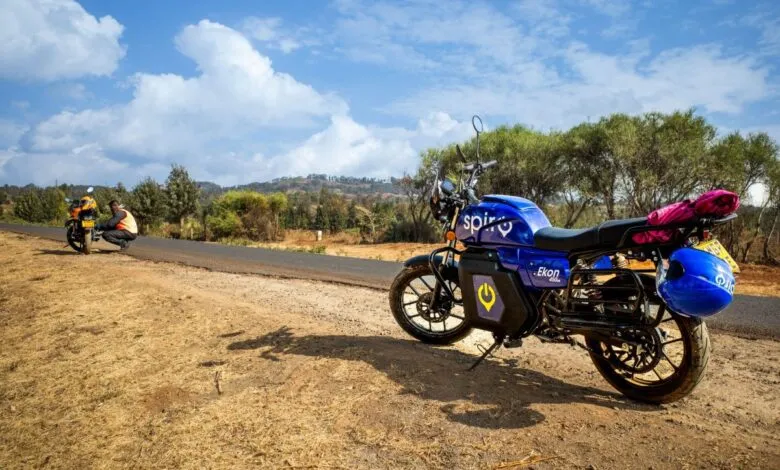
Spiro has set an ambitious target to deploy more than 100,000 electric motorcycles across Africa by the end of 2025. This represents a 400% year-over-year increase, reflecting the company’s aggressive growth strategy in a market previously considered too fragmented to achieve meaningful scale. When CEO Kaushik Burman joined the company two years ago from Gogoro, Spiro operated just 8,000 bikes and 150 battery swap stations in Benin and Togo. Today, its footprint spans six nations, Rwanda, Kenya, Nigeria, Uganda, Benin, and Togo, with over 60,000 bikes in operation and 1,500 swap stations. Battery swaps have skyrocketed from 4 million in 2022 to over 27 million this year, demonstrating rapid user adoption.
The company’s success is rooted in a business model tailored to local realities. In many African cities, motorcycle taxis, known as boda bodas or okadas, are essential for moving people and goods through heavy traffic. However, riders face punishing fuel expenses that eat into their earnings. Burman notes that drivers often work 10 to 12 hours daily, covering 150 to 200 kilometers, with little left to save after paying for petrol and maintenance. Electric bikes with battery swapping eliminate refueling downtime and cut operating costs significantly, making them an ideal fit for this segment.
Spiro’s electric motorcycles cost about 40% less upfront than new gasoline models. In markets like Kenya or Rwanda, where a conventional motorbike sells for $1,300–$1,500, Spiro’s e-bikes are priced around $800. More importantly, operating expenses are roughly 30% lower per kilometer because battery swaps are cheaper than refueling. Riders typically save up to $3 per day, an amount that can accumulate to fund additional assets or small business ventures over time.
Revenue streams come from both bike sales and the battery-swapping network. Customers purchase or lease a Spiro bike and then pay only for the energy they use via a proprietary algorithm. Each swap station houses multiple batteries that are continuously recharged, ensuring no operational delays. By owning the charging infrastructure and collecting a small fee per swap, Spiro achieves economies of scale as the network grows. The company also integrates renewable energy and storage systems to maintain operations during power outages.
Partnerships have been key to expanding Spiro’s physical presence. Swap stations are situated in petrol stations, shopping centers, and even religious institutions, creating local employment opportunities along the way. To support rising demand and boost local manufacturing, Spiro has established four assembly plants across Kenya, Nigeria, Rwanda, and Uganda. These facilities produce bikes and key components such as traction motors, controllers, and batteries. The company already assembles batteries in Kenya using its proprietary battery management system and aims to increase local sourcing of materials, including plastics, helmets, and brake parts, from 30% to 70% within two years.
The $100 million investment, which includes $75 million from FEDA and the remainder from strategic partners, will accelerate Spiro’s expansion. This follows over $180 million in prior funding from sources including the Equitane Group and Société Générale. The fresh capital will support scaling the battery-swap infrastructure, increasing manufacturing capacity, advancing research and development, and launching pilot programs in new markets such as Cameroon and Tanzania.
While competition in Africa’s EV space is intensifying with players like Ampersand, ROAM, Max, and BasiGo, Burman believes Spiro’s real rivals are gasoline motorcycles, both new and secondhand, and the vast number of individuals who still lack access to affordable transport. Africa is home to roughly 25 million motorbikes, compared to 320 million in India, despite similar population sizes. This 13-fold gap underscores the massive untapped potential and the long-term opportunity for electric mobility providers ready to meet the demand.
(Source: TechCrunch)