Spellcasters Chronicles: Quantic Dream’s Risky Gamble After Star Wars Eclipse
▼ Summary
– Quantic Dream is developing its first multiplayer game, Spellcasters Chronicles, a free-to-play 3v3 action-strategy title while also working on Star Wars Eclipse.
– The game features magic-wielding mages battling to destroy opponents’ Lifestones using spells, summoned creatures, and massive Titans, with cosmetic-only monetization.
– Development began seven years ago as a small passion project and required hiring most of the ~100-person team externally due to Quantic Dream’s lack of multiplayer expertise.
– The studio is using its proprietary engine despite multiplayer challenges, citing creative control, independence, and preserving company culture as key reasons.
– Spellcasters represents a risky venture into a crowded market, contrasting with the safer Star Wars Eclipse project, with NetEase providing support while maintaining Quantic Dream’s creative independence.
NoneQuantic Dream, the French studio celebrated for cinematic single-player adventures like Heavy Rain and Detroit: Become Human, is making a dramatic pivot into the competitive multiplayer arena with its new project, Spellcasters Chronicles. This free-to-play 3v3 game represents a significant departure from the studio’s established identity, launching alongside the highly anticipated Star Wars Eclipse.
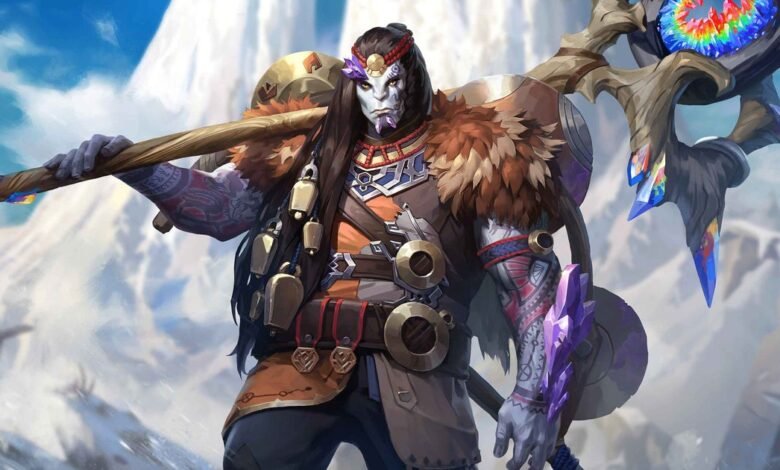
In Spellcasters Chronicles, teams of magic-wielding combatants battle to obliterate the enemy’s Lifestone. The gameplay blends direct spellcasting with strategic elements, allowing players to summon creatures, construct defensive buildings, and customize their spell decks. The most visually striking feature is the ability to summon colossal Titans, game-changing entities that can dominate the battlefield once specific conditions are fulfilled. The business model will focus exclusively on cosmetic purchases, with a closed beta anticipated before the year concludes.
Development on the title began seven years ago as a small passion project. Game Director Gregorie Diaconu recalls its humble origins, stating it emerged from an initial concept by David Cage and quickly captivated a tiny team. They were drawn to the challenge of creating something entirely new, a stark contrast to their previous narrative-driven work. Lead Producer Laura Courouble emphasizes that innovation is deeply embedded in the studio’s DNA, and Spellcasters was their opportunity to pose a fresh question: what unique contribution could they make to the multiplayer genre?
This new direction necessitated a major hiring initiative, as Quantic Dream lacked in-house multiplayer expertise. The vast majority of the hundred-person Spellcasters team consists of new recruits. Courouble, who joined from Ubisoft, notes they specifically sought veterans from competitive games and stylized art backgrounds. She describes it as a “little miracle” that the project remained completely secret for seven years, despite the challenges of hiring under such intense confidentiality.
The team is a blend of these new specialists and a minority of Quantic Dream veterans, who are primarily focused on adapting the studio’s proprietary engine. While this engine powered the photorealistic visuals of Detroit: Become Human, it is now being used to render a vibrant, stylized fantasy world. Diaconu defends the decision to use their internal technology, calling it a key strength that allows them to create visually distinct games. He believes this approach helps their titles stand the test of time better than those reliant on mainstream engines.
Courouble acknowledges that switching to a commercial engine like Unreal would have simplified hiring and provided ready-made networking tools, but it would have fractured the engineering team. Co-CEO Guillaume de Fondaumière outlines three core reasons for sticking with their own tech: it provides artists with bespoke tools for cinematography and character creation, ensures independence from third-party development priorities, and, crucially, helps preserve the company’s culture and retain top talent by offering them new challenges.
The development process for Spellcasters had an experimental, “game jam” atmosphere. One early idea that stuck was allowing players unrestricted flight across the entire map. While such a mechanic could easily break game balance, the team embraced it. Diaconu explains they decided to build the entire game around this potentially disruptive feature, turning it into a unique selling point that offers both a powerful fantasy and a strategic overview of the fight.
The art direction draws from anime influences with a Western touch, aiming to create a “playable anime.” A key artistic goal is to represent magical traditions from diverse global cultures, moving beyond the classic Gandalf archetype. The intention is for every player to find a character whose motivations and visual design resonate with them.
The Titans serve as the game’s primary spectacle. The third-person perspective was chosen specifically to emphasize the player’s small scale against these screen-filling behemoths and armies of summoned creatures. Courouble recalls the visceral, positive reactions from early playtesters upon seeing them. Like Helldivers 2, the game will feature a persistent narrative where battle outcomes influence the world’s fate, though specific details are still under wraps. Matches are designed to be concise, lasting about 25 minutes, facilitating quick matchmaking and making it easy to jump in for a session.
Entering a market dominated by giants like League of Legends and Fortnite is a formidable challenge. De Fondaumière admits it is difficult to precisely forecast their target audience or market share. Their strategy is simply to innovate and present a truly unique experience, hoping it will attract a large enough global player base to sustain the project. He draws a parallel to the early skepticism around interactive storytelling before the launch of Fahrenheit, proving that Quantic Dream has successfully carved out niches before.
De Fondaumière openly describes Spellcasters Chronicles as the risky, bold venture in their two-game strategy, contrasting it with the more secure path of Star Wars Eclipse. The studio’s acquisition by NetEase provided the financial means to self-publish and pursue this dual-track approach. The Chinese conglomerate was initially surprised by the multiplayer concept but has been supportive, offering guidance on live-service operations and providing access to their technical infrastructure without imposing creative control. Diaconu and Courouble characterize the relationship as collaborative, with NetEase acting like a “big brother” offering advice rather than directives.
While ultimate financial accountability now rests with NetEase, de Fondaumière stresses that Quantic Dream retains its creative independence. He acknowledges the inherent compromise of relying on shareholders but asserts that he and David Cage set the boundaries for their working methods. Spellcasters Chronicles is undoubtedly a high-stakes gamble for a studio known for a very different kind of game. However, with the safety net of Star Wars Eclipse in development, the potential rewards for success are immense, potentially opening exciting new avenues for Quantic Dream’s future.
(Source: Games Industry)
