UAE Launches National MRV System to Achieve Net Zero by 2050
▼ Summary
– The UAE has launched the National MRV system, the first integrated national platform in the region to monitor greenhouse gas emissions and air pollutants.
– It provides an accurate database to support evidence-based policymaking and help sectors track progress toward the UAE’s climate and environmental goals, including Net Zero 2050.
– The system streamlines procedures, reducing emissions report preparation time from 15 to 3 months and cutting workflow steps from 11 to 4, supporting the Zero Government Bureaucracy Program.
– It enhances the UAE’s compliance with international climate agreements like the Paris Agreement and solidifies its global leadership in climate action.
– The system was developed over four years through collaboration with government and private partners, including over 200 meetings and 20 workshops to ensure data accuracy and reliability.
The United Arab Emirates has officially launched its groundbreaking National Measurement, Reporting, and Verification (MRV) system, a pivotal initiative designed to accelerate the country’s journey toward its Net Zero by 2050 strategic goal. This integrated platform represents the first of its kind in the region, merging the tracking of greenhouse gas emissions with air pollutant monitoring to create a robust environmental governance framework.
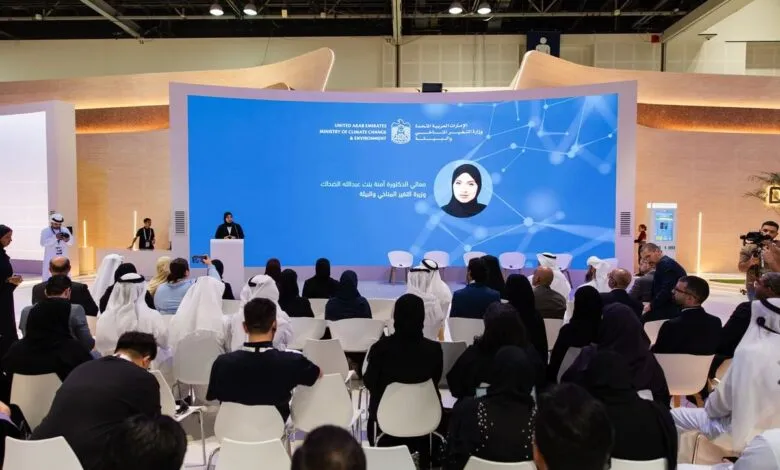
Unveiled during a special event at GITEX GLOBAL 2025 in Dubai, the launch was attended by numerous senior officials and private sector experts. The system serves as a foundational element of the UAE’s climate action strategy, providing a precise and trustworthy database. This resource empowers policymakers to craft informed, evidence-based regulations while allowing all economic sectors to monitor their advancement in meeting national climate and environmental targets. It directly supports the objectives of the UAE Net Zero 2050 Strategy and the National Air Quality Agenda 2031. Furthermore, the platform is instrumental in realizing the aims of the Zero Government Bureaucracy Program by simplifying complex procedures and transforming lengthy work cycles into efficient, automated processes.
Dr. Amna bint Abdullah Al Dahak, the Minister of Climate Change and Environment, emphasized that the introduction of the National MRV system reflects the UAE leadership’s vision to leverage innovation and digital transformation for building a sustainable and prosperous future. She stated that sustainability is not merely an option but a strategic path to ensure the nation’s prosperity. The ambition to reach Net Zero by 2050 is central to the UAE’s developmental vision and is a crucial component in constructing a diversified and competitive national economy. She described this transformation as a strategic opportunity to spur innovation across key sectors, thereby opening new growth avenues and securing a sustainable future for coming generations.
Dr. Al Dahak added that realizing this ambitious vision depends on a solid foundation of knowledge and precise data, noting that decision-makers cannot effectively manage what they cannot measure. Consequently, the launch of the National MRV system marks a significant leap forward in the nation’s environmental governance. She characterized it as a strategic instrument that allows for the accurate measurement of emissions, a deeper understanding of environmental impact, and the confident fulfillment of climate commitments, thereby reinforcing the UAE’s status as a leading global model in climate and environmental leadership.
During the event, Dr. Alanoud Alhaj Al Ali, Acting Assistant Undersecretary for the Green Development and Climate Change Sector, provided a detailed overview of the system’s strategic and technical aspects. She explained that the National MRV system is designed to accomplish several primary objectives, chief among them being the consolidation of the UAE’s leadership by improving compliance with the transparency stipulations and international climate action mandates under Article 13 of the Paris Agreement.
The system establishes an integrated framework that allows various national and local entities to cooperate on emissions monitoring and reporting via a single, user-friendly platform. It also aids decision-making by supplying accurate, up-to-date data on greenhouse gas emissions and air pollutants, which assists policymakers in developing sound policies and legislation. Moreover, it speeds up progress toward national goals, particularly those outlined in the UAE Net Zero 2050 Strategy and the National Air Quality Agenda 2031.
The development of the National MRV system followed a meticulous four-year process. The initial phase in 2021 and 2022 involved a thorough analysis of the existing situation and an examination of international best practices. During this stage, relevant partners from government and private sectors were identified, data and global methodologies were established, and the project’s institutional and governance structure was formulated.
The subsequent phase, from 2023 to 2025, concentrated on the system’s design and development. It underwent three consecutive pilot phases for rigorous testing and operational refinement, culminating in the launch of the final, fully operational national version. The system was specifically engineered to enable the private sector to evaluate its decarbonization progress and its roadmap for achieving net-zero targets.
Dr. Al Ali also underscored the system’s role as a practical model that embodies the government’s “Zero Bureaucracy” vision. She described the project as more than a technical tool, representing a working philosophy committed to transforming government procedures into an intelligent and proactive system. By re-engineering and fully automating data collection processes, a national model has been created that liberates partners from cumbersome administrative tasks and redirects their efforts toward strategic goals, thereby boosting government performance and supporting the nation’s sustainable development.
She demonstrated the system’s tangible impact on simplifying procedures and enhancing efficiency, notably reducing the time required to prepare emissions inventory reports from 15 months to just 3 months, a time saving exceeding 80 percent. The workflow was streamlined from 11 complicated steps down to 4 simplified, automated ones. On the governance level, communication channels were consolidated from over 240 entities and partners to just 7 main coordinating bodies.
These improvements have collectively freed thousands of manual work hours, converting them into added value that serves national objectives. Dr. Al Ali affirmed that this national achievement would not have been possible without the comprehensive, participatory approach adopted by the Ministry. This involved conducting over 200 bilateral meetings and 20 specialized workshops with all partners at federal, local, and private sector levels to harmonize roles, standardize methodologies, and guarantee the highest levels of data accuracy and reliability.
(Source: Economy Middle East)