2026 Nissan Leaf: Small, Affordable & Efficient
▼ Summary
– Nissan provided travel and accommodation for Ars to test the Leaf, though Ars maintains editorial independence and does not accept paid content.
– The original Nissan Leaf was an early mass-market EV, with ambitious sales targets set by then-CEO Carlos Ghosn in the early 2010s.
– Early Leaf models were compromised by being built on adapted internal combustion platforms and lacking liquid-cooled batteries.
– The new Leaf uses a dedicated EV platform shared with Renault and Mitsubishi, improving space efficiency and rear legroom despite a shorter exterior.
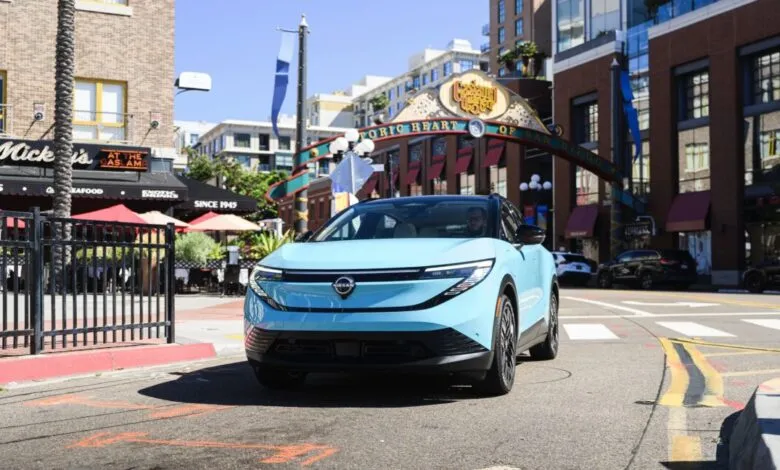
– The third-generation Leaf has a more aerodynamic design, a lower drag coefficient, and a crossover/sedan hybrid body style resembling the Nissan Ariya.
Nissan’s latest iteration of the Leaf continues to deliver on its promise of affordable, efficient electric mobility, now with a more refined and spacious design. Built on a dedicated EV platform shared with Renault and Mitsubishi, the 2026 model benefits from significant engineering improvements that enhance both practicality and performance.
The original Leaf was a trailblazer in the EV market, envisioned by former CEO Carlos Ghosn to achieve mass-market adoption long before Tesla dominated headlines. While initial sales targets weren’t fully met, the Leaf still reached a major milestone with its 500,000th unit sold by 2020. Earlier models, however, faced limitations due to their adapted internal combustion architecture and air-cooled battery systems, a notable drawback compared to modern liquid-cooled alternatives.
This third-generation Leaf marks a substantial departure from its predecessors. The shift to a purpose-built electric platform, also used in the Nissan Ariya, results in impressive gains in interior space. Despite being three inches shorter externally, the new model offers nearly nine inches more rear legroom, making it far more accommodating for passengers. The design blends crossover and fastback sedan elements, creating a versatile and aerodynamic profile with a drag coefficient of just 0.26.
Visually, the Leaf carries forward Nissan’s evolving design language, with cues that echo the Ariya. Distinctive lighting elements and subtle brand iconography contribute to a more upscale appearance, though some features remain exclusive to higher trim levels. The overall effect is a vehicle that feels both contemporary and functional, balancing style with everyday usability.
(Source: Ars Technica)