Master Electrostatic Discharge Prevention with IEEE’s New Course
▼ Summary
– Modern semiconductor devices with nanometer-scale features and low operating voltages are highly vulnerable to electrical overstress, including minor electrostatic discharge (ESD).
– ESD, which can occur from a 100-volt discharge, damages sensitive components designed for voltages as low as 1.2 V, causing immediate or latent defects.
– ESD accounts for over 30% of semiconductor failures during manufacturing and handling, with costs ranging from cents to thousands of dollars per component.
– IEEE has introduced a Practical ESD Protection Design course and certificate program to train professionals in ESD mitigation, aligned with industry standards like ANSI/ESD S20.20–21.
– The program equips engineers with skills to reduce ESD risks, supporting innovation and reliability in industries like AI, 5G, and edge computing.
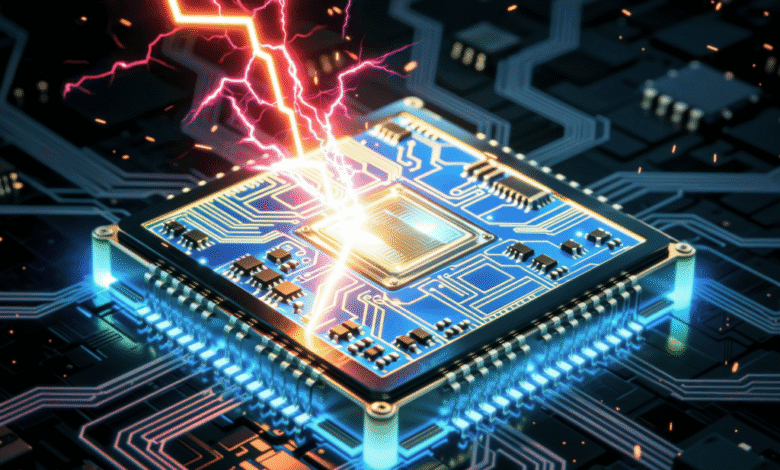
Modern semiconductor devices with nanometer-scale features and ultra-low operating voltages face growing vulnerability to electrostatic discharge (ESD), a costly and persistent threat in electronics manufacturing. Even minor discharges as low as 100 volts can permanently damage components designed for voltages under 1.2V, leading to immediate failure or hidden defects that surface later.
ESD occurs when objects with different electrical potentials interact, causing a sudden transfer of charge, often visible as a tiny spark. The EOS/ESD Association highlights that this phenomenon accounts for over 30% of semiconductor failures during production and handling. The financial repercussions vary widely, from pennies for basic components to thousands for advanced integrated circuits, not including additional expenses like rework, labor, and logistics.
To address this challenge, IEEE has introduced a comprehensive Practical ESD Protection Design course, offering engineers and technicians actionable strategies to minimize ESD risks. The program aligns with ANSI/ESD S20.20–21 standards and combines theoretical knowledge with hands-on case studies. Participants learn to implement protective measures across design, testing, and equipment handling, critical skills as devices shrink and performance demands rise.
Zachariah Peterson, an IEEE member and ESD consultant, emphasizes that ESD-related failures extend beyond repair costs, damaging brand reputation and customer trust. Proactive training helps engineers build resilient products while safeguarding business longevity. Upon completion, attendees receive an IEEE certificate recognizing 89 professional development hours and 8.9 continuing education units, validating their expertise in this high-stakes field.
With the rapid expansion of AI, 5G, and edge computing, semiconductor reliability is more crucial than ever. IEEE’s program isn’t just about prevention, it’s an investment in innovation, quality assurance, and competitive advantage. As technology advances, mastering ESD protection will remain a cornerstone of sustainable electronics development.
(Source: Spectrum IEEE)
