Bezos-Backed EV Startup: Key Facts and Details

▼ Summary
– Slate Auto, a startup secretly backed by Jeff Bezos, emerged in April 2025 after three years of covert development in Troy, Michigan.
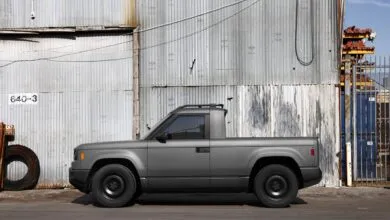
– The company’s first product is a highly customizable, ultra-affordable electric pickup truck, initially announced with a starting price under $20,000.
– The company quickly garnered over 150,000 refundable reservations for its vehicle, demonstrating significant market interest.
– Slate Auto plans to begin production in late 2026 at a repurposed printing plant in Warsaw, Indiana.
– The company underwent a CEO change in 2026, appointing former Amazon executive Peter Faricy to lead it toward its commercial launch.
The emergence of a new electric vehicle startup in April 2025 sent ripples through the automotive world. Slate Auto, operating in secrecy for three years in Troy, Michigan, revealed its plan to build an ultra-affordable, highly customizable electric pickup truck. The company’s backing from Jeff Bezos and its unique business model immediately set it apart in a sector often defined by high costs and operational struggles.
This venture represents a significant departure from the norm in the U. S. EV market, where many companies have faced financial difficulties and product delays. While Slate’s leadership, investors, and strategy present a promising vision, the journey to its planned late 2026 production date is filled with challenges.
The company’s story began to unfold publicly in early April last year. TechCrunch reported on the existence of the stealth startup, detailing its financial support from Jeff Bezos and Los Angeles Dodgers owner Mark Walter. Slate’s mission was to develop an electric pickup with a starting price near $25,000, a goal that would leverage expertise from former Harley-Davidson and Chrysler employees familiar with customization and aftermarket parts.
Shortly after that report, an unidentified truck appeared in online forums, sparking speculation. TechCrunch confirmed the vehicle was a Slate prototype, photographed outside the company’s design center in Long Beach, California. By late April, the company was placing concept vehicles on public roads to build anticipation for its official launch. These previews hinted at a vehicle with modular “Transformer-like” capabilities, appearing in forms that resembled SUVs and hatchbacks, not just a traditional truck.
Slate’s formal debut event in Long Beach on April 24 finally revealed the truck. The company announced a starting price under $20,000, a figure that relied on the federal EV tax credit. The base model was strikingly minimalist, offering 150 miles of range and lacking features like power windows, a central infotainment screen, or even standard paint. The core promise was extensive customization, allowing buyers to alter everything from the seating configuration to the vehicle’s fundamental shape.
The following day, news broke that Slate had selected a potential manufacturing site: a dormant 1.4 million-square-foot former printing plant in Warsaw, Indiana. By mid-May, the startup’s concept had clearly resonated with the public, as it confirmed surpassing 100,000 refundable reservations at $50 each, a remarkable feat for a company virtually unknown weeks earlier.
A significant shift occurred in early July. The Trump administration’s passage of a new tax bill set a September expiration date for the federal EV tax credit. This move forced Slate to retract its “under $20,000” pricing promise, as the credit would no longer be available to subsidize the cost. The company removed the language from its website ahead of the bill being signed.
Around the same time, more details emerged about Slate’s early funding. While Bezos was a known participant in a 2023 investment round involving at least 16 backers, Los Angeles-based Slauson & Co. publicly discussed its decision to invest, citing confidence in the startup’s vision during its initial and Series B funding phases.
In the fall, Slate CEO Chris Barman took the stage at TechCrunch Disrupt 2025, discussing Bezos’s role, the immense challenge of building a car company from the ground up, and plans for a customization marketplace. Consumer interest remained strong despite broader cooling in U. S. EV demand, with Slate announcing it had crossed 150,000 reservations by mid-December. This demand suggested a viable market for low-cost electric options, especially as fewer affordable models were slated for release.
The new year brought a leadership change. In a surprising move in early March, Slate appointed former Amazon Marketplace VP Peter Faricy as its new CEO. Chris Barman, the company’s first hire, transitioned to the role of President of Vehicles. This executive shift was designed to prepare the startup for its commercial launch at the end of the year, with a key focus on converting its substantial reservation list into firm orders.
(Source: TechCrunch)