GameStop Misjudged Digital Gaming’s Rise
▼ Summary
– GameStop’s former management believed digital game distribution was a temporary fad and that physical stores would regain dominance.
– The company purchased the digital store Impulse in 2011 but did not take it seriously as a strategic asset.
– Impulse, launched in 2008 by Stardock, was initially a viable competitor to Valve’s Steam platform.
– GameStop shut down the Impulse store entirely by 2014, rendering purchased games inaccessible.
– GameStop has since closed over 1,300 physical stores, including hundreds in 2025 and early 2026.
A major retail chain once dismissed the entire concept of digital game sales as a temporary trend, a strategic blunder that now defines its struggle for relevance. According to former Stardock executive Larry Kuperman, GameStop’s leadership was historically convinced that digital distribution was merely a “passing phase.” They believed the industry would inevitably swing back to the dominance of brick and mortar stores, a miscalculation that looks increasingly costly as the company pivots to selling collectibles and leverages internet memes while shuttering hundreds of locations.
Kuperman, who helped develop the digital storefront Impulse, recently detailed this history at the Game Developers Conference. Impulse launched in 2008 as a direct competitor to Valve’s Steam platform, which was still in its relative infancy. At the time, Steam was growing from a tool for updating Valve’s own games into a broader marketplace, fueled by releases like BioShock. The landscape was genuinely competitive, with gaming media often listing Impulse and Steam as equal options for PC gamers. Stardock, a respected software and game developer, built Impulse into a compelling asset, attracting all the major publishers. This made it a logical acquisition for a forward-thinking retailer.
GameStop purchased Impulse in 2011, bringing Kuperman on board as the head of electronic distribution. He believed it was his “forever job,” a role that would position the company at the forefront of the industry’s digital shift. Instead, he encountered a corporate culture deeply skeptical of that future. Kuperman recounted that management at the time viewed electronic distribution as a fad, operating with a mentality he parodied as, “I’ve seen the future, it looks just like the 1950s.” This internal resistance ensured Impulse never received the commitment needed to thrive. By April 2014, GameStop had shut down the service entirely, stranding customers’ game libraries.
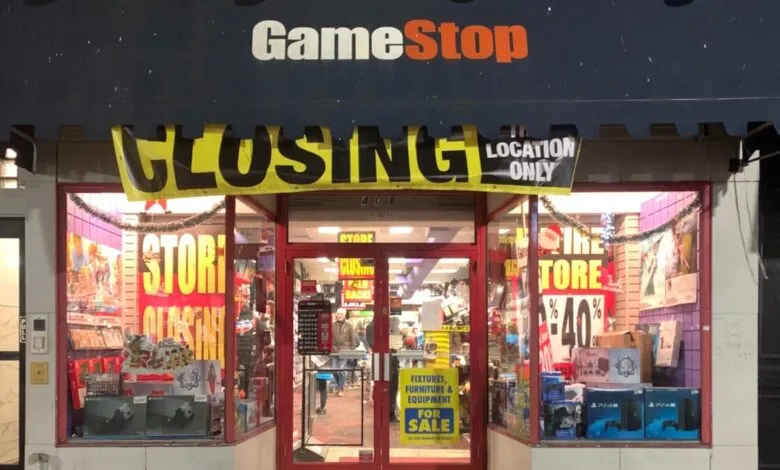
The aftermath of that failed digital strategy has been severe. While the company’s recent stock volatility captures headlines, its physical retail footprint has contracted dramatically. The prediction of a brick-and-mortar resurgence proved entirely wrong. Since 2024, GameStop has closed more than 1,300 stores, including 727 in 2025 alone and hundreds more in the first month of this year. The story of Impulse serves as a stark case study in a corporation misreading a fundamental industry transformation, choosing to protect a declining model rather than embrace the change that would redefine its entire market.
(Source: Kotaku)