Social Search: The Next Evolution in Discoverability
▼ Summary
– Search behavior has diversified beyond Google, with people now using platforms like TikTok, YouTube, and Amazon for recommendations, tutorials, and product validation.
– Research shows that while traditional search engines like Google still handle about 80% of searches, a significant portion occurs on commerce platforms (~10%), social networks (~5.5%), and AI tools (~3.2%).
– The search industry’s focus on AI overlooks a larger mainstream shift, as AI search currently represents a small share compared to established platforms like Amazon and YouTube.
– Social platforms like TikTok and Reddit now function as search engines for specific intents, and their content also appears directly in Google search results and powers AI-generated answers.
– Brands need a “search everywhere” strategy, optimizing for visibility across multiple platforms where their audience searches, as this creates a compounding discoverability effect beyond traditional SEO.
The landscape of online discovery is undergoing a profound transformation. While Google remains the dominant force in search, a significant shift is underway as users increasingly turn to social media and other platforms to find answers. People now instinctively search on TikTok for recommendations, YouTube for tutorials, and Reddit for unfiltered community opinions. This diversification of search behavior represents a major, yet often overlooked, opportunity for modern marketing strategies.
Recent analysis of search activity across dozens of platforms confirms this trend. Although traditional search engines like Google still handle the majority of queries, a substantial portion of discovery now occurs elsewhere. Commerce sites like Amazon account for a notable share, while social networks and emerging AI tools are carving out their own significant niches. The key insight is that consumers go directly to the platform where they expect to find the most useful answer in their preferred format, rather than starting with a general web search.
Much of the current industry dialogue is fixated on artificial intelligence and its potential to disrupt search. Professionals are intensely debating how to optimize for AI interfaces and whether tools like ChatGPT will overtake traditional engines. These are valid considerations for the long term. However, the data presents a more immediate strategic picture. AI search tools currently represent a small fraction of overall search activity. Established platforms like Amazon, YouTube, and even Bing currently process more searches daily than the leading AI chatbots. Many brands are allocating disproportionate resources to AI visibility while missing the massive, active search audiences on other digital destinations.
Social platforms have effectively become search engines in their own right. Each serves a distinct role in the user’s discovery journey. TikTok and Instagram are go-to sources for discovery and recommendations. YouTube is the premier destination for learning and reviews. Reddit provides authentic community discussions, and Pinterest offers visual inspiration. Users visit these sites with clear intent to solve problems or fulfill desires, moving them far beyond their origins as mere entertainment hubs.
This evolution has not gone unnoticed by Google. Social and creator content now appears directly within Google’s search results. The search giant has expanded its integration of content from TikTok, YouTube Shorts, Reddit threads, and Instagram posts. Partnerships with platforms like Reddit ensure community discussions gain prominent placement. Consequently, a brand’s social content can drive discovery in three powerful ways: through direct searches on the social platform itself, via visibility in Google’s results, and by influencing AI-generated answers.
Indeed, social content is a critical fuel for AI systems. Tools like ChatGPT and Google’s AI Overviews frequently cite Reddit threads, YouTube videos, and forum discussions to generate responses that reflect real-world experiences and opinions. This creates a compounding discoverability effect. A single, well-crafted piece of content, such as a helpful YouTube tutorial, can achieve visibility across multiple layers: ranking in YouTube search, appearing in Google results, being referenced by an AI, and being shared across social and private messages. This multiplies the reach and return on investment for content, a crucial advantage in an era of scrutinized marketing budgets.
Despite these shifts, most companies continue to follow an outdated search playbook, focusing almost exclusively on Google SEO, paid search, and website content. Very few have developed structured strategies for TikTok search optimization, YouTube visibility, or Reddit community engagement. Social search remains a relatively open field compared to the fierce competition of traditional SEO. Brands that act now can establish a presence and build preference in spaces where customer demand already actively exists.
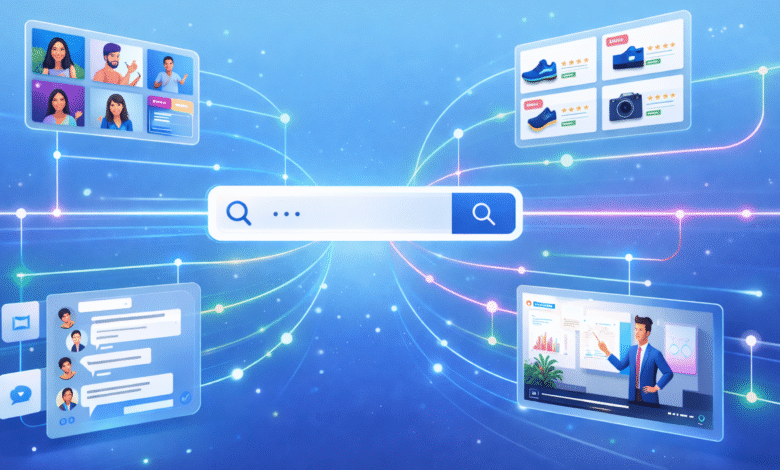
The modern approach requires a “search everywhere” mindset. Search is a fundamental user behavior that happens across an expanding universe of platforms. Audiences will search wherever they believe they will find the best answer in the most useful format. The brands that will succeed are not those that rank only on Google, though that remains vital. The winners will be discoverable wherever their audience searches, whether that’s on a social platform, an e-commerce site, or an AI interface. This holistic approach to visibility is the definitive future of search.
(Source: Search Engine Land)