Canal+ Closes Showmax: Is African Content Innovation Dead?
▼ Summary
– Canal+ is shutting down the African streaming service Showmax, causing significant concern and fear for the future among the continent’s film and TV producers.
– The closure follows Amazon’s exit from African originals and leaves Netflix as the primary major streaming platform commissioning content in Africa, drastically reducing opportunities.
– Showmax was valued for allowing more experimental, risque, and locally authentic storytelling that wouldn’t fit the conservative linear TV channels like MultiChoice’s DStv.
– Industry experts state the shutdown reflects a global streaming shift towards consolidation and sustainable economics, collapsing a major funding pipeline for African originals.
– Netflix has publicly reaffirmed its ongoing commitment to invest in Africa, attempting to assuage industry fears following Showmax’s demise.
The recent decision by Canal+ to shut down the Showmax streaming service has sent shockwaves through Africa’s film and television industry, leaving creators anxious about a future with dramatically fewer opportunities. This move effectively removes a major commissioner of African original content, creating a significant void in a market already constrained by the limited presence of global streaming giants. For a decade, Showmax served as a vital platform for local storytellers, and its sudden closure raises urgent questions about the sustainability and diversity of African content creation.
Award-winning producers, speaking anonymously to protect professional relationships, express profound fear and uncertainty. They are deeply concerned about what types of projects, if any, will be commissioned for the African market by Canal+ going forward. The shutdown arrives just two years after Amazon MGM Studios abruptly ceased its African originals investments, compounding a sense of instability. With Disney+ only available in South Africa, Amazon out of the originals game, and services like Apple TV+, HBO Max, and Paramount+ showing little to no interest in the continent, the commissioning landscape is shrinking rapidly. For many, Netflix now stands virtually alone as the remaining major global player actively investing in African stories.
The timing of the announcement was particularly jarring, breaking during the Joburg Film Festival as a panel was set to discuss Franco-African collaboration. On that very stage were the cast and producers of “Spinners,” a Showmax Original series co-produced with Canal+, now left without its intended streaming home. The awkward moment underscored the precarious nature of these partnerships. Creators are mourning Showmax not just as a platform, but as an avenue for creative risk. It allowed for more daring genres, provocative stories, and experimental depictions that often wouldn’t fit the more conservative mandates of MultiChoice’s linear TV channels like Africa Magic, kykNET, and M-Net.
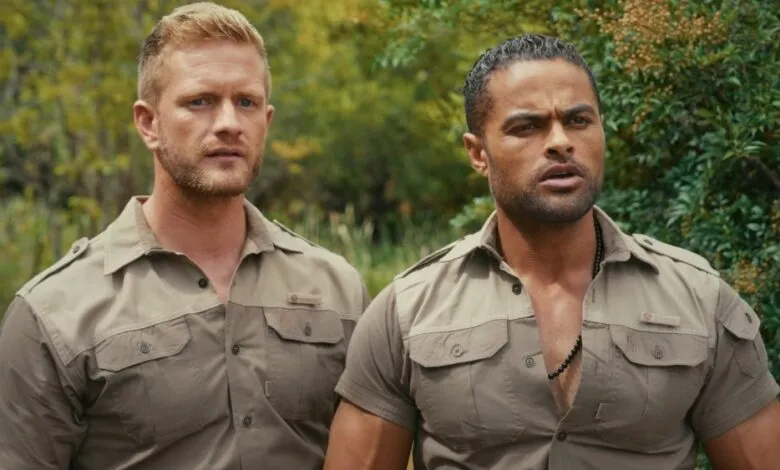
“We got to breathe for a while. Now we’re holding our breath. Again,” lamented one award-winning producer-director. They reflected on the significant investment MultiChoice funneled into content following its 2023 relaunch of Showmax with NBCUniversal, a period that felt like a “little renaissance” for creative freedom and industry growth across the continent. The success of a title like “Khaki Fever” exemplifies this lost potential. The raunchy, R-rated comedy, specifically commissioned as a Showmax Original, became a viewership hit. Producers note such a boundary-pushing film, set on a South African game reserve, would likely never have been made for traditional broadcast. “Khaki Fever is a perfect example of how Showmax as a streamer allowed African creatives another outlet besides Netflix to do boundary-pushing work. Now it’s gone,” stated another director-producer.
Industry reaction at the festival was one of palpable dismay. Neil Brandt, CEO of Storyscope, described the news as “a slap in the face.” In response, Netflix’s director of scripted content for sub-Saharan Africa, Kaye-Ann Williams, sought to reassure creators at a private event, asserting Netflix’s ongoing and growing commitment to the region. She highlighted upcoming projects like the Johannesburg-based crime caper “180” as evidence of continued investment.
Analysts point to broader global streaming trends to explain the closure. Leslie Adams, Sales Director at Reach Africa, notes the industry is shifting from a “growth at all costs” model to one prioritizing sustainable economics and scale. Rising content costs make competition fierce without significant market size, leading to inevitable consolidation. Adams predicts more bundling, aggregation, and ad-supported models will emerge, ultimately meaning fewer standalone services for viewers but potentially stronger, bundled platform offerings.
The academic perspective is grim. Professor Anna-Marie Jansen van Vuuren of Tshwane University of Technology observes that the early dreams of streaming democratizing African commissioning have “shattered.” She emphasizes that Showmax was the most significant commissioner of African originals – far more than any global streamer, backing edgy, authentic titles like “Wyfie,” “Adulting,” and “Spinners.” Its closure removes a crucial buyer for high-risk, locally rooted content and leaves a massive hole in both distribution and monetization for creators.
Looking ahead, media strategist Moses Mmutlane warns of a dangerous gap. He suggests international companies with deep pockets may step in to fund local productions, but this could lead to South African-owned content being licensed overseas, stripping local control. “Showmax created a space to showcase local African productions and funded a lot of them, creating a continuous channel for local producers and production companies to thrive,” Mmutlane noted. While MultiChoice is reportedly developing a new streaming platform, hopes are pinned on it increasing local content production and broadening funding, all while protecting Africa’s creative industries from aggressive international conglomerates solely focused on acquiring content. The fear remains that without careful stewardship, rights issues and contractual limitations could force the closure of local production companies, leaving African storytelling more vulnerable than ever.
(Source: Variety)