Rocket Lab CEO: Engine Tests Are Normal, Not a Setback
▼ Summary
– A grass fire at Rocket Lab’s Archimedes engine test stand was reported as starting when an anomaly caused an electrical box to catch fire.
– Satellite imagery and a source indicate the incident was a catastrophic engine explosion that blew off a test cell roof, causing significant damage.
– This event was one of at least two Archimedes engine test failures in the past three months.
– The failures occur as Rocket Lab is finalizing the Archimedes engine, a key component for its new Neutron rocket slated for a debut launch this year.
– Rocket Lab’s CEO downplayed concerns about the test anomalies in response to media inquiries.
Rocket Lab’s development of its new Archimedes engine has encountered testing anomalies, a normal part of the rigorous process for any new rocket propulsion system. The company is currently focused on finalizing the flight version of this liquid oxygen and methane engine, a critical component for its upcoming Neutron launch vehicle. CEO Pete Beck has characterized recent test events as standard procedure, not setbacks, emphasizing that such challenges are expected when pushing the boundaries of new technology.
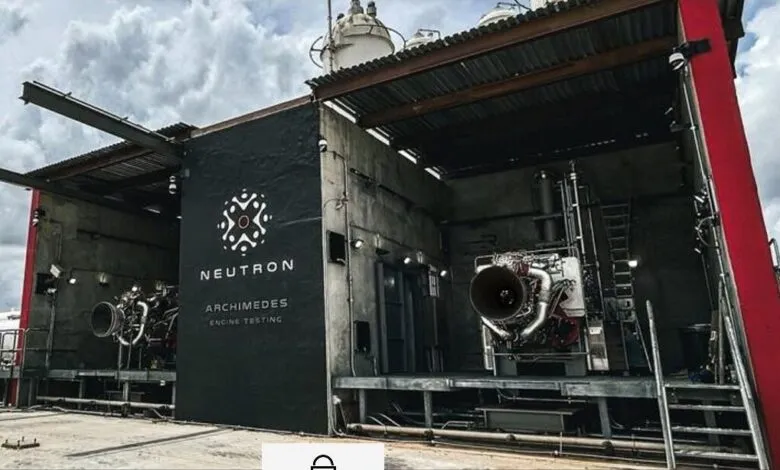
In late November, an incident at the A3 test stand at NASA’s Stennis Space Center required a call to the local fire department. A Rocket Lab employee reported a grass fire that began during an engine test, noting an anomaly caused an electrical box to ignite. Satellite imagery from around that time indicates visible changes to one of the two test cells, with some observers suggesting the damage was more extensive than an electrical issue. One individual familiar with the event described it as a significant engine explosion that led to considerable damage to the test infrastructure.
Reports indicate this was not an isolated event, with at least two Archimedes engine tests ending unsuccessfully over a recent three-month period. These developments occur as Rocket Lab works toward a pivotal goal: preparing the Neutron rocket for its inaugural launch. The medium-lift vehicle is designed to be powered by a cluster of nine Archimedes engines, each producing 165,000 pounds of sea-level thrust.
Responding to inquiries about the test anomalies, Rocket Lab founder and CEO Pete Beck dismissed the notion that these events represent a major problem. He framed them as routine occurrences in engine development, where engineers deliberately test hardware to its limits to gather essential data. Beck’s stance is that public speculation often inflates minor technical issues into dramatic failures, whereas in reality, these are calculated steps in a complex engineering campaign.
The company’s strategy involves an aggressive testing schedule to retire risk and validate the engine’s performance ahead of Neutron’s debut. The Archimedes engine represents a significant technical leap for Rocket Lab, marking its first foray into a larger, more powerful liquid-propellant engine designed for reusability. Success with this engine is fundamental to the Neutron rocket’s business case, which aims to provide frequent and cost-effective access to orbit for satellite constellations.
Industry observers note that encountering multiple test anomalies is not uncommon for new rocket engine programs, even for established companies. The intense pressures, extreme temperatures, and mechanical stresses involved make propulsion one of the most challenging aspects of aerospace engineering. The true measure of progress, experts say, lies in a team’s ability to diagnose issues, implement solutions, and iteratively improve the design.
Rocket Lab maintains a confident public posture, aligning its communications with the narrative that development is proceeding as planned. The focus remains on analyzing test data, making necessary adjustments, and continuing toward a full-duration, full-thrust certification test. The coming months will be critical as the company transitions from component and engine-level testing to integrated stage tests and, ultimately, the first flight of the Neutron rocket.
(Source: Ars Technica)


