ICE’s Rapid US Expansion: Where It’s Headed Next

▼ Summary
– ICE and DHS have secretly expanded ICE’s physical presence across the US with over 150 new or expanded facilities in nearly every state, often near sensitive locations like schools and medical offices.
– The General Services Administration (GSA) was instructed by DHS to bypass standard lease procedures and hide listings due to “national security concerns” to support this expansion.
– ICE has more than doubled in size since 2025, receiving nearly $80 billion in funding and now employing approximately 22,000 officers and agents nationwide.
– A dedicated “ICE surge” team within the GSA’s Public Buildings Service was tasked with finding and securing new office spaces for ICE’s enforcement and legal divisions across the country.
– This expansion has successfully placed new ICE offices in almost every US state and major city, both by expanding existing offices and moving into new or repurposed government-leased buildings.
A significant and largely undisclosed expansion of Immigration and Customs Enforcement (ICE) is underway across the United States, placing new agency facilities in nearly every state. Federal documents reveal a campaign by ICE and the Department of Homeland Security (DHS) to establish over 150 new leases and office expansions, many situated within or adjacent to the nation’s largest metropolitan areas. These new locations for street-level agents and ICE attorneys are frequently positioned near sensitive sites like elementary schools, medical offices, and places of worship.
In El Paso, Texas, the agency is establishing a presence on a large campus near Interstate 10, close to several local healthcare providers. In Irvine, California, new ICE offices are located next to a childcare agency. On Long Island, New York, the agency is moving into offices near a passport center. Near Houston, ICE appears set to occupy a building just blocks away from a preschool.
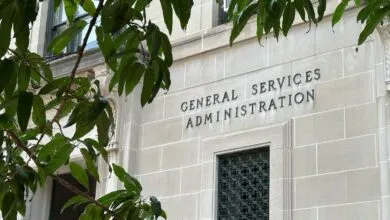
This aggressive physical expansion relies heavily on the General Services Administration (GSA), the agency responsible for managing federal buildings. Internal communications show DHS explicitly requested that GSA bypass standard government lease procurement procedures. In some instances, DHS asked for lease listings to be concealed, citing “national security concerns” to support ICE’s enforcement activities.
A GSA spokesperson stated the agency is committed to supporting its law enforcement partners and follows all applicable laws and regulations in lease procurement. DHS did not respond to requests for comment on the expansion strategy.
The scale of this growth aligns with the agency’s dramatic increase in size and funding. Since the beginning of the current administration, ICE has more than doubled, now reporting approximately 22,000 officers and agents nationwide with ongoing hiring. The agency received nearly $80 billion in funding through recent legislation, providing extensive resources for its operations. This influx of personnel has created an urgent demand for office space and suggests a broader deployment into new operational areas.
To meet this demand, a specialized “ICE surge” team was formed within GSA’s Public Buildings Service. This team is tasked with identifying new office locations and expanding existing ones specifically for ICE’s Enforcement and Removal Operations (ERO) and the Office of the Principal Legal Advisor (OPLA). ERO handles the arrest, detention, and removal of immigrants, while OPLA serves as the agency’s legal arm, litigating removal cases.
Records indicate the surge team’s efforts have been highly successful. Beyond simply enlarging current ICE offices, the initiative has secured new government-controlled spaces across the country. The result is a transformed and far more distributed ICE footprint, with a physical presence now established in almost every U.S. state and major city.
(Source: Wired)