Is the Game Developer Unionization Movement in Danger?
▼ Summary
– The games industry is at a pivotal point for unionization, facing deep-rooted ideological resistance from leadership despite recent momentum.
– Two high-profile 2026 cases involve Rockstar in the UK and Ubisoft in Canada, where unions allege layoffs are retaliation for organizing, which the companies deny.
– Even if union-busting is not legally proven, these cases send a chilling message that unionization may not protect jobs and could even hasten layoffs.
– A major problem is that unions often form too late and too narrowly, involving only vulnerable staff with little bargaining power, which weakens them from the outset.
– For unions to be effective, employees must be convinced to organize when times are good, creating a stable counterbalance to industry instability and benefiting all stakeholders.
As 2026 unfolds, the push for unionization within the video game industry faces a critical test. Two high-profile international cases are casting a long shadow, potentially threatening the momentum labor organizers have painstakingly built. While unionization efforts have gained significant traction in recent years, moving from a fringe idea to a serious conversation, the road to widespread, effective labor organization remains fraught with obstacles. This year will likely determine whether those hard-won gains can withstand the intense pressure from corporate leadership deeply opposed to the concept.
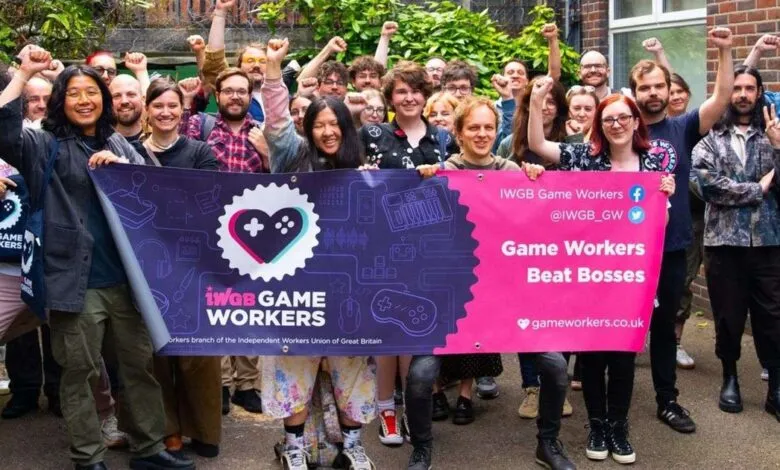
Currently, the spotlight falls not on the United States, often considered the most union-resistant major development hub, but on the United Kingdom and Canada. In the UK, Rockstar Games faces ongoing legal and political scrutiny over its dismissal of 31 workers last October. The company insists the terminations were for leaking confidential game information, while the IWGB union alleges they were retaliatory acts against union organizing. Across the Atlantic, Ubisoft recently shuttered its Halifax studio, impacting 71 employees. The publisher denies any connection to the studio’s historic formation of the first union within Ubisoft’s North American operations, attributing the closure solely to broader corporate restructuring.
In both instances, the respective unions are demanding deeper investigations into the companies’ motives. Proving illegal retaliation is notoriously difficult, but such proceedings are far from futile. Corporations often leave behind damning evidence in emails or internal communications, and workplaces with poor labor relations can foster disgruntled employees willing to become whistleblowers.
However, the broader impact may not hinge on the legal outcomes. The message being sent to workers industry-wide is chilling, regardless of corporate intent. At Ubisoft Halifax, the union existed for such a brief period that it could do little more than witness the studio’s dissolution. The implication is clear: forming a union not only failed to protect these jobs but may have even accelerated their loss. In the Rockstar case, any protections are arriving through a protracted legal battle after the fact. Even a successful tribunal ruling is a scenario few employees would willingly choose, especially in an industry with a recent history of aggressive layoffs.
These developments risk suppressing unionization drives elsewhere. A cynical observer might note that some companies would gladly pay substantial legal fees to achieve such a deterrent effect. This is not an argument against unions themselves, which could profoundly benefit both employees and the long-term health of the industry. The core issue lies in the reactive and fragmented nature of many organizing efforts.
After years of anti-union sentiment, many employees only consider collective action when they see layoffs looming. By that point, a union’s power is severely limited. It can fight for fair severance, but it cannot realistically stop a struggling company from closing an underperforming division. Furthermore, these last-minute efforts often result in narrow unions comprising only a fraction of a company’s workforce, typically those in the most vulnerable positions with the least inherent bargaining power. While courageous, these groups often lack the influence to secure meaningful concessions from employers without the involvement of more senior, established staff.
Breaking this cycle is essential for unionization to deliver genuine benefits across all job levels. Encouragingly, awareness is growing. The industry’s widespread mishandling of harassment scandals revealed that human resources departments primarily protect the company, not the staff. Heavy-handed mandates to return to physical offices, despite evidence supporting remote work productivity, have further galvanized support for collective voice. Most tellingly, the recent waves of mass layoffs have demonstrated that regions with stronger labor protections experienced far greater job stability.
This last point underscores a fundamental value of organized labor: it transforms employees into stakeholders. While no union can prevent all layoffs during an industry downturn, its presence can act as a crucial counterbalance to the speculative financial practices that create extreme instability. A strong emphasis on creating stable, secure positions might slow certain types of growth, but much of that growth can be unsustainable. The upsides, improved stability for workers, more sustainable planning for companies, and better conditions for creating quality games, are immense.
Building a union is a demanding endeavor, but a profoundly worthwhile one. Effective organizations are invaluable for ensuring equitable treatment, securing better benefits and working conditions, and providing employees a voice that often leads to smarter company-wide decisions. The present danger, however, is that if newly formed unions are too small and weak to win their first major confrontations, each loss could set back the broader movement for years. The key to avoiding this is clear: convincing employees of the benefits of collective bargaining must happen when times are stable and their leverage is strong, not in a moment of crisis when the outcome is already largely decided.
(Source: Games Industry)