Google’s Opal Vibe-Coding Now in Gemini
▼ Summary
– Google is integrating its Opal “vibe-coding” tool into the Gemini web app, allowing users to create custom AI-powered mini-apps called Gems.
– Gems are customized versions of Gemini designed for specific tasks, such as a learning coach or coding partner, which Google provides pre-made.
– Opal lets users describe an app in natural language, and the tool uses Gemini models to build it through a visual editor without requiring code.
– The visual editor includes a feature that turns written prompts into a list of steps, simplifying the app-building process.
– For advanced customization, users can switch to the Opal Advanced Editor, and the created mini-apps can be reused.
Google is integrating its Opal vibe-coding tool directly into the Gemini web application, enabling users to build custom AI-powered mini apps known as Gems through natural language descriptions. This move brings a powerful, no-code development environment to a broader audience, allowing anyone to create tailored tools for specific tasks without needing programming expertise.
Gems are customized versions of Gemini designed for particular purposes. Google offers several pre-built examples, such as a learning coach, a brainstorming assistant, a career guide, a coding partner, and a text editor. The new integration allows users to craft their own unique Gems using the Opal tool. By simply describing the desired app in everyday language, Opal leverages various Gemini AI models to generate the application’s framework.
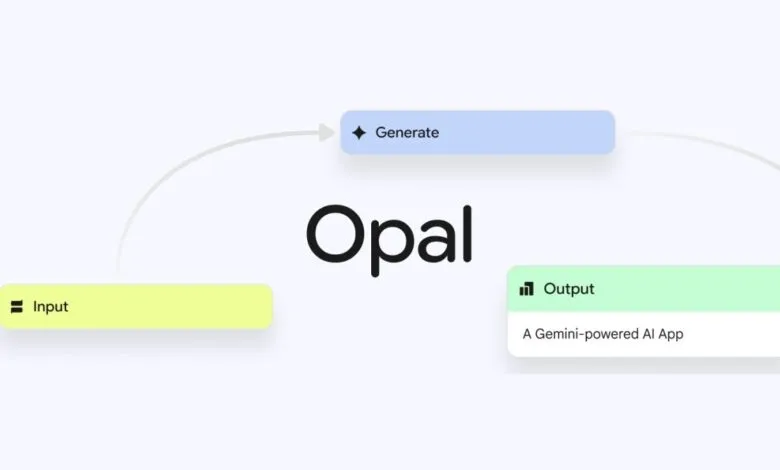
Accessing Opal is straightforward through the Gems manager within the Gemini web interface. The platform features a visual editor that outlines the necessary steps for application creation. Users can drag, drop, and connect these steps to design their app’s workflow, all without writing a single line of code. This intuitive interface significantly lowers the barrier to creating functional software.
To further streamline the process, Gemini includes a new view that transforms a user’s written prompt directly into a sequenced list of actionable steps. This visualization helps builders understand the app’s structure and logic as they create it. For those seeking deeper control, an Advanced Editor is available at opal.google.com, offering more sophisticated customization options beyond the standard web interface. Once created, these mini apps can be saved and reused for future projects.
This approach, often called “vibe-coding,” uses artificial intelligence to handle the programming heavy lifting based on human intent. The practice has seen explosive growth, with a market now populated by tools from startups like Lovable and Cursor, as well as features from major AI providers. Consumer-focused platforms, such as those from the app-building startup Wabi, also contribute to this expanding ecosystem. By embedding Opal into Gemini, Google is positioning its flagship AI assistant as a central hub for personalized, user-generated AI tools.
(Source: TechCrunch)