Skana Robotics Enables Underwater Robot Fleet Communication
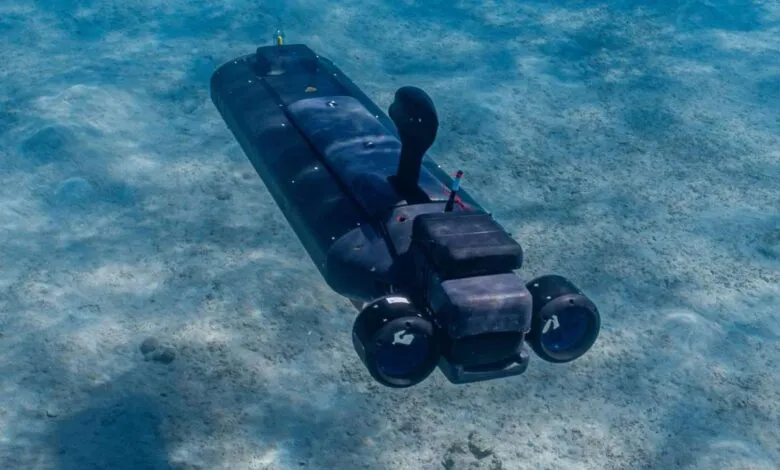
▼ Summary
– Skana Robotics has developed an AI-powered system enabling underwater vessels to communicate and share data across long distances without surfacing, which reduces detection risk.
– This fleet management software allows individual autonomous vessels to adapt their tasks based on shared data while still working toward a collective mission.
– The AI technology used is based on older, mathematically-driven algorithms chosen for their predictability and explainability over the “wow effect” of newer models.
– The Tel Aviv-based startup, founded in 2024, is currently targeting government and commercial clients in Europe, citing increased maritime threats.
– Skana aims to secure a major government contract this year and release a commercial version of its product in 2026 to demonstrate its scalable operational capabilities.
Operating fleets of underwater robots presents a significant strategic advantage for defense and security, yet a persistent technical hurdle has limited their potential. The critical challenge has been enabling reliable, long-distance communication between submerged vessels without forcing them to surface and risk detection. A new solution from Skana Robotics aims to solve this problem through an innovative application of artificial intelligence, though not the kind dominating headlines today.
The Tel Aviv-based startup has enhanced its SeaSphere fleet management platform with a novel capability. This system allows groups of autonomous underwater vehicles (AUVs) to share data and coordinate directly with each other across substantial distances while fully submerged. This breakthrough means individual units can autonomously adapt their course or tasks based on real-time information from the fleet, all while continuing to work toward a collective mission objective. Beyond defense, the technology is designed to help secure underwater infrastructure like pipelines and communication cables.
Idan Levy, Skana’s co-founder and CEO, emphasized the scale of the problem they are addressing. Effectively deploying hundreds of unmanned vessels in a coordinated operation, both on the surface and below, requires robust communication links. The company’s software is engineered to create those vital digital connections beneath the waves.
The research behind this advancement was led by Teddy Lazebnik, an AI scientist and professor. Interestingly, Lazebnik’s team deliberately avoided the latest, most powerful AI models like large language models. Instead, they turned to older, more mathematically grounded algorithms. He explained that while newer AI can be more impressive in raw performance, it often sacrifices predictability. For mission-critical operations where explainable decisions are non-negotiable, the team prioritized reliability and generality over sheer computational power.
Founded in 2024, Skana Robotics recently emerged from stealth mode. The company is currently targeting government and commercial clients in Europe, where heightened maritime security concerns have increased demand for such technologies. Levy noted the startup is in advanced discussions for a major government contract it aims to finalize this year.
Looking ahead, Skana plans to release a commercial version of its product in 2026. The goal is to demonstrate the system’s capabilities at a large, operational scale. Lazebnik stated the ambition is to have naval authorities within the European Union test and validate the technology themselves, proving it can manage complex, multi-vessel maneuvers effectively in real-world conditions.
(Source: TechCrunch)