Rivian Develops AI Chips for Self-Driving Vehicles
▼ Summary
– Rivian announced it is designing its own proprietary AI chip, the Rivian Autonomy Processor, to power its autonomous driving systems and catch up with competitors like Tesla.
– The company plans to launch advanced autonomous features, including hands-free and eyes-off driving, starting with its second-generation R1 vehicles in early 2025 and expanding to the upcoming R2 models.
– Rivian will integrate lidar sensors into its future R2 vehicles for redundancy and improved real-time driving, differentiating its approach from Tesla’s vision-only system.
– The company introduced an AI-powered voice assistant and a “Large Driving Model,” and will bundle its autonomy features into a new subscription service called Autonomy Plus for a potential revenue stream.
– This strategic push into vertical integration and autonomy comes as Rivian faces investor pressure to compete and find new revenue, despite recent financial challenges and slowing sales.
In a significant push to advance its autonomous driving capabilities, Rivian has announced it is designing its own proprietary AI chips, positioning itself alongside Tesla in the race to develop self-driving technology through vertical integration. The electric vehicle maker unveiled its new silicon, the Rivian Autonomy Processor, during a recent event, detailing a comprehensive strategy that includes a new AI voice assistant, a subscription service, and a foundational “Large Driving Model” for autonomous decision-making.
The newly revealed chip is a 5-nanometer component to be manufactured by TSMC. Rivian states this processor integrates processing and memory into a single multi-chip module, powering its third-generation computer. The architecture is designed to deliver high efficiency, performance, and compliance with automotive safety standards. Rivian estimates its neural engine can handle 800 trillion operations per second (TOPS), while a dual-chip setup in its third-gen computer reaches 1,600 trillion 8-bit integer operations per second (INT8 TOPS) by utilizing data sparsity. For context, this performance sits below top-tier data center chips like Nvidia’s H100 but represents a substantial capability for an automotive application. The company also claims the chip can process an impressive 5 billion pixels of camera data each second.
This move toward in-house silicon is a strategic effort to catch up with competitors like Tesla, which has long developed its own chips, while much of the industry relies on suppliers like Nvidia. Rivian emphasizes that vertical integration is crucial for its future growth and technological independence. The announcement comes at a pivotal time for the company, which is under investor pressure to chart a profitable path forward as federal EV tax credits phase out for some models.
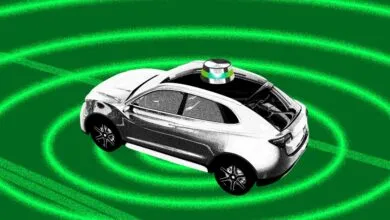
Rivian’s autonomous driving system will utilize a suite of sensors, including lidar, which it plans to integrate into its upcoming, more affordable R2 vehicles. This approach contrasts with Tesla’s camera-only strategy and aims to provide redundancy and improved real-time environmental mapping. The company outlined a phased rollout of features, starting with an expanded hands-free driver assist system for its R1 vehicles early next year. This system, dubbed Level 2 Plus, will operate on millions of miles of roads across the U.S. and Canada, not limited to highways.
Looking further ahead, Rivian plans to introduce more advanced eyes-off, Level 3 capabilities. These partially autonomous features will be offered as a one-time upgrade or through a new “Autonomy Plus” monthly subscription service, creating a potential new revenue stream. A deeply integrated, AI-powered Rivian Assistant voice companion is also slated for release, designed to manage vehicle functions and connect with third-party apps.
Collectively, these initiatives represent Rivian’s ambitious plan to become a serious contender in autonomous driving. While rivals have a head start, Rivian is betting that its integrated approach, combining custom hardware, sophisticated software, and a direct-to-consumer model, will allow it to close the gap in the evolving self-driving landscape.
(Source: The Verge)