I Tried Google’s Android XR Glasses: The Future Is Here

▼ Summary
– Google announced three advances in its Android XR platform, including display AI glasses for developers and updates to Galaxy XR and Project Aura.
– The AI glasses demo showcased efficient multimodal hardware and a smart Gemini assistant that provided contextual environmental information upon wearing them.
– Google’s strategy leverages the existing Android ecosystem, allowing third-party apps and services to transition fluidly into the Android XR operating system.
– Samsung’s Galaxy XR headset received new features like PC Connect for Windows, while the more portable Project Aura glasses from Xreal offered a comfortable, high-field-of-view experience.
– Google’s vision for 2026 involves seamless transitioning between diverse wearable devices, indicating a tangible and rapidly converging future for multifunctional smart glasses.
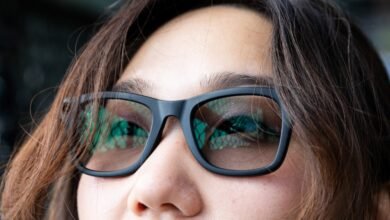
Stepping into Google’s Hudson River office last week, I experienced a glimpse of a connected future that feels remarkably close. I spent time with a pair of Android XR glasses, engaging in a fluid conversation with the Gemini AI assistant while moving freely around the room. These weren’t the consumer-focused frames previewed earlier but a developer kit, signaling that this technology is poised to move from prototype to platform. The demonstrations, which included visual assistance and spatial navigation, operated with a surprising level of polish. At one point, I attempted to confuse Gemini by asking for a fruit salad recipe involving the pasta on a nearby shelf; it cleverly suggested a more appropriate tomato sauce dish instead. This interaction highlighted both the intelligence of the AI and the sophisticated multimodal hardware packed into the glasses.
Google’s strategy for AI-powered eyewear unfolds across two distinct paths. One approach focuses on audio and camera features, similar to existing products like Meta’s Ray-Bans. The other, which I tested, incorporates a transparent display for visual overlays and floating interfaces. While competition in this arena is intense, Google enters with a significant built-in advantage: its vast and mature software ecosystem. The imminent release of Developer Preview 3 for the Android XR SDK, complete with new APIs, will provide the tools to bring that ecosystem into three-dimensional space. This isn’t merely about porting over apps like Gmail or YouTube. The real potential lies in the seamless transition of countless existing third-party Android applications, widgets, and services into the XR environment.
I witnessed this integration firsthand. Using the glasses, I requested a ride from the Google office to a specific pizzeria in Staten Island. Beyond simply plotting a route to the pickup location, the display proactively showed my driver’s details as I approached the vehicle. Google explained this functionality was pulled directly from the native Uber Android app, serving as a powerful example of how straightforward development for this wearable platform could be. Another compelling moment occurred the instant I put the glasses on. Rather than requiring me to ask questions, Gemini immediately provided a summary of my environmental context, noting my location, the weather, and objects placed around the room, creating a natural and intuitive starting point for conversation.
The experience continued as I switched to Samsung’s updated Galaxy XR headset. New features like PC Connect, which syncs with a Windows computer for an expansive virtual display, were particularly impressive. Testing it with the game “Stray,” I found the wireless controls responsive and the visual performance stable. However, the device that truly captured my imagination was Xreal’s Project Aura. These more traditional-looking glasses offer a substantial 70-degree field of view and feature a tinting function to enhance brightness. Running on the same Android XR platform, they support hand-tracking gestures for pinch and swipe commands, allow for multiple floating application windows, and can also connect to a PC.
The major unknown for Project Aura is its final cost. Given the enhanced capabilities and Xreal’s existing product pricing, a launch figure near the $1,000 mark seems plausible. While an official release date beyond “late next year” wasn’t confirmed, the hardware feels like a significant step toward comfortable, all-day wearable computing. My journey through these demos, despite the expected beta-stage hiccups, reinforced that the race in wearable computing is accelerating with concrete, functional products. The core of Google’s approach leverages the immense strength of the established Android ecosystem, a fact that should excite developers. This points to a 2026 vision of seamless, multi-device interaction that is evolving from ambitious concept into a tangible technical reality, promising to fundamentally alter our relationship with digital information.
(Source: ZDNET)