Google Expands AI Mode Links and Web Guide Test

▼ Summary
– Google is increasing the number and improving the design of inline links in its AI Mode search responses to encourage user clicks.
– The company is adding contextual introductions to these embedded links, providing short explanations for why a link might be helpful.
– Google is expanding its Web Guide feature from the “web” tab to the “all” tab in Search Labs, though users still need to opt into the experiment.
– Web Guide uses a custom AI model to understand queries and content, grouping relevant web links into helpful topic sections from multiple related searches.
– These updates aim to drive more traffic to publishers and are welcomed by the search marketing community.
Google is actively refining its AI-powered search features to improve user experience and drive more traffic to publishers. The company is rolling out significant updates to both its AI Mode and Web Guide functionalities, focusing on making links more prominent and useful for searchers. These changes aim to bridge the gap between AI-generated summaries and the broader web, encouraging deeper exploration.
Within AI Mode, Google is increasing the number of inline links and updating their visual design to make them more noticeable and useful. The company is also adding short contextual introductions to these embedded links, which are brief statements explaining why a particular source might be worth visiting. This move directly addresses the need to guide users from AI summaries to the original content, potentially increasing click-through rates for websites.
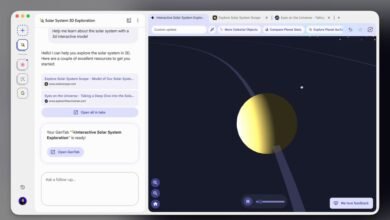
Simultaneously, Google is expanding the availability of its Web Guide feature. Initially launched under the “web” tab for users who opted into Search Labs experiments, it is now being rolled out to the primary “all” tab in search results. Access still requires opting into the experiment, but this broader placement makes the tool more visible. Google states that Web Guide uses a custom version of its Gemini AI to deeply understand search queries and web content, organizing links into helpful topic groups to surface pages users might not have otherwise discovered.
The technical process behind Web Guide involves a query fan-out technique, similar to methods used in AI Mode. This means the system concurrently runs multiple related searches to identify the most comprehensive and relevant set of results. Google has also announced performance improvements, claiming the updated Web Guide is now twice as fast as its previous version.
For publishers and the search marketing community, these developments are encouraging. Enhancing link visibility within AI Mode is a direct step toward channeling user interest from AI summaries to publisher websites. The expansion and refinement of Web Guide is similarly welcomed, as it offers a novel way to discover content through AI-organized categories. The broader hope is that these features will eventually graduate from experimental labs to become standard, integrated parts of the search experience, fostering a healthier ecosystem for both users and content creators.
(Source: Search Engine Land)